

For decades, enterprise video surveillance largely operated as a separate layer of physical infrastructure. Cameras captured footage, recorders stored it, and security teams reviewed video when something went wrong. That model is changing quickly. Cameras are increasingly becoming intelligent data sources that can feed information into cloud applications, access control systems, operational dashboards, IoT platforms, and automated business workflows.
The shift is happening alongside broader enterprise AI adoption. McKinsey’s 2025 global survey found that 88% of respondents said their organizations regularly used AI in at least one business function, compared with 78% a year earlier. At the same time, MarketsandMarkets estimates the AI video surveillance market at $4.04 billion in 2026 and projects it to reach $10.88 billion by 2032, representing annual growth of 17.9%.
Yet adding intelligence to cameras is only part of the challenge. A sophisticated analytics tool creates limited enterprise value if its alerts, metadata, and insights remain trapped inside a separate security console.
The next stage is therefore less about smarter cameras alone and more about architecture. Video intelligence is beginning to operate as another software layer within the enterprise technology stack, connecting physical events with digital systems and business processes.
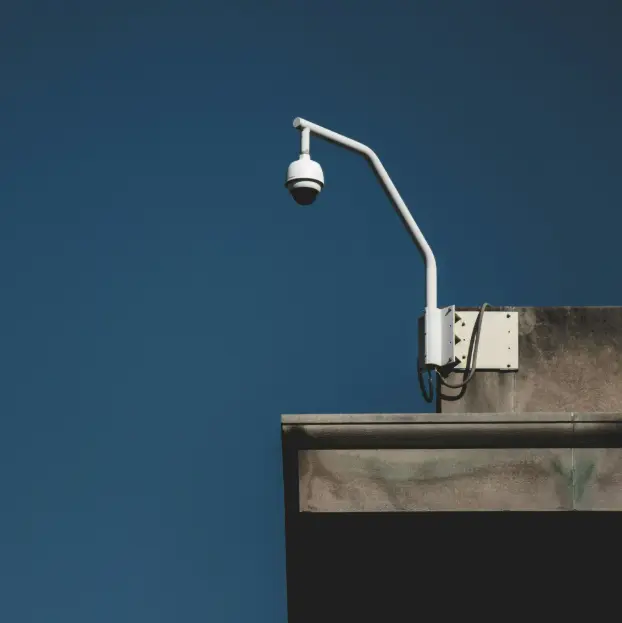
Cameras Are Becoming Software-Defined Enterprise Sensors
Traditional CCTV systems were designed around recording. A camera generated a video stream, a recorder stored that stream, and people searched through footage when they needed evidence. The camera itself had little relationship with the rest of the organization’s software environment.
AI changes that relationship because video can now be converted into structured information. Computer vision systems can identify people, vehicles, objects, movement patterns, occupancy changes, license plates, and other events. Instead of treating every second of footage equally, software can generate metadata describing what happened and when it happened.
That makes a camera more comparable to an enterprise sensor. A temperature sensor reports a temperature change. A card reader reports an access attempt. An AI-enabled camera can report that a vehicle entered a loading area, a person crossed a restricted boundary, or activity occurred in an unusual location.
For enterprise technology teams, the important development is that these events can be passed into other systems. APIs, webhooks, cloud services, event streams, and integrations allow video-derived information to participate in the same workflows already used for identity, operations, facilities management, safety, and incident response.
Moving From Video Alerts to Connected Business Workflows
An intelligent alert becomes much more useful when the organization can automatically connect it with context from another system. Consider an employee attempting to enter a restricted room. Access control software knows whose credential was presented, while nearby video provides visual context. Connecting both datasets gives investigators more useful information than either system could provide independently.
The same approach can extend far beyond doors. In a warehouse, an IoT sensor could identify an abnormal environmental condition while nearby cameras provide visual confirmation of what is happening. Computer vision could identify unsafe proximity between workers and moving equipment, while a safety application records the event for investigation or training.
Retailers can similarly connect video-derived occupancy or queue information with operational dashboards. Transportation facilities can combine vehicle detection with access permissions and location data. Manufacturing teams can correlate visual events with equipment alerts or production workflows.
This is an important architectural change. Instead of requiring employees to monitor several applications and manually reconstruct an event, connected systems can bring related information together. The result is faster understanding and fewer disconnected data silos.
Integration Is Turning Video Intelligence Into Enterprise Infrastructure
Enterprise software becomes more valuable when applications exchange information reliably. That principle already shapes customer relationship management, cloud infrastructure, cybersecurity, finance, and supply-chain technology. Video systems are increasingly moving in the same direction.
A modern architecture might connect cameras to an analytics layer, send selected events to a cloud platform, associate those events with access-control information, and then distribute alerts through dashboards or incident-management workflows. APIs and event-based integrations make it possible to use visual intelligence without forcing every employee to work directly inside a video management application.
One example is Coram, which illustrates how ai video analytics can operate as part of a broader physical-security software environment. According to its video analytics page, the platform can connect existing IP cameras to the cloud, integrate with access control systems including Brivo, OpenPath and Mercury board-based systems, provide text-based video search, and combine video, access control, alerts, and incident-response workflows. Its access-control capabilities also allow doors, users, and permissions to be centrally managed through a cloud interface.
The broader lesson is not about any single platform. Enterprises increasingly need physical systems to behave like their other software services: interoperable, searchable, centrally manageable, and able to exchange data with the rest of the technology stack.
Video Data Can Create Value Beyond Traditional Security
Once video intelligence becomes accessible to other applications, its usefulness can extend into daily operations. Security remains an important use case, but the same visual data can help organizations understand how spaces, vehicles, equipment, and people interact.
A distribution center provides a straightforward example. Cameras may already cover loading bays for security purposes. Analytics can also identify vehicle arrival patterns, activity around docks, or unusually long periods in which a loading area remains occupied. Operations teams can use that information to investigate delays rather than relying entirely on manual observations.
In physical retail, visual analytics can help identify traffic patterns, congestion, or queue growth. In manufacturing, cameras can contribute to safety monitoring or provide context when equipment-related alerts occur. Facilities teams can use occupancy information to understand how particular spaces are actually being used.
The challenge is turning those capabilities into measurable business results. McKinsey found that although 88% of organizations reported regular AI use in at least one function, only about one-third said their companies had begun scaling AI across the enterprise. Just 39% reported any enterprise-level EBIT impact from AI. The same research found that organizations achieving stronger results were more likely to redesign workflows rather than simply add AI tools to existing processes.
For video analytics, that distinction matters. Detecting an event is useful. Automatically placing that event inside the workflow of the person who can act on it is where much of the practical value begins.
Enterprise Adoption Requires More Than Better Algorithms
Newer technology does not automatically produce better operations. An enterprise may deploy highly accurate analytics and still struggle if notifications are poorly configured, integrations are unreliable, employees do not trust alerts, or nobody has responsibility for responding to the information produced.
Infrastructure is another concern. Video generates large amounts of data, and organizations have to decide what should be processed locally, what should move to the cloud, how long information should be retained, and which systems are allowed to consume metadata. Those questions become more important as enterprises operate increasingly complex hybrid environments. Flexera’s 2026 State of the Cloud report found that 73% of surveyed organizations were using hybrid cloud environments.
Privacy must also be considered from the beginning. Analytics involving identity, employee behavior, facial characteristics, location, or movement can create legitimate concerns about how information is collected and used. Access controls, retention policies, audit logs, cybersecurity safeguards, and clearly defined use cases therefore need to be part of the architecture rather than added after deployment.
A useful implementation strategy is to start with a specific operational problem. Organizations can define the event they need to detect, determine which systems require the information, decide who should receive an alert, and establish what action should follow. Integration can then be measured against an actual workflow rather than the number of available AI features.
Governance also becomes more important as AI moves deeper into enterprise systems. McKinsey reported that 51% of respondents from organizations using AI had experienced at least one negative consequence related to AI, with inaccuracy among the most commonly reported issues. Human verification remains particularly important when an automated observation could affect security actions, employee decisions, or access to sensitive areas.
The Future Is an Event-Driven Physical Intelligence Layer
The next generation of enterprise video systems is likely to become less dependent on employees continuously watching screens. Analytics can increasingly convert footage into searchable events, alerts, metadata, and contextual information that software can process automatically.
Natural-language interfaces are one part of this development. Instead of manually reviewing hours of recordings, users can search for an object, person description, vehicle, location, or event. Multimodal AI could further combine video with text, sensor readings, access records, and other data to help operators understand complicated incidents.
The larger opportunity, however, is orchestration. Imagine an unauthorized access event generating a nearby video clip, checking relevant identity information, notifying the appropriate team, creating an incident record, and presenting everything inside one dashboard. The video system becomes one contributor to a larger enterprise process rather than the destination where the workflow ends.
Organizations should prepare by prioritizing interoperability and data architecture. Open interfaces, consistent event formats, identity management, clear permissions, system observability, and vendor compatibility may ultimately matter as much as individual detection models.
This is especially relevant because broad AI use does not necessarily mean deep integration. A July 2026 study examining S&P 500 companies found that only 11% had AI deeply integrated into business processes in 2025, while another 10% were using AI directly in producing goods or delivering services. The next competitive step is therefore not simply possessing AI technology, but embedding it into repeatable operating workflows.
FAQs
What is AI video analytics in an enterprise environment?
AI video analytics uses machine learning and computer vision to interpret video and identify relevant objects, activities, or events. In an enterprise architecture, the resulting information can also be connected with cloud applications, access systems, operational tools, sensors, and other software rather than remaining inside the surveillance system.
How is AI-based video different from traditional CCTV?
Traditional CCTV primarily records footage for monitoring or later review. AI-enabled systems can automatically interpret portions of that footage, generate searchable metadata, recognize predefined events, and trigger workflows that reduce the amount of video employees must manually examine.
Can video analytics be used outside security departments?
Yes. Depending on the use case and privacy requirements, video-derived information can support areas such as workplace safety, facilities management, logistics, traffic management, customer flow, and operational analysis. The value depends on whether the information can be connected to a practical business decision or workflow.
Why are integrations important for enterprise video systems?
Integrations allow video events to be combined with information from other systems. A security team, for example, may receive an access-control event together with relevant video, while an operations team might connect visual activity with an IoT or equipment alert. This reduces the need to manually compare information across separate applications.
What should enterprises consider before implementing AI-powered video?
Organizations should define specific use cases, determine data-retention requirements, evaluate integration compatibility, establish user permissions, and consider privacy and cybersecurity risks. They should also decide which automated events require human review before an action is taken.
Conclusion
Video surveillance is moving from the edge of the technology environment toward the center of the enterprise software stack. Cameras are no longer useful only because they record what happened. Their growing value comes from converting physical activity into information that other digital systems can understand and use.
The organizations that gain the most from this shift will likely focus less on deploying isolated AI features and more on architecture, integration, governance, and practical workflows. As video, cloud software, IoT, access control, and business applications become increasingly connected, visual intelligence can evolve from a security tool into another source of enterprise data and operational context.