

As more services move online, organizations increasingly need reliable ways to determine whether users meet specific age requirements. Traditional approaches such as manually entering a date of birth can be simple, but they do not necessarily confirm that the information provided is accurate.
Age verification software offers a technology-based approach to this challenge. Depending on the system and use case, it can analyze facial characteristics, identity documents, or other signals to estimate or verify whether a person meets a required age threshold. The process can be designed to provide access decisions while limiting unnecessary exposure of personal information.
Why Online Age Verification Matters
Age restrictions apply to various online services, products, and content. In a physical environment, staff members may check identification before allowing access. Online platforms need alternative methods because there may be no employee physically present to perform the check.
Simply asking users to enter their date of birth creates an information gap. A user can potentially provide an incorrect date without the platform knowing whether it is genuine.
Automated age verification can introduce additional evidence into the process, helping organizations make access decisions based on more than self-declared information.
Facial Analysis as an Age Signal
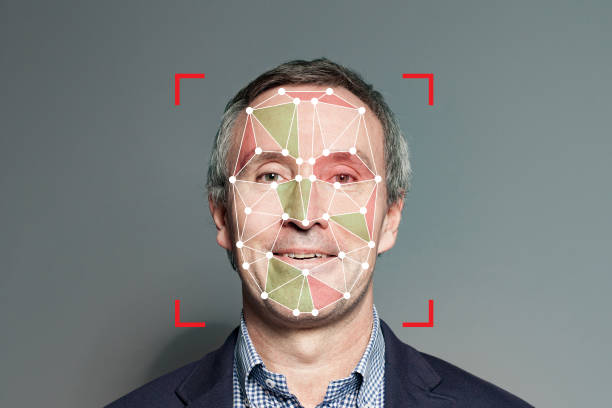
One approach involves analyzing a person’s face using computer vision and machine-learning models. The system can examine visual characteristics that may correlate with age and produce an estimated age or age range.
This type of technology generally does not need to determine a person’s exact age. In many applications, the important question is whether the individual appears to be above or below a particular threshold.
For example, a system may be designed around an age boundary rather than returning a precise number. This can help align the technology with the actual purpose of the verification process.
How the Verification Process Works
A typical facial age verification workflow can involve several stages.
First, the user provides a facial image or completes a camera-based interaction. The software detects the face and evaluates whether the image meets basic quality requirements.
The system then analyzes relevant facial characteristics using an AI model trained for age estimation. The resulting prediction can be compared with the required age threshold.
Depending on the implementation, additional security checks may be performed before an access decision is made.
The Role of Liveness Detection
A major consideration in facial verification is determining whether the submitted image represents a real person who is physically present.
This is where liveness detection can provide an additional layer of protection. Liveness technology is designed to distinguish a live facial presentation from attempts involving photographs, recorded videos, or other presentation methods.
Combining age estimation with liveness detection can make a verification workflow more resistant to simple attempts to manipulate the process. The exact techniques used vary between systems, but the broader objective is to ensure that the facial sample is suitable for the verification task.
Deepfakes Create a New Challenge
Advances in generative AI have made synthetic and manipulated facial media increasingly realistic. This creates additional challenges for systems that rely on facial imagery.
Deepfake detection can be used as another security signal by looking for characteristics associated with manipulated or AI-generated content. Depending on the implementation, analysis may consider visual artifacts, inconsistencies, facial behavior, or other indicators.
Deepfake detection does not replace age estimation. Instead, it can complement facial analysis by addressing a different question: whether the submitted media may have been artificially manipulated.
Combining Multiple Verification Signals
A robust age verification workflow does not necessarily have to depend on one technology. Different signals can be combined depending on the level of assurance required.
For example, a system could use facial age estimation alongside liveness checks, while another workflow could combine facial analysis with document verification.
The appropriate approach depends on the application’s risks, regulatory requirements, user experience goals, and privacy considerations.
Privacy and Data Minimization
Because facial images can contain sensitive personal information, privacy should be considered from the beginning of an age verification system’s design.
Organizations should determine what information actually needs to be collected and avoid retaining unnecessary biometric or personal data. Where possible, processing methods that reduce the transmission or storage of sensitive information can help limit privacy exposure.
Clear explanations can also help users understand why verification is required, what information is processed, and how it is handled.
Balancing Security With User Experience
Verification that is too complicated can frustrate users, particularly when accessing a service requires only a simple age threshold.
Systems therefore need to balance security with convenience. A process involving several steps may provide stronger assurance but can also introduce additional friction.
Facial age estimation can potentially provide a relatively quick interaction, but performance can vary depending on camera quality, lighting, facial position, and other environmental factors. Good interface design should account for these limitations and provide clear instructions when a verification attempt cannot be completed successfully.
Where Age Verification Software Can Be Used
Age verification technology can support a variety of online scenarios where age restrictions apply. Potential applications include:
- Age-restricted digital content
- Online services with minimum-age requirements
- Certain e-commerce experiences
- Gaming platforms
- Social and community platforms
- Digital onboarding processes
- Access-controlled websites and applications
The appropriate verification method can differ significantly depending on the consequences of an incorrect age decision.
The Future of AI-Based Age Verification
AI-based age verification is likely to continue developing as computer vision models become more capable. Future systems may combine facial age estimation with stronger liveness detection, deepfake detection, document analysis, and privacy-preserving processing techniques.
At the same time, accuracy and fairness will remain important considerations. Age estimation models can perform differently across individuals and conditions, so organizations need to evaluate their systems carefully and establish appropriate processes for uncertain results.
The long-term goal is not simply to make verification more automated. It is to create systems that can establish eligibility reliably while minimizing unnecessary data collection and maintaining a reasonable user experience.
Frequently Asked Questions
What is age verification software?
Age verification software uses automated methods to determine whether a user meets a specified age requirement. Depending on the system, it may use facial analysis, identity documents, or other verification signals.
Can facial analysis determine someone’s exact age?
Facial age estimation generally produces an estimated age or age range rather than proving an exact date of birth. Many systems are therefore designed around age thresholds rather than precise ages.
Why is liveness detection used?
Liveness detection can help determine whether a facial sample comes from a live person rather than a photograph, replayed video, or another presentation.
Does age verification store facial images?
That depends on how the particular system is designed. Privacy-conscious implementations can minimize collection and retention of facial information and process only what is necessary for the verification purpose.
Conclusion
Age verification software is becoming an important component of digital access control as more age-restricted services move online. Facial analysis can provide an efficient way to estimate whether a user meets an age threshold, while technologies such as liveness detection and deepfake detection can add additional security signals.
The most effective approach depends on the requirements of the specific application. By combining appropriate verification methods with privacy-conscious data practices and a user-friendly process, organizations can work toward secure age-based access without creating unnecessary friction for legitimate users.