



If you want to avoid keyword stuffing, keep things simple and natural:
- Use one main keyword and a few related terms
- Write for people first, not search engines
- Place keywords only where they fit naturally
- Use synonyms and variations instead of repeating the same word
- Focus on what the user is actually looking for and make your content easy to read
In short, if your content sounds natural and helpful, you are already on the right track.
What Is Keyword Stuffing in SEO
Keyword stuffing is the practice of adding the same keyword again and again in a piece of content just to try to rank higher in search results. Instead of helping the reader, it makes the content feel forced and unnatural.
In simple terms, it means overloading your content with repeated keywords to manipulate rankings. Today, search engines are smart enough to detect this and may lower your rankings because of it.
Example of Bad Keyword Usage
Here is a simple example of keyword stuffing:
“Best SEO tools are important because SEO tools help you find SEO tools that improve your SEO tools strategy.”
This kind of writing is hard to read and does not add real value.
A better version would be:
“Using the right SEO tools can help you improve your strategy, find better keywords, and track your website performance.”
Types of Keyword Stuffing
Visible Stuffing
This is when keywords are repeated many times in a way that readers can easily notice. It usually makes sentences sound awkward and repetitive.
Hidden Stuffing
This happens when keywords are added in a way that users cannot see, such as:
- White text on a white background
- Very small font sizes
- Keywords hidden in code or meta tags
Even though users may not notice it, search engines can detect it easily.
Why It Was Used Earlier
In the early days of SEO, search engines relied heavily on keyword frequency to rank pages. Because of this, many people tried to rank higher by repeating keywords as much as possible.
That approach no longer works. Modern search engines focus more on content quality, relevance, and user experience, making keyword stuffing outdated and risky.
Why Keyword Stuffing Is Bad for SEO
Keyword stuffing does more harm than good. It might look like a shortcut, but it usually leads to poor results in the long run.
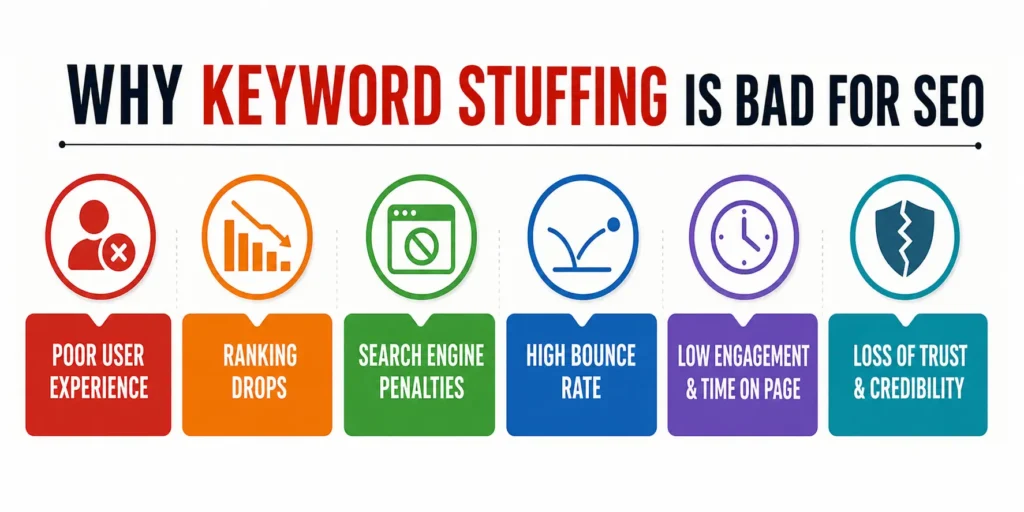
Poor User Experience
When the same keyword is repeated again and again, the content becomes hard to read. Visitors may leave your page quickly because it feels unnatural and confusing.
Google Penalties and Ranking Drops
Search engines like Google are designed to detect keyword stuffing. If your content looks manipulative, your rankings can drop or your page may not rank at all.
Lower Engagement and Readability
Stuffed content often:
- Sounds repetitive
- Lacks clarity
- Does not provide real value
This leads to lower time on page and higher bounce rates, which can hurt your SEO performance.
Loss of Trust
When users see content filled with repeated keywords, it feels spammy. This reduces trust and makes your brand look less reliable.
In short, search engines now prioritize helpful, user-focused content. Overusing keywords goes against this and can directly impact your visibility and credibility.
How to Avoid Keyword Stuffing (Step-by-Step)
Avoiding keyword stuffing is not about removing keywords completely. It is about using them in a natural and smart way so your content reads well and still ranks.
1. Focus on One Primary Keyword Per Page
Start with one clear keyword for each page. This keeps your content focused and avoids confusion.
- Choose one main keyword
- Add 1 to 5 related keywords
- Avoid trying to rank for too many keywords at once
This helps search engines understand your topic clearly.
2. Write for Humans First
Always think about the reader before search engines.
- Use natural language
- Keep sentences simple and clear
- Avoid forcing keywords into every line
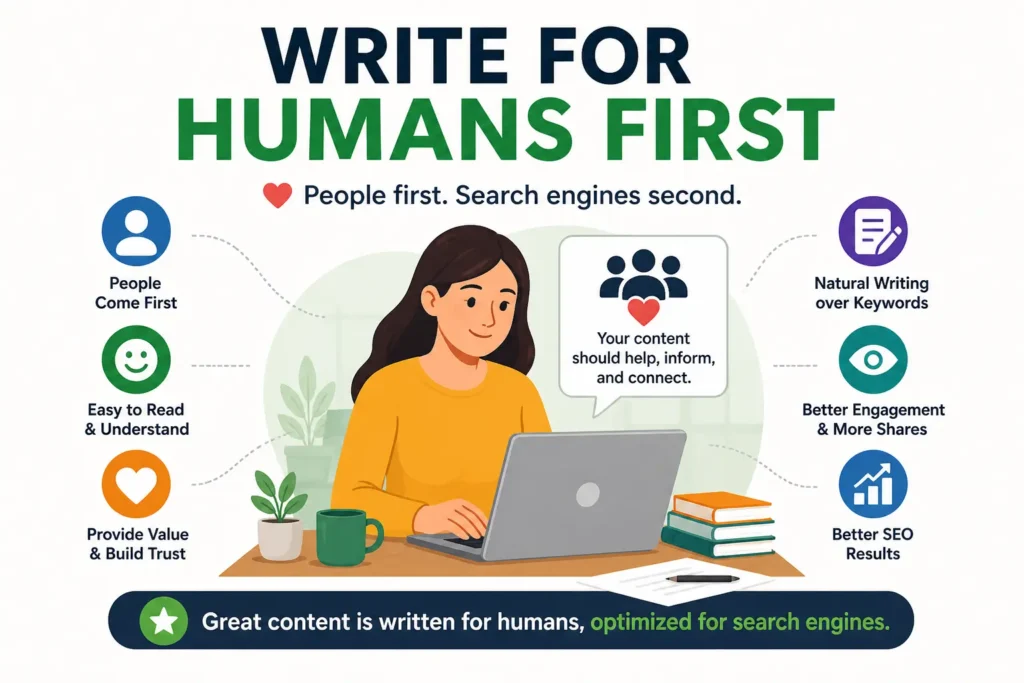
When your content feels easy to read, keyword stuffing becomes less likely.
3. Use Keywords Naturally
Your keyword should fit into the sentence without effort.
- Add keywords only where they make sense
- Avoid repeating the same phrase again and again
- Keep the content smooth and readable
If a keyword feels forced, it probably is.
4. Use Synonyms and Related Terms
Instead of repeating the same keyword, mix things up.
- Use variations of your keyword
- Add related terms and phrases
- Cover the topic from different angles
This improves context and keeps your content natural.
5. Follow Proper Keyword Placement
You do not need to place keywords everywhere. Just focus on key areas.
- Title tag
- Meta description
- H1 and subheadings
- First paragraph
- Image alt text
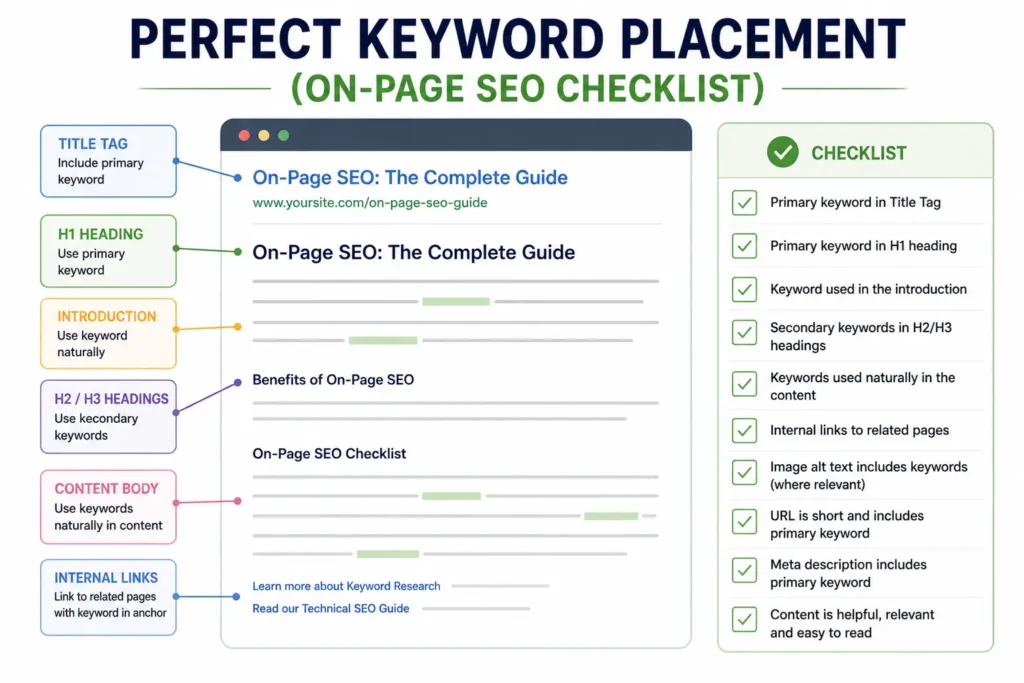
Use keywords in these spots where they matter most, instead of overusing them in the body.
6. Maintain Natural Keyword Usage
There is no perfect percentage to follow. Focus on balance.
- Avoid overusing the same keyword
- Write in a natural flow
- Read your content out loud to check if it sounds right
If it sounds repetitive, reduce keyword usage.
7. Use Long-Tail Keywords
Longer keywords help you write more naturally.
- They are more specific
- They match what users are searching for
- They reduce the need to repeat the same short keyword
This makes your content more useful and easier to rank.
8. Optimize for User Intent
Understand why someone is searching for your topic.
- Identify what the user wants to know
- Answer real questions clearly
- Organize your content in a simple way
When you focus on intent, keyword stuffing becomes unnecessary.
9. Use Content Optimization Tools
Tools can help you stay on track.
- SEO writing tools
- Keyword usage checkers
- Competitor analysis tools
Platforms like Semrush and Ahrefs can help you analyze keyword usage and improve your content quality.
10. Build Topic Clusters Instead of Repeating Keywords
Do not rely on one keyword again and again. Expand your content.
- Cover related subtopics
- Link to other relevant pages
- Build depth around your topic
This approach improves your authority and removes the need to repeat the same keyword too often.
If you follow these steps, your content will feel natural, useful, and optimized without risking keyword stuffing.
Common Keyword Stuffing Mistakes to Avoid
Even if you understand SEO basics, it’s easy to make small mistakes that lead to keyword stuffing. Here are the most common ones to watch out for:
Repeating the Same Keyword in Every Sentence
Using the same keyword again and again makes your content sound robotic. It hurts readability and pushes users away.
Adding Keywords Where They Don’t Fit
Forcing keywords into sentences where they don’t belong breaks the natural flow. If it feels awkward while reading, it’s a sign something is wrong.
Using Irrelevant Keywords
Adding keywords that are not related to your topic just to get more traffic can confuse both users and search engines. It also lowers content quality.
Stuffing Keywords in Alt Text and Meta Tags
Alt text and meta descriptions should describe the content clearly. Filling them with repeated keywords instead of meaningful descriptions can hurt SEO.
Adding Hidden Text
Some people try to hide keywords using tricks like invisible text or tiny fonts. Search engines like Google can easily detect this, and it can lead to penalties.
Avoiding these mistakes will help you keep your content clean, natural, and more effective for both users and search engines.
Best Practices for Natural SEO Writing
Writing for SEO does not mean forcing keywords into every line. The goal is to create content that feels natural, helpful, and easy to read.
Write Like You Speak
Use simple and clear language, just like a normal conversation. Avoid overcomplicating sentences or trying to sound overly technical. This makes your content easier to understand and more engaging.
Use Short Paragraphs
Break your content into small sections.
- Keep paragraphs 2 to 4 lines long
- Make it easy to scan
- Improve readability on mobile devices
Short paragraphs help users stay on your page longer.
Add Examples and Visuals
Examples make your content easier to understand, while visuals help explain ideas quickly.
- Use real-life examples
- Add images, charts, or screenshots
- Support your points with simple explanations
This improves both user experience and engagement.
Focus on Value, Not Keyword Count
Instead of worrying about how many times a keyword appears, focus on helping the reader.
- Answer questions clearly
- Provide useful information
- Solve real problems
Search engines like Google now prioritize helpful, user-focused content over keyword-heavy pages.
In short, modern SEO is about quality and user experience. If your content is useful and easy to read, it will perform better without relying on keyword stuffing.
Tools to Detect Keyword Stuffing
You do not have to guess whether your content is overusing keywords. The right tools can quickly show you if your writing feels natural or needs improvement.
SEO Writing Assistants
These tools analyze your content in real time and guide you while you write.
- Check keyword usage and readability
- Suggest improvements for better flow
- Help balance SEO and user experience
Popular tools like Semrush and Surfer SEO provide clear recommendations so you can avoid overusing keywords.
Keyword Density Tools
These tools show how often your keywords appear in your content.
- Track keyword frequency
- Highlight overused terms
- Help you maintain a natural balance
Tools like Ahrefs and Small SEO Tools can quickly scan your content and point out any keyword overload.
Content Audit Tools
These tools analyze your full page and compare it with top-ranking content.
- Identify keyword stuffing issues
- Check overall SEO performance
- Provide suggestions based on competitors
Platforms like Screaming Frog and Google Search Console help you understand how your content performs and where you need to improve.
Using a mix of these tools makes it easier to keep your content natural, readable, and optimized without crossing into keyword stuffing.
FAQs About Keyword Stuffing
What Is the Ideal Keyword Density
There is no fixed number you need to follow. Instead of focusing on percentages, aim for content that feels natural and easy to read. If your keyword usage sounds forced, it is likely too much.
Can Keyword Stuffing Hurt Rankings
Yes, it can. Search engines like Google can detect overuse of keywords. This may lead to lower rankings or even penalties.
Is Keyword Stuffing Still Used
No, it is outdated and risky. Modern SEO focuses on helpful content and user experience, not repeating the same keyword multiple times.
How Do I Fix Keyword Stuffing
You can fix it by improving how your content reads.
- Remove repeated keywords
- Replace them with synonyms or related terms
- Rewrite sentences to make them smoother
- Focus on clarity and readability
Once your content sounds natural, you are on the right track.
Conclusion
Avoiding keyword stuffing is simple when you keep your focus clear.
- Put users first and write to help them
- Use keywords naturally instead of forcing them
- Keep a balance between SEO and readability
- Build content around complete topics, not just one keyword
Search engines like Google now reward content that is helpful, clear, and easy to read. If your content solves real problems and feels natural, you will not need to worry about keyword stuffing at all.