

Creating a finished video involves many steps that happen long before the final export. While viewers only see the completed version, editors spend hours reviewing footage, selecting clips, organizing timelines, improving audio, adding effects, and preparing content for different platforms.
For professional editors and creators, the challenge is not only making a video look good. It is managing the entire production process efficiently while maintaining creative quality.
Artificial intelligence is changing this workflow by supporting creators throughout different stages of editing. From understanding raw footage to creating final versions, AI is helping reduce repetitive work and making the production process faster.
Rather than replacing editors, AI is becoming a support system that helps creators spend more time on storytelling and less time handling repetitive technical tasks.
Why Is Video Editing From Raw Footage So Time-Consuming?
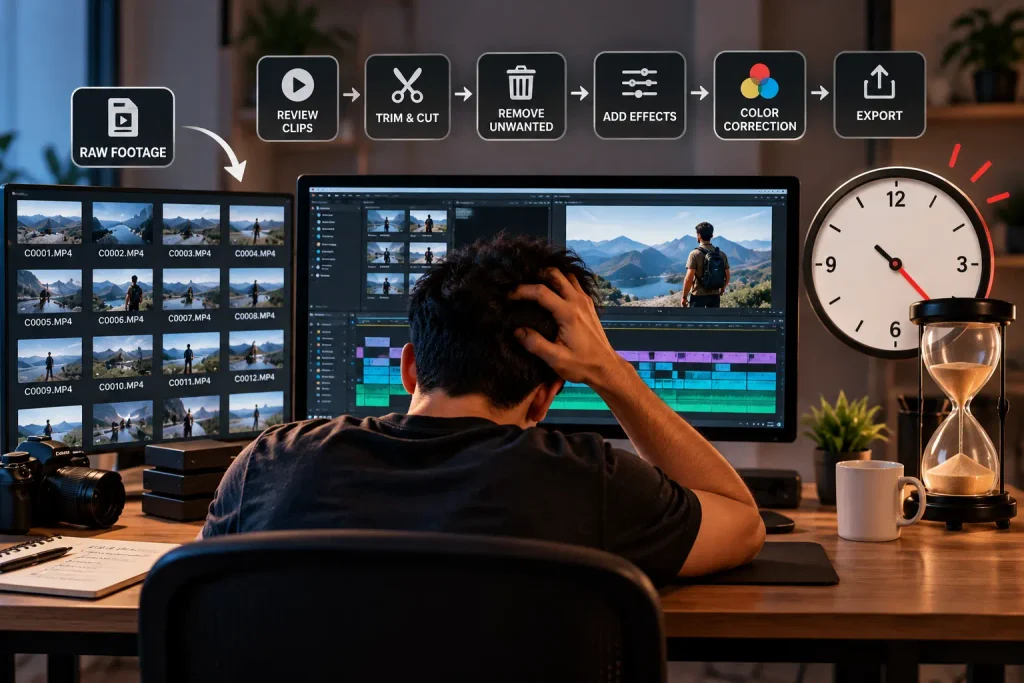
Raw footage is rarely ready to use immediately.
A single project may include multiple takes, different camera angles, background shots, audio recordings, and additional assets. Before editing can begin, creators need to review everything and determine what belongs in the final story.
This preparation stage often includes:
- Sorting footage
- Reviewing recordings
- Selecting the best takes
- Removing unwanted sections
- Organizing project files
For large projects such as documentaries, interviews, podcasts, and marketing campaigns, this process can take significant time.
AI is helping simplify these early stages by allowing editors to understand and organize content more efficiently.
How AI Helps Organize and Understand Raw Footage
One of the biggest advantages of AI in video editing is its ability to analyze large amounts of content quickly.
Instead of manually searching through hours of recordings, creators can use AI-powered workflows to identify useful information within footage.
AI can help with:
- Recognizing scenes and objects
- Identifying speakers
- Finding specific moments
- Organizing clips based on content
- Detecting repeated sections
This makes it easier for editors to locate the footage they need and spend more time refining the creative direction of the project.
For example, an editor working on a long interview can quickly find sections where specific topics are discussed instead of manually reviewing the entire recording.
Creating the First Cut Faster With AI Assistance
The first cut is one of the most important stages of video production. It creates the basic structure of the final video and determines how the story begins to take shape.
Traditionally, editors spend significant time deciding which clips to include, arranging scenes, and removing unnecessary content.
AI can assist by helping create an initial structure from raw footage. It can identify strong moments, remove repetitive sections, and help organize clips into a more usable sequence.
This does not mean the final edit is completed automatically. Instead, AI helps create a stronger starting point that editors can review and refine.
Tools like invideo editor follow this approach by allowing creators to upload footage, provide instructions about the type of edit they want, and use AI assistance to review content and create an editable timeline. Editors can then make manual adjustments, change pacing, and shape the final story according to their creative goals.
How AI Improves Editing and Timeline Management
Once the initial structure is created, editors spend time refining the timeline.
This includes adjusting pacing, improving transitions, selecting better shots, and ensuring every scene contributes to the overall message.
AI can support this stage by helping with:
- Finding alternative clips
- Detecting unnecessary sections
- Suggesting improvements
- Creating different versions
- Adjusting content for different platforms
For creators producing frequent content, these improvements can significantly reduce the time required for repetitive editing tasks.
How AI Helps Improve Audio and Voice Workflows
Audio quality has a major impact on how professional a video feels.
Even strong visuals can lose their impact if dialogue is unclear, background noise is distracting, or audio levels are inconsistent.
AI-powered audio tools are helping editors improve sound by assisting with:
- Noise reduction
- Dialogue cleanup
- Audio balancing
- Voice enhancement
- Sound organization
Another area where AI is improving video workflows is localization. Creators and businesses increasingly need content that can reach audiences across different languages.
With AI-powered dubbing tools, creators can adapt videos for new audiences by translating spoken content into different languages while maintaining a more natural viewing experience. This can be especially useful for educational videos, product demonstrations, marketing campaigns, and global content distribution.
How AI Helps Create Multiple Versions of the Same Video
Modern video production rarely ends with one final version.
A marketing campaign may require different edits for social media platforms, advertisements, websites, and regional audiences.
Creating these variations manually can take considerable time.
AI helps make this process more efficient by supporting:
- Short-form versions from longer videos
- Different aspect ratios
- Captioned versions
- Platform-specific edits
- Localized content versions
This allows creators to maximize the value of their existing footage without rebuilding every video from scratch.
AI and the Final Editing Stage
The final stage of video editing involves polishing the content before publishing.
Editors may focus on:
- Color adjustments
- Visual consistency
- Final audio checks
- Captions
- Export settings
AI can assist with some of these finishing tasks, helping creators improve quality and prepare content faster.
For example, creators working with older recordings or lower-quality footage can use AI-powered enhancement tools to improve clarity and make existing content more suitable for modern platforms.
However, final creative decisions still require human judgment. Editors decide the visual style, emotional tone, and overall direction of the finished video.
The Role of Human Creativity in AI-Assisted Editing
While AI can improve efficiency, storytelling remains a human skill.
A good editor understands:
- Which moments create emotion
- How scenes should flow
- What the audience should feel
- How visuals support the message
AI can help handle repetitive work, but it does not replace creative judgment.
The strongest workflows combine AI assistance with human decision-making, allowing editors to work faster while maintaining their creative vision.
How Professional Teams Are Using AI in Video Production
Different types of creators are using AI to improve their workflows.
Content Creators
Creators use AI to turn longer recordings into shorter videos, improve editing speed, and maintain consistent publishing schedules.
Marketing Teams
Brands use AI to create campaign variations, adapt content for different platforms, and produce more video assets efficiently.
Production Teams
Professional teams use AI to organize large footage libraries and reduce time spent on preparation tasks.
Educational Organizations
AI helps create training materials, tutorials, and multilingual learning content more efficiently.
The Future of AI in Video Editing
AI is becoming a valuable part of modern video production workflows. As technology improves, creators will have more support throughout the entire editing process, from organizing footage to producing final versions.
The future of editing will not be about replacing editors. Instead, it will focus on helping creators work more efficiently and focus their attention on the creative decisions that make videos meaningful.
Final Thoughts
The journey from raw footage to final cut involves many complex steps, but AI is making each stage more efficient.
By helping with footage organization, first cuts, timeline editing, audio improvements, localization, and final refinements, AI allows creators to spend less time on repetitive tasks and more time on storytelling.
As AI continues to evolve, video editing workflows will become faster, more flexible, and more accessible while keeping creativity at the center of the process.