


Building a keyword list is one of the first and most important steps in SEO. It helps you understand what people are searching for online and allows you to create content that matches their needs. When you target the right keywords, your website has a better chance of appearing in search engine results and attracting relevant visitors.
A keyword list is not just a collection of random search terms. It includes different types of keywords such as primary keywords, long-tail keywords, informational keywords, and commercial keywords that support your overall SEO strategy. A well-organized keyword list helps improve content planning, search visibility, organic traffic, and conversions.
Whether you run a blog, ecommerce store, SaaS website, agency, or local business site, learning how to build a keyword list can help you create more targeted content and grow your website over time. In this guide, you will learn how to find SEO keywords, understand search intent, organize keyword clusters, analyze competitors, and build a strong keyword strategy for long-term SEO success.
What Is a Keyword List?

A keyword list is a structured collection of search queries that people type into search engines like Google, Bing, and Yahoo. These keywords are used to optimize website pages and create SEO-focused content.
Keyword lists help businesses understand:
- What users are searching for
- Which topics are popular
- What type of content people need
- How competitive a keyword is
- Which keywords can drive conversions
For example, a website focused on SEO tools may target keywords like:
- keyword research tools
- backlink checker
- SEO audit software
- rank tracking tools
- free keyword finder
A properly organized keyword list becomes the foundation of:
- Content marketing
- Blog strategy
- Landing page optimization
- Ecommerce SEO
- Internal linking
- Topic clustering
Why Building a Keyword List Is Important
A keyword list is essential because it helps search engines understand your website content while helping users discover your pages.
Benefits of Building a Keyword List
1. Better Search Engine Rankings
Targeting relevant keywords improves your chances of ranking higher in search results.
2. Increased Organic Traffic
Ranking for keywords people actively search for can bring consistent traffic to your website.
3. Improved Content Planning
A keyword list helps organize your content strategy around topics users care about.
4. Better Understanding of User Intent
Keyword research helps identify whether users want information, products, services, or comparisons.
5. Helps Build Topical Authority
Covering related keyword clusters strengthens your expertise in a niche.
6. Supports Conversion Optimization
Targeting commercial and transactional keywords can improve lead generation and sales.
Steps to Build a Keyword List for SEO
A well-structured keyword list improves content planning, increases search visibility, and helps websites rank for relevant topics in search engines.The process of building a keyword list involves finding relevant topics, researching search terms, analyzing user intent, organizing keywords into groups, and continuously updating your strategy.
Below are the essential steps to create a strong SEO keyword list that supports long-term organic growth.
Step 1: Identify Your Main SEO Topics
Before researching keywords, you need to identify the main topics related to your website, business, products, or services. These broad subjects are often called “core topics” or “pillar topics” because they form the foundation of your SEO strategy and content structure.
Choosing the right core topics helps search engines understand your website niche while helping users find content relevant to their needs. Your main topics should focus on what your target audience searches for and what your business wants to rank for in search results.
Example Core Topics for Different Niches
SEO Website
- keyword research
- technical SEO
- backlinks
- local SEO
- content marketing
Ecommerce Website
- product SEO
- category pages
- shopping keywords
- ecommerce analytics
SaaS Website
- CRM software
- project management tools
- workflow automation
- AI software
Health Website
- fitness tips
- healthy diet
- weight loss
- workout plans
How to Choose the Right SEO Topics
Your core topics should align with:
- Business goals
- Audience interests
- Industry relevance
- Search demand
- Competitor landscape
Benefits of Identifying Main Topics
- Builds topical authority
- Improves content organization
- Makes keyword research easier
- Supports pillar page strategy
- Helps create content clusters
These broad topics become the starting point for deeper keyword research and content planning.
Step 2: Create Seed Keywords
After identifying your main SEO topics, the next step is creating seed keywords. Seed keywords are simple and broad search terms related to your niche that help generate additional keyword ideas.
These keywords act as the foundation of your keyword research process because they help SEO tools and search engines provide related keyword suggestions, search variations, and long-tail keyword opportunities.
Example Seed Keywords for an SEO Website
- SEO tools
- keyword research
- backlinks
- technical SEO
- SEO audit
Ways to Find Seed Keywords
1. Brainstorming: Think about: your services, products, customer problems, industry terms
2. Google Autocomplete: Type a keyword into Google and review suggested searches.
3. Related Searches: Check the related sor: blogs, headings, category pages, FAQs
5. Forums and Communities: Communities often reveal real audience questions and pain points.
Useful platforms include:
- Quora
- Stack Overflow
Benefits of Seed Keywords
- Expands keyword ideas
- Reveals audience search behavior
- Helps discover niche topics
- Supports long-tail keyword research
- Improves content relevance
Strong seed keywords make keyword research more targeted and effective.
Step 3: Use Keyword Research Tools
Keyword research tools help you discover search terms, analyze competition, estimate traffic potential, and identify ranking opportunities. These tools provide valuable SEO data that helps businesses choose keywords with the best balance of relevance, search volume, and competition.
Using multiple keyword tools can improve research accuracy because each tool collects and presents data differently.
For teams building their own dashboards or automating research at scale, pulling search volume, difficulty, and related terms straight from a keyword API removes the need to manually export data from separate platforms.
Popular Keyword Research Tools
- Google Keyword planner
- Ahrefs
- Semrush
- Ubersuggest
- MOZ Pro
Important Keyword Metrics to Analyze
1. Search Volume: Shows how many times users search for a keyword each month.
2. Keyword Difficulty: Indicates how competitive a keyword is.
3. CPC (Cost Per Click): Helps identify commercial value and advertiser demand.
4. Traffic Potential: Estimates how much traffic a keyword can generate.
5. SERP Features: Shows whether Google displays:
- featured snippets
- videos
- local packs
- image results
- People Also Ask sections
Why Keyword Tools Matter
- Finds hidden keyword opportunities
- Identifies low-competition keywords
- Tracks keyword trends
- Helps estimate ranking difficulty
- Supports SEO content planning
Keyword research tools help turn basic ideas into a complete SEO keyword strategy.
Step 4: Understand Search Intent
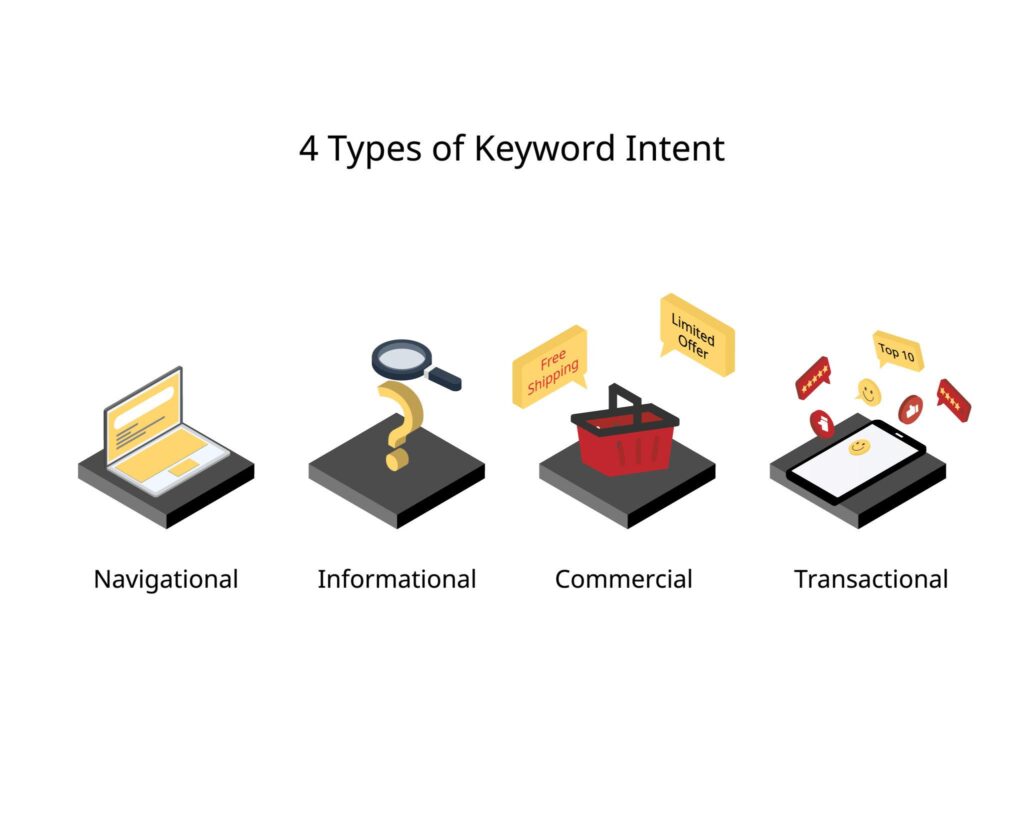
Search intent refers to the reason behind a user’s search query. Understanding search intent is important because Google ranks pages that best satisfy what users are looking for.
Even if a keyword has high search volume, it may not perform well if your content does not match user intent. That is why understanding intent is a critical part of building a successful keyword list.
Types of Search Intent
1. Informational Intent: Users want information, guides, or answers.
Examples:
- what is keyword research
- how to build a keyword list
2. Navigational Intent: Users want to visit a specific website or platform.
Examples:
- Ahrefs login
- Google Search Console
3. Commercial Intent: Users are comparing products or researching before buying.
Examples:
- best keyword research tools
- top SEO software
4. Transactional Intent: Users are ready to purchase or take action.
Examples:
- buy SEO software
- SEO agency pricing
Benefits of Search Intent Analysis
- Improves content relevance
- Increases user engagement
- Reduces bounce rate
- Helps rank higher in Google
- Improves conversion rates
Matching content with user intent helps search engines trust your pages more.
Step 5: Find Long-Tail Keywords

Long-tail keywords are longer and more specific search phrases that usually have lower competition and higher conversion potential. These keywords are extremely valuable for new websites and niche businesses because they are often easier to rank for in search engines.
Instead of targeting broad terms, long-tail keywords focus on very specific user searches.
Examples of Long-Tail Keywords
1. Short Keyword : SEO tools
2. Long-Tail Keyword: best SEO tools for beginners
Benefits of Long-Tail Keywords
1. Lower Competition: Long-tail keywords are generally easier to rank for.
2. Better Conversion Rates: Specific searches often indicate stronger buying intent.
3. Improved Content Relevance: Long-tail keywords closely match user needs.
4. Better Voice Search Optimization: Voice searches are more conversational and longer.
Best Uses for Long-Tail Keywords
- New websites
- Small businesses
- Local SEO campaigns
- Blog content
- Ecommerce product pages
Long-tail keywords can drive highly targeted traffic that converts better.
Step 6: Analyze Competitor Keywords

Competitor analysis helps discover keywords already driving traffic to similar websites.
What to Analyze
- Top-ranking pages
- Blog topics
- Keyword gaps
- Backlinks
- Content structure
- Internal linking
SEO tools like: Ahrefs , SEMrush allow you to identify:
- competitor rankings
- traffic sources
- ranking keywords
- backlink opportunities
Competitor analysis helps uncover content opportunities faster.
Step 6: Analyze Competitor Keywords
Competitor keyword analysis helps you discover which keywords are already driving traffic to other websites in your industry. Instead of starting from scratch, competitor research allows you to identify proven keyword opportunities faster.
Studying competitor strategies also helps uncover content gaps and ranking opportunities your website can target.
What to Analyze in Competitor Websites
- Top-ranking pages
- Blog topics
- Keyword gaps
- Backlinks
- Content structure
- Internal linking strategy
Useful Competitor Analysis Tools
- Ahrefs
- Semrush
These tools help identify:
- ranking keywords
- traffic sources
- backlink opportunities
- high-performing pages
Benefits of Competitor Research
- Finds keyword opportunities faster
- Reveals ranking strategies
- Identifies content gaps
- Improves content quality
- Helps build stronger SEO campaigns
Competitor analysis is one of the fastest ways to improve keyword research accuracy. Teams that want raw, large-scale competitor and SERP data beyond what off-the-shelf tools expose often pull it directly with the best web scraping API, which handles proxies, blocks, and JavaScript rendering so the page and ranking data feeding your keyword research stays complete and current.
Step 7: Group Keywords Into Clusters

Keyword clustering means organizing similar keywords into groups based on search intent and topic relevance. Instead of creating separate pages for every keyword variation, clustering allows you to target multiple related keywords within a single page.
Search engines now prioritize topic relevance and semantic relationships rather than exact-match keyword usage.
Example Keyword Cluster
Main Topic: Keyword research
Supporting Keywords
- keyword research tools
- free keyword finder
- keyword difficulty checker
- SEO keyword strategy
- keyword clustering tools
Benefits of Keyword Clustering
- Improves topical authority
- Strengthens internal linking
- Prevents keyword cannibalization
- Supports pillar page creation
- Improves semantic SEO
Keyword clusters help websites build stronger content structures and better ranking potential.
Step 8: Prioritize Keywords
Not every keyword should be targeted immediately. Prioritizing keywords helps focus your SEO efforts on terms that provide the best balance of traffic potential, competition, and business value.
A smart keyword strategy combines both easy-to-rank keywords and competitive high-traffic terms.
Factors to Consider When Prioritizing Keywords
1. Relevance: Choose keywords closely related to your business and audience.
2. Search Volume: Higher search volume can bring more organic traffic.
3. Keyword Difficulty: Lower difficulty keywords are easier to rank for.
4. Conversion Potential: Commercial keywords often generate more revenue.
5. Search Intent: Ensure keywords match your content goals.
Types of Keywords to Balance
- Low-competition keywords
- High-volume keywords
- Commercial keywords
- Informational keywords
- Local SEO keywords
Prioritizing keywords helps maximize SEO results with limited resources.
Step 9: Organize Your Keyword List
Organizing keywords properly helps improve workflow, content planning, and SEO management. A structured keyword list makes it easier to assign keywords to pages, track rankings, and avoid duplicate targeting.
Many SEO professionals use spreadsheets or SEO software to manage keyword lists efficiently.
Recommended Keyword Columns
| Keyword | Search Intent | Volume | Difficulty | Target Page |
| keyword research tools | Commercial | High | Medium | Blog |
| how to build a keyword list | Informational | Medium | Low | Guide |
| SEO audit checklist | Informational | Medium | Medium | Pillar Page |
Recommended Keyword Categories
- Primary keywords
- Secondary keywords
- Transactional keywords
- Informational keywords
- Product keywords
- Question keywords
- Local SEO keywords
Benefits of Organizing Keywords
- Improves content planning
- Helps avoid keyword cannibalization
- Simplifies SEO tracking
- Improves internal linking
- Supports scalable SEO growth
Proper keyword organization creates a more efficient SEO workflow.
Step 10: Update Your Keyword List Regularly
SEO constantly changes due to algorithm updates, industry trends, and changing user behavior. A keyword strategy that works today may become outdated over time, which is why keyword lists should be updated regularly.
Continuous optimization helps maintain rankings and discover new opportunities.
Ways to Update Your Keyword List
- Monitor keyword rankings
- Analyze Google Search Console data
- Track new industry trends
- Refresh outdated content
- Add seasonal keywords
- Study competitor updates
Why Updating Keywords Matters
- Keeps content relevant
- Improves long-term rankings
- Helps adapt to algorithm updates
- Finds new traffic opportunities
- Supports ongoing SEO growth
SEO is a long-term strategy, and regularly updating your keyword list helps maintain consistent organic performance.
Best Practices for Building an SEO Keyword List
1. Focus on User Intent: Always choose keywords based on what users actually want to find, whether they are looking for information, products, services, or solutions to a problem.
2. Target Topic Clusters: Group related keywords together to create connected content that improves topical authority and helps search engines understand your website better.
3. Use Multiple Research Tools: Using different keyword research tools provides more accurate data, additional keyword ideas, and better insights into competition and search trends.
4. Prioritize Long-Tail Keywords: Long-tail keywords are more specific, easier to rank for, and often attract users with stronger search intent and higher conversion potential.
5. Track Keyword Performance: Regularly monitor keyword rankings, traffic, and engagement metrics to identify what is working and where improvements are needed.
6. Build High-Quality Content: Creating useful, informative, and well-structured content helps improve user experience and increases your chances of ranking higher in search engines.
7. Analyze Competitor Keywords: Studying competitor websites can help you discover high-performing keywords, content gaps, and new SEO opportunities in your niche.
8. Keep Updating Your Keyword List: Search trends and user behavior change over time, so regularly updating your keyword list helps maintain SEO relevance and visibility.
9. Balance Low and High Competition Keywords: Combining low-competition keywords with high-volume keywords creates a balanced SEO strategy for both short-term and long-term growth.
10. Optimize Keywords Naturally: Use keywords naturally within headings, paragraphs, titles, and meta descriptions instead of forcing them unnaturally into the content.
Conclusion
Building a keyword list for SEO is an essential part of creating a successful content and marketing strategy. A well-structured keyword list helps businesses understand audience search behavior, create targeted content, improve search rankings, and increase organic traffic.
By identifying core topics, researching seed keywords, analyzing search intent, using keyword research tools, and organizing keywords into clusters, you can build a strong SEO foundation for long-term growth. Regularly updating your keyword list and focusing on user intent can also help your website stay competitive in changing search engine results.
Frequently Asked Questions (FAQs)
1. What is a keyword list in SEO?
A keyword list is a collection of search terms used to optimize website content and improve rankings in search engines like Google.
2. Why is keyword research important for SEO?
Keyword research helps identify what users are searching for, allowing businesses to create relevant content that attracts targeted organic traffic.
3. What are long-tail keywords?
Long-tail keywords are longer and more specific search phrases that usually have lower competition and higher conversion potential.
4. Which tools are best for keyword research?
Popular keyword research tools include Ahrefs, SEMrush, Ubersuggest.
5. How often should I update my keyword list?
You should regularly update your keyword list to keep up with search trends, algorithm updates, and changing user behavior.
6. What is search intent in SEO?
Search intent refers to the reason behind a user’s search query, such as finding information, comparing products, or making a purchase.
7. What is keyword clustering?
Keyword clustering is the process of grouping related keywords together to improve topical authority and content organization.
8. How many keywordocus on one primary keyword along with several related secondary and semantic keywords for better optimization.