

If you’ve started investing in SEO, you’ve probably noticed something confusing: one agency offers backlinks for $50 each, while another quotes $800 or more for a single link. So, what’s the real cost of link building, and more importantly, what should you actually pay?
The answer isn’t as straightforward as comparing price tags. High-quality link building isn’t a commodity—it’s a strategic process that combines research, content creation, outreach, relationship building, and editorial placements. The value of a backlink depends on factors like relevance, authority, traffic, and the credibility of the linking website.
Choosing the cheapest option may save money upfront, but it often results in low-quality links that deliver little SEO value or worse, violate Google’s guidelines. On the other hand, paying premium prices doesn’t automatically guarantee better results. The key is understanding what you’re paying for and how to evaluate the return on your investment.
In this guide, we’ll break down the different link building pricing models, explain the factors that influence costs, compare affordable and premium services, and help you determine what a fair investment looks like for your business.
What Is Link Building Pricing?
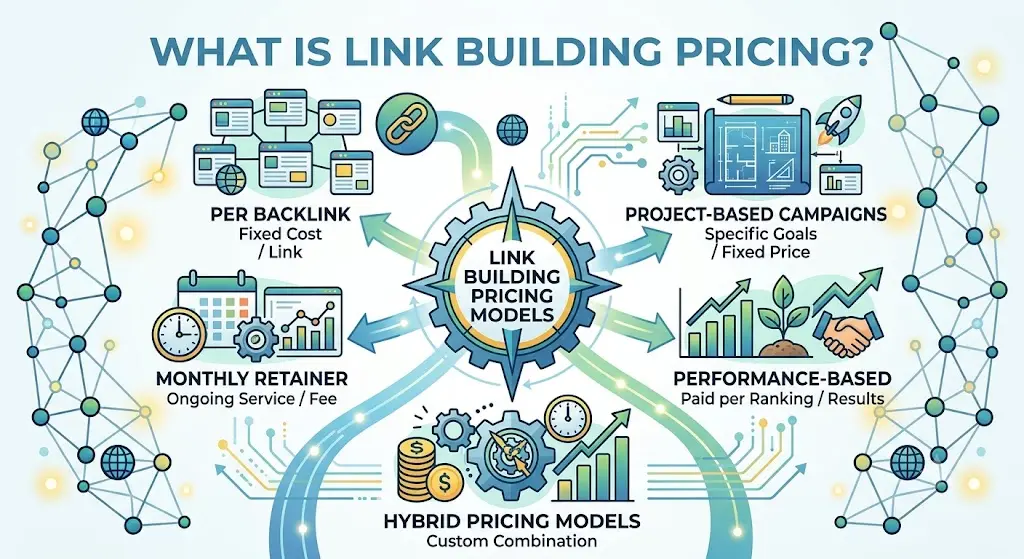
Link building pricing refers to the cost of acquiring high-quality backlinks through ethical SEO strategies such as outreach, guest posting, digital PR, content marketing, and relationship building.
Agencies may charge in several ways, including:
- Per backlink
- Monthly retainers
- Project-based campaigns
- Performance-based pricing
- Hybrid pricing models
The right pricing structure depends on your SEO goals, budget, industry, and the scale of your campaign.
How Much Should You Pay for Link Building?
A fair price for link building depends on the quality, relevance, and authority of the backlinks—not simply the number of links. Ethical link building typically costs more because it involves manual outreach, quality content creation, and genuine editorial placements that provide long-term SEO value.
Why Link Building Costs Vary So Much
Many business owners wonder why one backlink costs significantly more than another.
The answer lies in the amount of work involved.
A premium backlink often requires:
- Prospect research
- Website evaluation
- Personalized outreach
- Relationship building
- High-quality content writing
- Editorial review
- Follow-up communication
- Performance reporting
In contrast, cheap backlinks are often generated through automated tools, link farms, private blog networks (PBNs), or low-quality websites that provide little long-term benefit.
You’re not just paying for a hyperlink—you’re investing in expertise, credibility, and sustainable SEO growth.
Common Link Building Pricing Models
1. Per-Link Pricing
One of the most common pricing models.
You pay a fixed amount for each successfully acquired backlink.
Best For
- Small businesses
- One-time campaigns
- Targeted backlink acquisition
Pros
- Easy to budget
- Transparent pricing
- Flexible campaign size
Cons
- May encourage quantity over quality if the provider isn’t reputable
- Doesn’t always include strategy or ongoing optimization
2. Monthly Retainer
Many agencies offer ongoing link building services through a monthly retainer.
This usually includes:
- Outreach
- Content creation
- Reporting
- Strategy
- Relationship building
- Link acquisition
Best For
Businesses focused on long-term SEO growth.
Pros
- Consistent backlink acquisition
- Continuous strategy refinement
- Better long-term results
3. Project-Based Pricing
Ideal for specific SEO initiatives such as:
- Product launches
- Website migrations
- New service pages
- Seasonal campaigns
You pay for a defined scope of work rather than ongoing services.
4. Performance-Based Pricing
Some providers charge only when they successfully secure backlinks.
While this sounds attractive, it’s important to understand how “success” is measured. Ensure quality standards are clearly defined to avoid paying for low-value placements.
What Factors Affect Link Building Pricing?
Website Authority
Backlinks from well-established, trusted websites generally require more effort to secure.
These publishers often have stricter editorial standards and larger audiences.
Industry Competition
Highly competitive industries such as:
- Finance
- SaaS
- Healthcare
- Legal
- Insurance
Typically require more outreach and higher-quality content, increasing campaign costs.
Content Creation
High-quality outreach often includes original content such as:
- Guest articles
- Research
- Case studies
- Data-driven reports
- Infographics
Content production significantly influences pricing.
Outreach Complexity
Manual outreach involves:
- Prospect identification
- Personalized emails
- Follow-ups
- Publisher negotiations
Relationship-based outreach takes time but produces higher-quality backlinks.
Link Relevance
Relevant backlinks from niche-specific websites generally provide more SEO value than generic links.
Finding highly relevant publishers often requires additional research.
Editorial Standards
Premium publications have strict publishing guidelines, requiring better content and more extensive review processes.
Cheap vs Premium Link Building
Cheap Link Building
Often includes:
- Automated outreach
- Low-quality blogs
- Spam directories
- Link exchanges
- Irrelevant websites
- Generic content
Potential risks:
- Weak SEO value
- Poor user experience
- Increased spam signals
- Manual penalties
Premium Link Building
Focuses on:
- Relevant websites
- Editorial placements
- Manual outreach
- High-quality content
- Relationship building
- Long-term authority
Although the initial investment is higher, premium backlinks tend to deliver stronger and more sustainable SEO results.
What Are You Actually Paying For?
Many people assume they’re paying solely for backlinks.
In reality, a professional campaign includes multiple services.
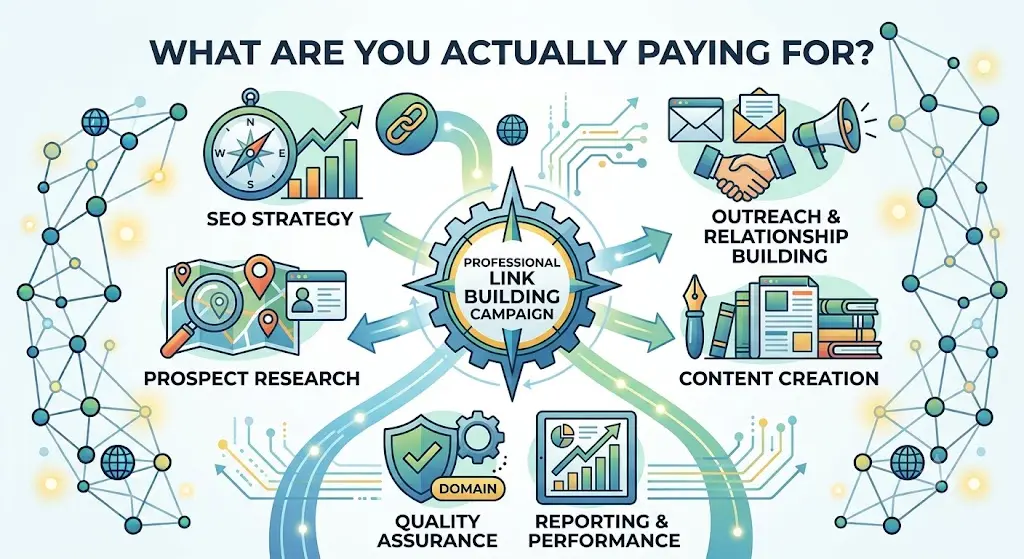
These often include:
SEO Strategy
Identifying pages that need authority and selecting the right backlink opportunities.
Prospect Research
Finding websites that match your industry, audience, and content.
Outreach
Building relationships with publishers and editors through personalized communication.
Content Creation
Writing valuable articles that meet editorial standards and genuinely benefit readers.
Quality Assurance
Reviewing placements for relevance, authority, and SEO value before publication.
Reporting
Tracking acquired links, referral traffic, and campaign performance.
How to Evaluate Link Building ROI
Price alone doesn’t determine value.
Instead, evaluate whether your campaign contributes to meaningful business outcomes.
Monitor metrics such as:
- Organic traffic growth
- Keyword ranking improvements
- Referring domains
- Referral traffic
- Lead generation
- Sales
- Brand visibility
- Domain authority trends
A campaign with fewer high-quality backlinks may outperform one with dozens of low-value links.
Questions to Ask Before Paying for Link Building
Before signing a contract, ask:
How do you acquire backlinks?
Look for ethical methods such as:
- Manual outreach
- Guest posting
- Digital PR
- Resource page outreach
Avoid providers relying on automated submissions or private blog networks.
Do you create original content?
Quality content increases acceptance rates and improves the value of backlinks.
Can I review target websites?
Reputable agencies are transparent about the types of websites they target.
How do you measure success?
Success should be based on:
- Relevant placements
- Traffic growth
- Rankings
- Authority
- Business impact
—not simply the number of backlinks.
Red Flags That Signal Poor Value
Guaranteed Rankings
No agency can promise specific Google rankings.
SEO depends on many factors beyond backlinks.
Thousands of Cheap Links
Large-volume packages often rely on spammy techniques.
Quality always outweighs quantity.
No Reporting
If you don’t know where your backlinks come from, you can’t evaluate their value.
Private Blog Networks (PBNs)
While PBNs may produce short-term gains, they violate Google’s guidelines and carry significant risks.
No Focus on Relevance
Backlinks from unrelated industries provide limited value compared to contextually relevant placements.
How AI Search Is Influencing Link Building Value
Traditional SEO emphasized backlink quantity and authority.
AI-powered search engines now evaluate broader signals, including:
- Brand mentions
- Topic relevance
- Entity relationships
- Expertise
- Trustworthiness
- Content quality
This means earning backlinks from respected, contextually relevant publications is becoming even more valuable.
Agencies that understand semantic SEO and topical authority are better positioned to help businesses succeed in AI-driven search.
Should Small Businesses Invest in Link Building?
Absolutely.
Small businesses often compete against larger brands with stronger domain authority.
Strategic link building helps level the playing field by improving:
- Organic visibility
- Local SEO
- Brand awareness
- Referral traffic
- Industry credibility
Rather than chasing hundreds of links, small businesses should focus on earning a consistent stream of relevant, high-quality backlinks.
Tips for Maximizing Your Link Building Budget
Prioritize Quality
One editorial backlink from a respected industry publication can outperform dozens of low-quality links.
Build Linkable Assets
Create content people naturally want to reference, such as:
- Original research
- Free tools
- Templates
- Comprehensive guides
- Industry statistics
Combine SEO Strategies
Link building works best when combined with:
- Technical SEO
- Content marketing
- Internal linking
- On-page optimization
- Digital PR
Monitor Performance
Regularly review campaign metrics to ensure your investment is delivering measurable results.
Link Building Pricing Checklist
Before investing, confirm that your provider:
✅ Uses ethical, white-hat methods
✅ Performs manual outreach
✅ Targets relevant websites
✅ Creates original content
✅ Provides transparent reporting
✅ Focuses on quality over quantity
✅ Avoids PBNs and spam tactics
✅ Aligns link building with your SEO strategy
If the answer is yes, you’re far more likely to achieve sustainable results.
Common Link Building Pricing Myths
Myth 1: The Cheapest Service Offers the Best Value
Reality: Low-cost services often rely on shortcuts that provide little SEO benefit and may introduce unnecessary risk.
Myth 2: More Backlinks Always Mean Better Rankings
Reality: Search engines prioritize relevance, authority, and quality over sheer quantity.
Myth 3: High Prices Always Guarantee Better Results
Reality: Premium pricing should reflect expertise, transparency, and quality—not just branding.
Myth 4: Link Building Is a One-Time Investment
Reality: Earning and maintaining authority requires consistent effort over time.
Frequently Asked Questions
How much should link building cost?
The cost varies depending on the quality of the backlinks, the competitiveness of your industry, and the level of outreach required. Focus on value and long-term ROI rather than the lowest price.
Why are quality backlinks more expensive?
They require manual research, personalized outreach, high-quality content creation, and editorial approval from reputable websites.
Is paying for backlinks against Google’s guidelines?
Paying solely to manipulate search rankings violates Google’s guidelines. Ethical agencies focus on earning editorial placements through valuable content and genuine outreach.
Which pricing model is best?
Monthly retainers are often ideal for businesses seeking ongoing SEO growth, while per-link or project-based pricing can suit smaller or short-term campaigns.
How can I tell if a link building service is worth the investment?
Look for transparent reporting, relevant placements, ethical practices, measurable results, and a clear strategy aligned with your business goals.
Should startups invest in link building?
Yes. Building high-quality backlinks early helps startups improve visibility, establish authority, and compete more effectively in search results.
Conclusion
Understanding link building pricing is about more than comparing quotes or counting backlinks. The real value lies in the quality of the strategy, the relevance of the placements, and the long-term impact on your website’s authority and search visibility.
When evaluating providers, look beyond the price tag. Consider their outreach process, content quality, reporting transparency, and commitment to ethical SEO practices. A higher investment in a well-executed campaign often delivers stronger returns than inexpensive services built on shortcuts.
As search engines and AI-driven platforms continue to evolve, businesses that invest in relevant, editorially earned backlinks will be better positioned to build trust, improve rankings, and grow sustainably. Choose a link building partner that focuses on lasting value—not just link volume—and you’ll create an SEO foundation that supports your business for years to come.