


A company spends eighteen months building brand recognition, then loses control of its own name online because someone registered the .com version three years earlier and never touched it.
This happens way more often than you’d think, it’s rarely a single big blowup either, usually it’s just friction that piles up: confused customers landing on a parked page, a competitor sitting on the near-identical domain, a rebrand that gets messier because the ideal name was never actually available to begin with.
Domains Are Infrastructure, Not Just Addresses
Most businesses treat their domain like a box to check during setup, then never think about it again. That framing misses what a domain actually does under the hood.
It’s the anchor point for email deliverability, the root of SSL certificate trust, the thing search engines have spent years associating with accumulated authority, and often the first thing a customer types when they can’t quite remember how to find you.
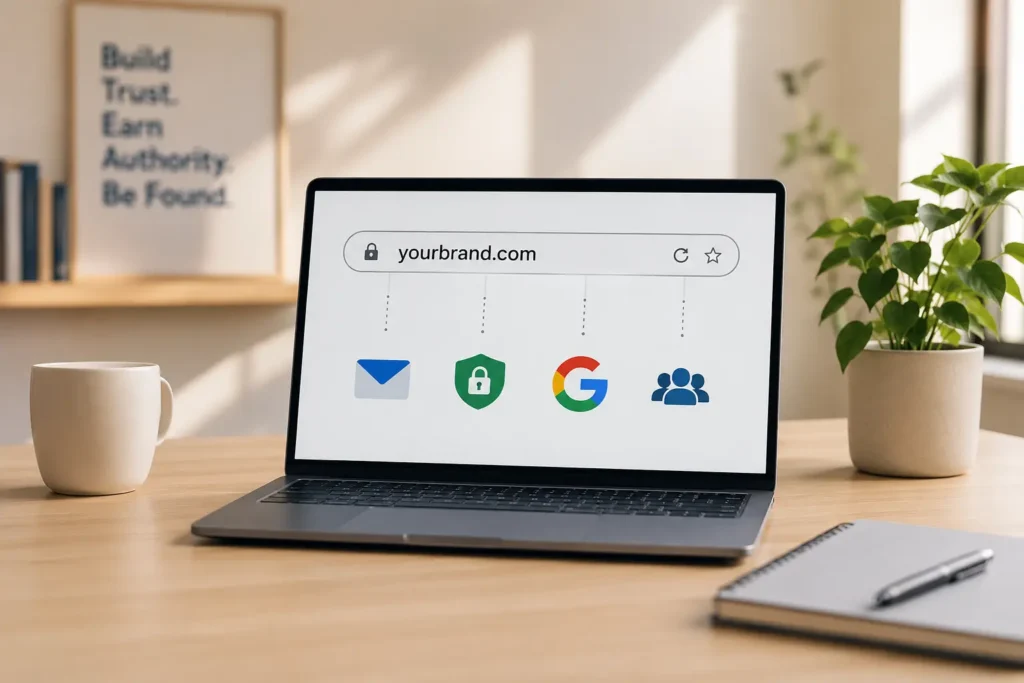
Losing control of it, or never locking down the right variations early on, creates a kind of fragility that doesn’t announce itself until something forces the issue, whether that’s a legal dispute, a rebrand, an acquisition, or a sudden spike in traffic to a domain the company doesn’t even own.
Locking in the right domains early is a lot cheaper than fixing this after the fact, and it’s worth checking a Hostinger domain coupon code before registering a batch of variations, since the savings add up fast across multiple TLDs.
The Defensive Registration Conversation
Registering every plausible variation of a brand name feels like overkill until the one you skipped turns into a real problem. Common misspellings, alternate TLDs, the hyphenated version, the plural version. All of it represents traffic and trust flowing somewhere, and if a business doesn’t own that somewhere, someone else eventually will.
Not always someone acting in good faith either. Getting ahead of this doesn’t mean registering hundreds of domains just because you can. It means actually sitting down and figuring out which variations carry real risk if left unclaimed, then moving on those before a competitor or an opportunist beats you to it.
Expiration Is a Risk
Domains expire, usually not through carelessness exactly, just a billing card that expired, an old employee’s inbox still tied to the account, or a renewal notice buried in spam.
Once a domain drops, there’s typically a grace period, then a redemption window with steep fees attached, then it’s back on the open market for anyone to grab, including squatters who specifically watch for this exact kind of lapse.
A business that’s spent years building SEO value and brand recognition around a domain can lose all of it in the gap between an expired card and someone finally noticing.
Budgeting for Acquisition Actually Saves Money Long Term
There’s a real cost here. Registration fees, sometimes buying a domain someone else already holds, renewal costs stacking up across multiple TLDs and variations. Set that against the cost of a rebrand forced by losing a core domain, or the ongoing revenue leak from traffic landing on a domain a competitor controls, and the upfront spend looks small by comparison.
Most businesses trying to stretch their budget will hunt down whatever discount they can find when expanding their portfolio of protected domains, since even a modest saving adds up once you’re registering and renewing several variations at the same time.
What This Looks Like Done Well
Companies that handle this well tend to keep it simple. Someone owns the renewal calendar. Someone keeps an eye on new TLD launches relevant to their industry.
Someone periodically checks which domains still earn their keep versus which have outlived their purpose. None of this needs a dedicated department.
It just needs someone treating domain management as an actual ongoing job, not a box ticked once during company formation and forgotten about.
When to Actually Expand the Portfolio
Not every business needs an aggressive acquisition strategy. A small local service business with barely any online competition has a lot less on the line than a company building a national or international brand.
How much defensive registration makes sense really scales with how much brand value is actually at risk, and how crowded the digital space around that brand has gotten.
Overspending on domains nobody will ever type is its own kind of waste too, just a less common one.
Final Thoughts
A domain feels like a small, one-time decision right up until it isn’t.
Covering the variations that carry risk, keeping renewals current, treating the whole portfolio as ongoing infrastructure instead of a closed task: that’s what keeps a growing brand from finding out the hard way that someone else got there first.
The businesses that get this right barely think about it day to day. The ones that don’t usually wish they had, right around the point it’s already too late to fix without spending a lot more than they would have upfront.