

AI-generated characters are becoming a major part of modern storytelling, advertising, and digital content creation. From fictional characters in short films to virtual creators in social media campaigns, AI enables the creation of unique personalities without traditional production limitations.
However, creating a character once is only the beginning. The bigger challenge is maintaining the same character across multiple scenes, camera angles, emotions, and environments. A character that looks perfect in one generation may appear completely different in the next, with changes in facial features, hairstyle, clothing, or overall appearance.
This challenge, often called character drift, can affect the quality of AI-generated content. When a character changes unexpectedly, audiences lose the sense of continuity that makes stories engaging. For creators producing films, advertisements, product videos, or social media series, maintaining a consistent character identity becomes essential.
Why Consistent AI Characters Matter in Modern Content Creation
In traditional filmmaking, character consistency is managed through detailed planning, casting, costume design, makeup, and production continuity. AI filmmaking requires a similar level of creative direction.
A consistent AI character should maintain recognizable elements such as:
- Facial structure
- Hair style and color
- Eye features
- Age and appearance
- Body type
- Clothing style
- Accessories
- Overall visual identity
These details help audiences recognize that the same character is appearing throughout a story, even when the setting, action, or camera perspective changes.
This is especially important for brands creating recurring campaigns, filmmakers developing AI-generated stories, and creators building long-form video content where characters need to remain visually connected.
How Prompts Influence AI Character Consistency
Prompts are the foundation of creating stable AI characters. A simple description may generate an attractive character, but it often lacks the information needed to recreate that same person later.
Instead of writing:
- A woman walking through a city.
A more effective character prompt provides specific identity details:
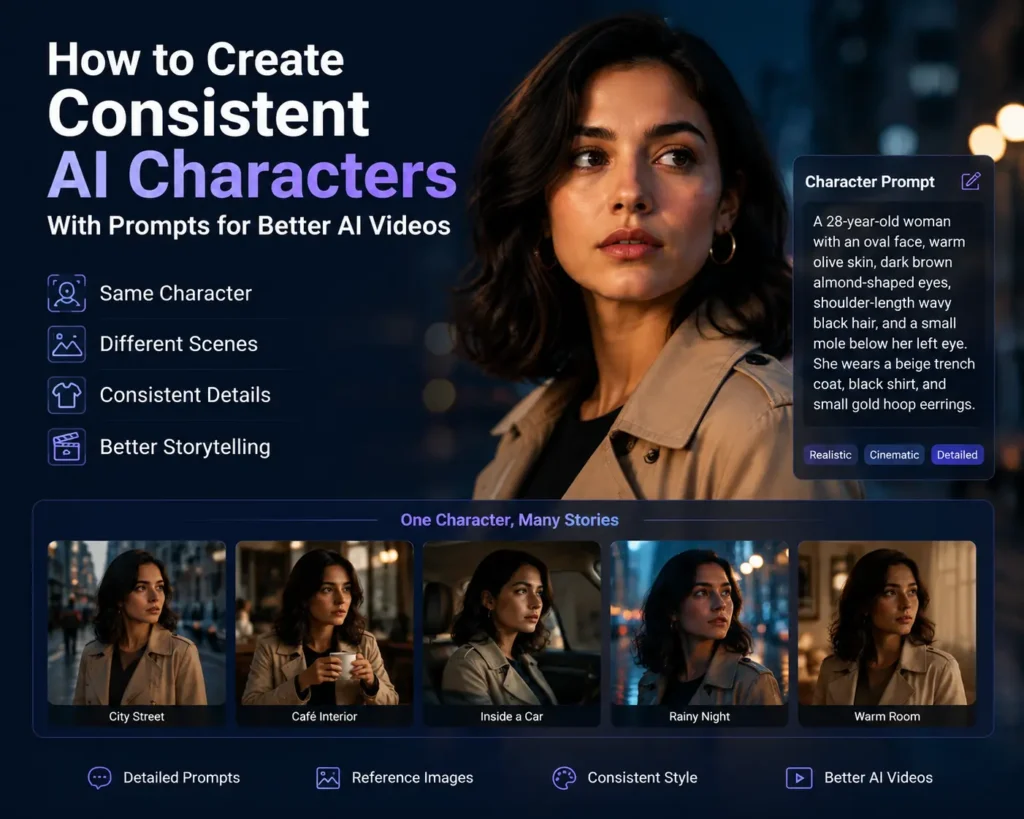
- A 28-year-old woman with an oval face, warm olive skin, dark brown almond-shaped eyes, shoulder-length wavy black hair, and a small mole below her left eye. She wears a beige trench coat, black shirt, and small gold hoop earrings.
The second prompt gives the AI more reference points to maintain. Details like facial structure, hairstyle, unique marks, and wardrobe choices act as visual anchors.
The goal is not to create the longest possible prompt. It is to define the details that make a character recognizable and repeatable.
Building a Character Identity Before Creating Scenes
A strong AI character usually starts with a character profile rather than a single scene prompt.
Creators can define:
Physical Appearance
This includes:
- Face shape
- Skin tone
- Hair style
- Eye color
- Height and body type
- Distinctive features
Wardrobe and Style
Clothing plays an important role in recognition. A signature jacket, accessory, or color palette can help maintain continuity across multiple scenes.
Personality and Visual Direction
A character is also defined by how they appear on screen. Expressions, posture, and overall visual style contribute to how audiences perceive them.
Once these elements are established, they can be reused throughout the project while only changing scene-specific details like location, action, and camera movement.
Keeping Character Context Across AI Video Workflows
Creating consistent characters becomes more challenging when moving from individual images to complete videos. Video projects require multiple scenes to work together, which means creators need a workflow that remembers previous creative decisions.
This is where AI filmmaking workflows are evolving beyond simple text-to-video generation. Platforms like invideo Agent help creators manage the complete video creation process by supporting scripting, planning, visual development, generation, editing, and post-production while maintaining project context.
Instead of treating every scene as a separate request, an agent-based workflow can help keep important decisions connected, including character details, visual style, and creative direction. This makes it more practical to develop multi-scene videos where the same characters need to appear consistently.
The Role of Reference Images in AI Character Creation
While detailed prompts are important, reference images provide additional guidance for maintaining character identity.
A character reference sheet can include:
- Front-facing portrait
- Side profile
- Different facial expressions
- Full-body view
- Multiple poses
- Clothing variations
These references work like a visual guide during production. They allow creators to compare new generations against the original character and maintain a consistent appearance.
Reference-based workflows are particularly useful for AI films, advertisements, and branded content where a character may appear across many different scenes.
Maintaining Visual Style Along With Character Identity
Character consistency is not only about keeping the same face. The entire visual world should feel connected.
A character generated with cinematic lighting, realistic textures, and a specific color style may feel completely different if the next scene uses a different visual approach.
Creators should maintain consistency in:
- Lighting style
- Camera perspective
- Color treatment
- Level of realism
- Background design
A consistent visual style helps audiences feel that every scene belongs to the same project.
How AI Agents Support Long-Form Character Creation
As AI video projects become more complex, managing creative decisions manually becomes difficult. A filmmaker working on a multi-scene project may need to track characters, locations, camera choices, and visual references across dozens of shots.
Modern AI agents are designed to support these larger workflows by helping organize creative information throughout production.
Invideo Agent allows creators to work with connected project context, helping them maintain consistency as they move from an initial idea to a finished video. This approach is useful for filmmakers, marketers, and creative teams producing content that requires multiple connected scenes.
For larger productions, invideo Agent Two expands these capabilities by supporting more advanced workflows with project memory and specialized expert agents. It can help manage creative areas such as cinematography, storyboarding, casting, and VFX while keeping different parts of production aligned.
Common Reasons AI Characters Lose Consistency
Even with strong prompts, AI characters can change due to several factors.
Vague Character Descriptions
Generic prompts often leave too much room for interpretation. A description like “a young professional” can create different results every time.
Changing Important Details
Small changes in wording can affect the output. Changing “shoulder-length wavy black hair” to “long dark hair” may result in a noticeably different character.
Major Scene Changes
Moving from a close-up portrait to an action scene with a completely different environment can sometimes affect character appearance. Maintaining key identity details helps reduce this issue.
Too Much Variation
Creativity is important, but too many changes at once can make it difficult for AI systems to maintain the original character.
Best Practices for Creating Reliable AI Characters
Successful AI character creation usually comes from balancing consistency and flexibility.
Creators should focus on:
- Building a detailed character profile
- Reusing important identity descriptions
- Maintaining consistent wardrobe details
- Using reference images when possible
- Keeping visual style stable
- Reviewing characters before creating full scenes
A strong workflow allows creators to experiment with different stories while keeping the character recognizable.
The Future of Consistent AI Characters
AI character creation is moving beyond generating individual images. The future is focused on creating complete characters that can exist across multiple scenes, videos, and campaigns.
As AI filmmaking tools become more advanced, creators will be able to develop characters with stronger continuity, better visual memory, and more control over storytelling.
Whether used for films, advertisements, social content, or brand campaigns, consistent AI characters will play an important role in making AI-generated content feel more professional and engaging.
The key is not just creating a good-looking character. It is building a character identity that can continue to evolve while remaining recognizable throughout the entire creative journey.