

If you look up “Goseboze AI tools ” there’s a chance you don’t know what Goseboze is at all. You are not the one. Many pages that show up for this term avoid the question and instead talk around it.
Here is the simple explanation: Goseboze is an AI product directory, not an AI application. It is a place where you can look through, check out and find AI tools made by companies. It is similar to a review site that helps you find a restaurant. It does not cook the food.
This guide explains what Goseboze actually does, what it does not do, the types of tools you can find there, including AI previsualization tools, and a real-world way to decide if a tool you find on the site is actually worth your time and money. After reading this, you should be able to use Goseboze the way it is supposed to be used: as a beginning for research, not as the final decision.
What Are Goseboze AI Tools?
Is Goseboze an AI Tool or an AI Directory?
Goseboze is a directory. According to its website it presents itself as a place where people can find, check out and list artificial intelligence products in different areas. It does not create text, pictures or videos by itself. It is not a chatbot that you talk to.
Imagine it as a card catalog, for AI software. You search or look through it until you reach a listing. That listing sends you to the real products website.
What Does Goseboze Actually Do?
At its heart the platform groups AI products into categories, gives every one a page with a short description and usually adds some basic information, like pricing level or how it is used. Some pages take you to the company’s website; others offer a little more explanation first.
People who build AI tools can also add their products to be shown here which is how the list gets bigger as time goes on.
What Goseboze Does Not Do
A few things worth clearing up before you go further:
- It doesn’t replace ChatGPT, Claude, or any other AI application. It helps you find them.
- It doesn’t generate content on your behalf.
- It doesn’t deeply test or audit every tool it lists.
- A listing isn’t a guarantee that the product is the best option in its category.
Keep that last point in mind. A directory listing tells you a tool exists. It doesn’t tell you the tool is good.
What Types of AI Tools Can You Find on Goseboze?

People use a directory like Goseboze because it has a lot of tools to try out. You do not have to look over for an AI writing assistant or an image generator or a coding tool or an automation platform. You can look at the categories in one place and find what you need based on what you want to do with Goseboze.
The tools you can find on Goseboze can change when new tools are added or old tools are updated or removed from Goseboze. Just because a tool is listed on Goseboze does not mean it is the tool or the safest tool or the most reliable tool. You should use Goseboze to find tools and then check out each tool before you use it for something important, with Goseboze.
1. AI Writing and Content Tools
AI writing tools are designed to help with text-based tasks. Depending on the product, they can assist with creating blog outlines, drafting articles, rewriting existing copy, summarizing information, generating product descriptions, writing emails, or developing social media content.
For example, a content marketer might use an AI writing tool to turn a list of ideas into a first draft, while an e-commerce business could use one to create initial product descriptions.
However, AI-generated content still needs human review. Check facts, tone, originality, brand requirements, and search intent before publishing anything generated by an AI writing platform.
Common use cases include:
- Blog post drafting
- Content ideation
- Email writing
- Product descriptions
- Social media copy
- Copy rewriting
- Summarization
- Grammar and style improvement
2. AI Image Generators
AI image tools allow users to create visual content from text prompts or modify existing images. Newer tools such as Grok Imagine also give creators another option for generating and experimenting with AI-powered visual content from prompts. They can be useful for marketers, designers, content creators, online stores, and businesses that need visual assets without producing every image manually.
Depending on the tool, you may find features for generating illustrations, realistic images, advertising concepts, product mockups, backgrounds, thumbnails, or social media graphics.
Before choosing an image generator, look beyond image quality. Check its commercial-use terms, ownership rules, generation limits, resolution options, editing capabilities, and whether uploaded images are used for model training.
Typical applications include:
- Marketing graphics
- Product concepts
- Blog illustrations
- Social media visuals
- Advertising creatives
- Concept art
- Background generation
- Image editing
3. AI Video Tools
AI video platforms do a lot more than just edit videos now. They can make videos from what you write or from pictures. Some of them even have AI avatars, voiceovers. Can automatically add subtitles or summarize the video for you. They can also generate scenes. Help with editing.
A company can use an AI video tool to make a marketing video from a script they wrote. A person making videos might use one of these tools to add captions to their video, remove parts they do not want or make videos from longer ones.
When you are trying to choose which AI video tool to use you should think about how good the video looks, how it takes to make the video what templates they have, if they put a watermark on the video how long the video can be the resolution of the video how good the voice sounds and if you can use the video for business
4. AI Chatbots and AI Assistants
AI chatbots are one of the well-known types of AI software. They can answer questions, explain information, come up with ideas, help with research, write content or offer support to customers.
Some are made to be around helpers while others are built for particular industries or tasks.
For companies custom AI chatbots can link to databases, websites, customer service tools or internal files.
The key point is that a chatbot’s value depends a lot on the data it can reach and how it deals with unclear responses.
Potential use cases include:
- Customer support
- Research assistance
- Internal knowledge bases
- Question answering
- Lead qualification
- Content brainstorming
- Personal assistance
5. AI SEO and Marketing Tools
SEO and marketing are really important for businesses and people who make content. These tools can help with things like finding the keywords, making content better, looking at what competitors are doing, figuring out what people are searching for, coming up with ads and planning campaigns.
For example someone who does SEO can use a tool that uses intelligence to look at a topic and find related words. A marketing team can use a tool that uses intelligence to come up with lots of ideas for ads.
SEO tools that use intelligence should help people make decisions, not make the decisions for them. Things, like what people’re searching for, how relevant something is, how much competition there is, what the audience needs and how good the content is still need people to think about them and make judgments.
SEO and marketing teams need to use these tools to help them do their jobs better and SEO tools need to support the work that SEO and marketing teams do.
Common applications include:
- Keyword research
- Content optimization
- Competitor research
- SEO content briefs
- Ad copy generation
- Marketing automation
- Social media planning
- Lead generation
6. AI Coding Assistants
AI coding tools are made for developers and software teams. These tools can do a lot of things like generate code, explain code that you do not understand, suggest what code to use next, find problems, create tests and help fix issues.
Some of these tools work inside the development environments and some of them have their own separate interfaces. AI coding tools can really help with the parts of development work but AI developers should still look at the code they generate very carefully.
The code that AI coding tools generate can have security problems, do things in a way that’s not efficient, make wrong guesses or not work with other things. AI coding tools can make mistakes so developers have to check the code from AI coding tools.
Common uses include:
- Code generation
- Code completion
- Debugging
- Code explanation
- Test generation
- Refactoring
- Documentation
- Developer research
7. AI Productivity Tools
AI productivity software focuses on helping individuals and teams manage information and everyday work more efficiently.
This category can include AI-powered note-taking applications, meeting assistants, scheduling tools, task managers, email assistants, document tools, and research platforms.
For example, an AI meeting assistant might turn a recorded meeting into notes and action items. An AI scheduling tool could help organize appointments based on availability and priorities.
The best productivity tool is usually the one that removes a specific bottleneck rather than simply adding another application to an already crowded workflow.
8. AI Automation Tools
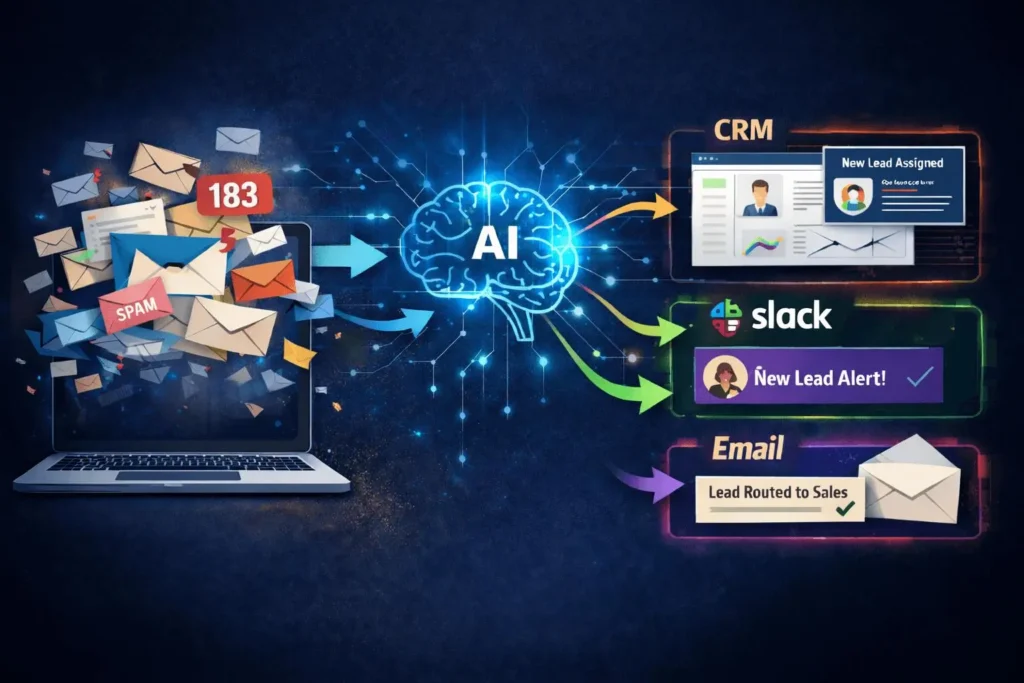
AI automation tools combine artificial intelligence with workflow automation. They can connect different applications and trigger actions based on predefined events, instructions, or AI-generated decisions.
For example:
New customer inquiry → AI analyzes the message → information is added to a CRM → personalized response is drafted → sales team receives a notification.
This type of workflow can reduce repetitive manual work and help teams process large volumes of information.
When evaluating an automation platform, look at supported integrations, workflow limits, reliability, error handling, security, permissions, and pricing. A tool that looks inexpensive at first can become costly when automation volume increases.
9. AI Business and Enterprise Tools
Enterprise oriented Artificial Intelligence tools are made for companies that have a lot of needs. These platforms can help with things like customer service, processing documents, looking at numbers, sales, human resources, managing knowledge, keeping things on the computer or automating work.
When companies look at these products they need to think about more than what they can do. They also need to think about how safe they are, who can use them if they follow the rules, if they can work with other systems, where the data is stored, how to manage them, who can use them and what kind of help they can get from the people who made them.
For example a small company might pick an Artificial Intelligence program because it is cheap and easy to use. A bigger company might need to check if the program works with the systems they already have and if it is safe enough for them. They need to make sure the Artificial Intelligence tools meet their security requirements. Companies like these need to think about what they need from Artificial Intelligence tools.
10. AI Audio and Voice Tools
AI audio tools cover everything from transcription and noise reduction to voice generation, dubbing, podcast editing, and voice-based applications.
A content creator might use an AI transcription tool to turn a podcast into written content. A marketing team could use synthetic voices for video narration, while a business might use voice AI for customer-service applications.
This category deserves additional caution because voice technology can involve sensitive biometric or identity-related considerations. Before using voice cloning or similar features, check consent requirements, licensing terms, privacy policies, and restrictions on commercial use.
How to Choose Between Different AI Tool Categories
The category alone should not determine which tool you choose. Start with the problem you are trying to solve.
For example:
Need to create blog content? Look at AI writing and content tools.
Need marketing visuals? Explore AI image generators.
Need to produce short videos? Consider AI video platforms.
Need to automate repetitive tasks? Explore AI automation tools.
Need help with programming? Look at coding assistants.
Need to organize meetings and tasks? Productivity tools may be more appropriate.
Once you identify the relevant category, compare individual products based on features, output quality, pricing, integrations, privacy, security, support, and ease of use.
Most importantly, don’t assume that the tool with the longest feature list is automatically the best choice. A simpler product that fits your workflow can provide more value than a feature-heavy platform you rarely use.
Why Goseboze’s Categories Can Be Useful
The biggest benefit of categorization is discovery. AI software is expanding quickly, and many specialized tools are difficult to find through general searches. A directory can help users discover products they might not otherwise encounter.
At the same time, categories should be treated as a starting point rather than a recommendation system. AI products change quickly, pricing can change, features can be added or removed, and some products may eventually become inactive.
A sensible approach is:
Discover → Shortlist → Verify → Test → Compare → Choose
That workflow lets you use Goseboze for what an AI directory does best, finding potential tools, while keeping the final decision based on independent evaluation and your actual requirements.
A Transparent Look at Well-Known AI Tools
Rather than handing you a list of “25 best tools” with no explanation, it’s more useful to show you a few well-known products by category, along with what you should actually check before relying on them. Pricing and feature sets for AI products change often, so treat the table below as a starting point for your own research, not a final answer.
| Tool | Category | Best For | Typical Pricing | What to Verify |
| ChatGPT | AI assistant | General-purpose tasks | Free and paid tiers | Current plan limits |
| Claude | AI assistant | Long-form writing and analysis | Free and paid tiers | Usage caps on your plan |
| Midjourney | Image generation | Creative visuals | Paid subscription | Current pricing tiers |
| GitHub Copilot | Coding assistant | Developers | Paid, with some free access | IDE compatibility |
| Zapier | Automation | Connecting apps and workflows | Free and paid tiers | Task limits per plan |
Each of these products has its own official pricing page. Always check that directly rather than trusting a secondhand summary, including this one.
How Does Goseboze AI Tools Work?
Using a directory like this follows a fairly predictable pattern. Here’s what that looks like in practice.
Step 1: Search for an AI solution. Start with the problem you’re trying to solve, not a tool name. “I need something to summarize long PDFs” is a better starting point than “show me AI tools.”
Step 2: Browse categories. Goseboze groups products by function, so you might browse under writing, image generation, or automation depending on your need.
Step 3: Review tool listings. Each listing usually gives you a short pitch, the category it belongs to, and sometimes a pricing indicator.
Step 4: Compare basic information. Before clicking through anywhere, jot down two or three candidates that look relevant.
Step 5: Visit the official product website. This is where the real research starts. The directory listing is a summary; the vendor’s own site has the actual details on pricing, features, and terms.
Step 6: Test the tool before paying. Most legitimate AI products offer a free tier or trial. Use it.
Step 7: Choose based on your actual requirements. Not the flashiest description, not the one with the most buzzwords, but the one that solves your specific problem.
Goseboze AI Tools by Use Case
Different users show up to a directory with different goals. Here’s a rough map of who tends to look for what:
Content creators usually want writing or image tools that speed up production without flattening their voice.
SEO professionals are typically after keyword research, content optimization, or SERP analysis tools.
Marketers often need a mix of ad copy generators, creative tools, and campaign automation.
Developers are usually browsing coding assistants or API-based tools they can plug into existing workflows.
Small business owners tend to want automation tools that cut down on repetitive admin work.
Students and researchers often look for summarization tools or research assistants.
Freelancers and agencies frequently need a stack that covers writing, design, and client communication in one pass.
If you fall into one of these groups, start your Goseboze search with the category that matches your role rather than scrolling the whole directory.
How to Choose the Right AI Tool From Goseboze

This is where most people go wrong. They pick the first tool that looks impressive instead of the one that actually fits.
Define the problem first. Write down exactly what you need the tool to do, in one sentence. This keeps you from getting distracted by unrelated features.
Check whether the tool actually solves it. Read the product description against your one-sentence problem. If it doesn’t match, move on.
Compare accuracy and output quality. For AI writing or image tools especially, run the same prompt through two or three candidates and compare the results side by side.
Check pricing. Look past the “starting at” number and check what happens once you scale usage, add team members, or hit a rate limit.
Review privacy and data policies. If you’re feeding the tool any sensitive information, read how it stores and uses your data before you upload anything.
Check integrations. A tool that doesn’t connect to what you already use will create more work, not less.
Check product maintenance. Look at when the product last updated its blog, changelog, or app store listing. A tool that hasn’t shipped anything in over a year is a warning sign.
Look for independent reviews. Search for the product name on Reddit or review sites like G2 or Trustpilot rather than relying only on the vendor’s own testimonials.
Test the tool with a real task. Not a demo prompt. Use it on something from your actual workload before you commit.
Goseboze AI Tool Evaluation Checklist
If you want a repeatable framework instead of a gut-feeling decision, score each candidate against these criteria:
| Criterion | Weight |
| Accuracy and performance | 25% |
| Ease of use | 15% |
| Pricing and value | 15% |
| Privacy and security | 15% |
| Integrations | 10% |
| Support and documentation | 10% |
| Product maintenance | 10% |
You don’t need a spreadsheet for every small decision, but for anything you’ll pay for monthly or roll out to a team, this kind of scoring keeps the choice grounded in something other than a nice landing page.
Are Goseboze AI Tools Safe and Reliable?
1. Is Goseboze Itself Safe to Browse?
Browsing a directory site carries roughly the same risk as browsing any other content site. The bigger question is what happens once you click through to an individual product.
2. Are All Listed AI Tools Safe?
No, and no directory can promise that. Some listed tools are well-built and well-maintained. Others are thin wrappers around someone else’s API, thrown together and abandoned within a few months. A listing on Goseboze, or any similar site, isn’t an endorsement of quality.
3. How to Check an AI Tool Before Signing Up
Before you create an account or hand over a card number, spend five minutes checking:
- Does the signup flow actually work, and does the product load properly?
- When did the company last post an update, on their blog, changelog, or social accounts?
- Is there a real privacy policy, and does it say anything specific about how your data is used?
- Can you find independent reviews outside the vendor’s own site?
4. What Data Should You Never Upload Without Checking the Privacy Policy?
Be cautious with anything that includes customer information, financial data, unreleased business plans, or personal identifying details. If a tool’s privacy policy is vague, missing, or clearly copy-pasted from a template, treat that as a reason to hold off.
5. How to Identify an Abandoned AI Product
A quick checklist:
- Visit the official website and see if it loads properly.
- Try to sign up and confirm the account creation flow works.
- Check for recent updates on the blog or changelog.
- Confirm the pricing page is current and not broken.
- Look for documentation, and check whether it references outdated features.
- Check whether support channels respond, or whether the contact page is a dead end.
- Search for the product name alongside “review” on Reddit or a forum.
- Test the core feature yourself instead of relying on the marketing copy.
If a product fails three or more of these checks, it’s probably not worth your time, no matter how good the directory listing sounds.
The AI Wrapper Problem: Why a Listing Doesn’t Mean Quality
1. What Is an AI Wrapper?
An AI wrapper is a product built almost entirely on top of someone else’s model, usually through an API from OpenAI, Anthropic, or a similar provider, with a thin interface layered on top. The wrapper itself adds little beyond a login screen and a specific prompt template.
2. Why Wrapper Products Are Common
Building on top of an existing model is fast and cheap compared to training something from scratch, so a large number of new AI products fall into this category. That’s not automatically a bad thing. It just means the underlying intelligence isn’t unique to that product.
3. How to Tell Whether an AI Tool Offers Real Value
Ask what the product does beyond the base model. Does it have a workflow, a specific dataset, an integration, or a use case designed around a real problem? Or does it just repackage a generic prompt with a subscription fee attached?
Estimates about how many AI products are wrappers versus original tools vary widely depending on who’s counting and how they define the term, so treat any specific percentage you see with some skepticism unless the source explains its methodology.
4. When a Wrapper Can Still Be Useful
A wrapper isn’t automatically worthless. If it saves you time by packaging a workflow you’d otherwise build yourself, that’s real value, even if the underlying model is one you could technically access directly.
Goseboze vs Other AI Directories
Goseboze isn’t the only place to discover AI tools. Here’s how it stacks up against a few well-known alternatives, based on general positioning rather than exact feature parity, since directory features change often.
| Platform | Primary Purpose | Curation | Best For |
| Goseboze | Discover, compare, and list AI products | Submission-based | General AI tool discovery |
| Futurepedia | AI tool directory with category browsing | Submission-based, editorial elements | Broad category browsing |
| There’s An AI For That | Large searchable AI tool index | Submission-based | Finding niche or unusual tools |
| Product Hunt | Launch platform for new products, including AI tools | Community-voted | Discovering brand-new launches |
| Toolify | AI tool directory and ranking site | Submission-based | Comparing tool popularity |
Which AI Directory Should You Use?
Honestly, there’s no reason to limit yourself to one. Directories overlap in coverage but rarely match exactly, so checking two or three before settling on a tool gives you a fuller picture than relying on a single source.
Goseboze for Businesses: Building an AI Tool Stack
1. Start With Business Problems
Don’t shop for AI tools the way you’d browse an app store for fun. Start with a list of actual bottlenecks in your workflow, then look for tools that address those specific gaps.
2. Choose One Tool Per Workflow
Running three different AI writing tools because each one was recommended somewhere different usually just adds cost and confusion. Pick one per function and commit to it long enough to judge whether it’s working.
3. Avoid Duplicate AI Tools
Before adding a new tool, check whether something you already pay for can handle the same job. A lot of existing software has quietly added AI features that duplicate what a standalone tool offers.
4. Consider Integration and Data Security
A tool that doesn’t fit your existing stack, or that handles data in a way your company policy doesn’t allow, isn’t worth the convenience it offers upfront.
5. Measure ROI
Track whether a tool is actually saving time or improving output, not just whether it feels useful. A simple before-and-after comparison on a specific task works better than a gut check.
Example stack for a small marketing team: one AI writing assistant for drafts, one image generator for social creative, and one automation tool to schedule and publish.
Example stack for an e-commerce business: a product description generator, a customer support chatbot, and an inventory or order automation tool.
Example stack for an agency: a writing tool for client deliverables, a project automation tool for internal workflows, and a research assistant for client onboarding.
Goseboze for Developers and AI Product Creators
1. How AI Products Can Be Submitted
Most directories, including Goseboze, allow developers to submit their own products through a form on the site, usually with fields for the product name, category, description, and website link.
2. What Information a Listing Should Include
A useful listing includes a clear, specific description of what the tool does, an accurate pricing summary, and a working link to the product. Vague marketing language without concrete detail makes it harder for users to judge fit, and it often gets skipped over.
3. Why Accurate Product Descriptions Matter
An inflated or misleading description might get a click, but it won’t hold onto a user who feels misled once they try the actual product. Accuracy in the listing saves everyone time.
4. What Developers Should Verify Before Listing
Make sure your pricing page, signup flow, and core features actually work before submitting. A broken product with a polished listing does more harm than good to your reputation.
Goseboze AI Tools: Pros and Cons
Advantages:
- Centralizes discovery instead of relying on scattered recommendations
- Covers a wide range of categories in one place
- Speeds up early-stage research
- Useful for finding smaller or niche products you wouldn’t find through a general search
Disadvantages:
- A listing isn’t the same as an endorsement
- Quality across listings varies significantly
- Descriptions are often written by the vendor and can lean promotional
- Some listed tools become inactive over time
- Independent verification is still necessary before you commit
Goseboze AI Tools vs Using Google to Find AI Software
1. When Goseboze Is More Convenient
If you want to browse by category without a specific product in mind, a directory saves time by grouping relevant tools together instead of making you sift through search results.
2. When Google Search Is Better
If you already know roughly what you want, a direct search or a query like “[tool name] reviews Reddit” often gets you to sharper, more specific information faster than browsing a directory page by page.
3. Why You Should Use Both
Use the directory to build your shortlist, then use a regular search engine to dig into reviews, complaints, and independent commentary on each candidate before you decide.
How to Get the Most Value From Goseboze
Search by problem, not by hype. A tool with a flashy name doesn’t automatically solve your specific issue.
Create a three-tool shortlist. More than three gets overwhelming; fewer than three doesn’t give you enough to compare.
Test identical tasks. Run the exact same prompt or workflow through each shortlisted tool so the comparison is fair.
Compare results side by side. Look at output quality, not just how polished the interface feels.
Check total cost. Factor in what happens once you go past the free tier or add team seats.
Verify privacy. Especially if you’re uploading business or customer data.
Make the final decision outside the directory. The directory’s job ends once it’s given you a shortlist. The decision itself should be based on your own testing.
Common Mistakes When Using AI Tool Directories
Choosing the first result. Directory listings aren’t sorted by quality, and the top of the page doesn’t mean the best fit.
Assuming a listing is an endorsement. It isn’t. It’s a submission that met the directory’s basic listing criteria.
Buying before testing. Free tiers exist for a reason. Use them before you commit to a paid plan.
Ignoring privacy policies. Especially risky if you’re uploading anything sensitive.
Choosing based only on features. A long feature list means nothing if the core function doesn’t work well.
Using too many AI tools at once. Stacking five overlapping tools usually creates more friction than it removes.
Skipping human review. AI output, whatever the tool, still benefits from a second look before it goes out the door.
Frequently Asked Questions About Goseboze AI Tools
What are Goseboze AI Tools?
Goseboze is an AI product directory that helps users discover, browse, and compare third-party AI software across categories like writing, image generation, coding, and automation.
Is Goseboze an AI tool?
No. Goseboze doesn’t generate content or perform tasks itself. It’s a directory that links to other companies’ AI products.
Is Goseboze an AI directory?
Yes, based on its own site description, that’s its core function: helping users discover, compare, and list AI products.
Is Goseboze free?
Browsing the directory is free. Individual tools you find through it may charge their own fees, separate from anything Goseboze charges.
How does Goseboze work?
You search or browse by category, review listings, and click through to the vendor’s website to sign up, test, or buy the tool directly.
Conclusion
Goseboze is worth using as a discovery tool. It’s a reasonable starting point when you’re not sure what’s out there for a given problem, and browsing by category beats scrolling through unrelated search results.
It’s not enough on its own for final purchasing decisions, security reviews, or anything involving sensitive data. Treat it as the first step in a three-step process: discover on Goseboze, verify on the vendor’s own site, and test before you pay.
That workflow, discover, verify, test, applies whether you’re evaluating Goseboze AI tools for a personal project or building out a tool stack for an entire team. The directory gets you started. The decision is still yours to make.
Last reviewed: August 2026. This article was compiled using Goseboze’s own site description of its directory function, along with general research practices for evaluating third-party software. Pricing, features, and available listings on any AI directory change frequently; always confirm current details directly on the vendor’s website before making a purchasing decision. For further reading on evaluating software vendors, see general discussions on r/artificial and r/SaaS on Reddit, or vendor security overviews on Wikipedia’s Software as a service page.