

Video production has always relied on more than visuals. A powerful story is built through a combination of images, dialogue, music, sound effects, and atmosphere. While audiences may notice the visuals first, audio plays an equally important role in shaping emotions and making a scene feel believable.
In traditional filmmaking, maintaining audio consistency requires careful planning. Voice recordings need to match character performances, background sounds need to fit the environment, and music needs to support the emotional direction of the story.
As AI-generated videos become more common, maintaining this connection between visuals and sound has become a major focus. A video can have realistic visuals, but if the voice changes between scenes, dialogue does not match the character, or sound effects feel disconnected, the overall experience can feel unnatural.
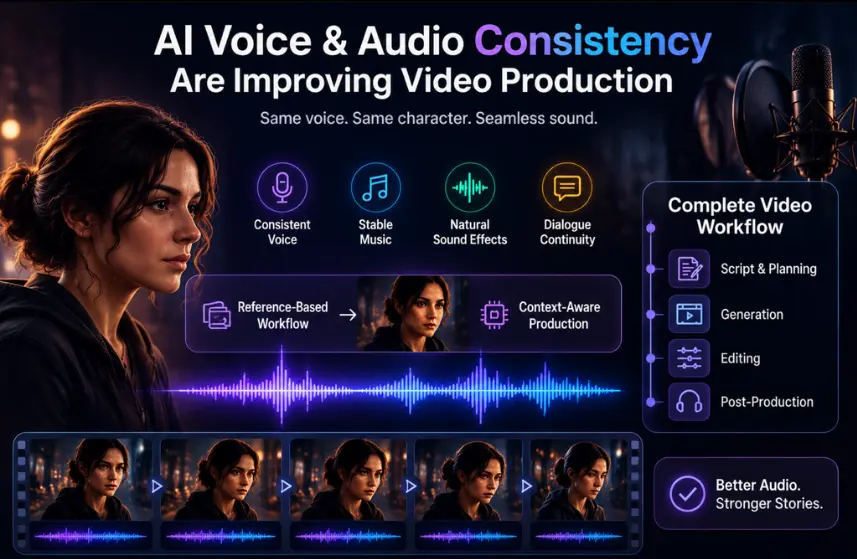
AI voice and audio technologies are helping filmmakers solve these challenges by creating more consistent sound experiences. From maintaining character voices to improving dialogue synchronization and managing complete video workflows, AI is changing how creators approach audio production.
Why Audio Consistency Matters in Video Production
Audio consistency helps create a seamless viewing experience. When every sound element works together, audiences can focus on the story instead of noticing production issues.
A character appearing throughout a film should have the same voice, tone, and speaking style. A product commercial should maintain the same brand sound across different versions.
Background sounds should match the location, and music should support the intended emotion.
Without consistency, even high-quality visuals can lose impact.
For example, an AI-generated character may look identical across multiple scenes, but if the voice changes from one scene to another, viewers may feel that the character is different.
Similarly, a cinematic scene set in a busy city should not suddenly have audio that sounds like a quiet indoor environment.
Audio continuity is what connects separate scenes into one complete experience.
The Challenge of Maintaining AI-Generated Voices
Voice consistency is one of the biggest challenges in AI-assisted video creation.
When creating videos with digital characters, virtual presenters, or AI-generated actors, creators need the voice to remain recognizable throughout the project. The tone, pitch, speaking style, and emotional delivery all contribute to the character’s identity.
Without proper control, AI-generated voices may vary between scenes. A character may sound energetic in one moment and noticeably different in another, making the performance feel disconnected.
Modern AI voice workflows are improving by allowing creators to define voice characteristics more clearly and maintain consistency across multiple scenes. An AI voice agent development company can apply similar principles when building voice-based experiences.
This is especially useful for:
- Short films with recurring characters
- Brand spokesperson videos
- Educational content
- Product demonstrations
- Social media campaigns
How AI Is Improving Dialogue Continuity
Dialogue is one of the most important parts of storytelling. The words a character says need to match their emotions, facial expressions, and the situation around them.
AI tools are helping improve dialogue workflows by supporting script generation, voice creation, and synchronization between spoken words and visuals.
A filmmaker creating a multi-scene video can maintain a more consistent dialogue style by defining character voices and speech patterns early in the process.
This becomes especially valuable when videos require multiple versions, such as localized advertisements or different edits for various platforms.
Instead of recreating voices from scratch each time, AI workflows help maintain continuity while allowing creators to adapt content efficiently.
The Role of Lip Sync in AI Video Production
Lip sync has become an important part of creating realistic AI-generated videos. When dialogue and facial movements do not match, viewers immediately notice the disconnect.
Advanced AI workflows are improving lip synchronization by helping align speech timing with mouth movements, expressions, and character performance.
This is particularly useful for videos involving:
- AI characters
- Digital presenters
- Product demonstrations
- Marketing videos
- Narrative content
Better lip sync allows AI-generated characters to feel more natural because their visual performance and audio delivery work together.
For filmmakers, this means they can focus more on storytelling rather than manually correcting every mismatch between dialogue and facial movements.
Maintaining Music Consistency Across Video Projects
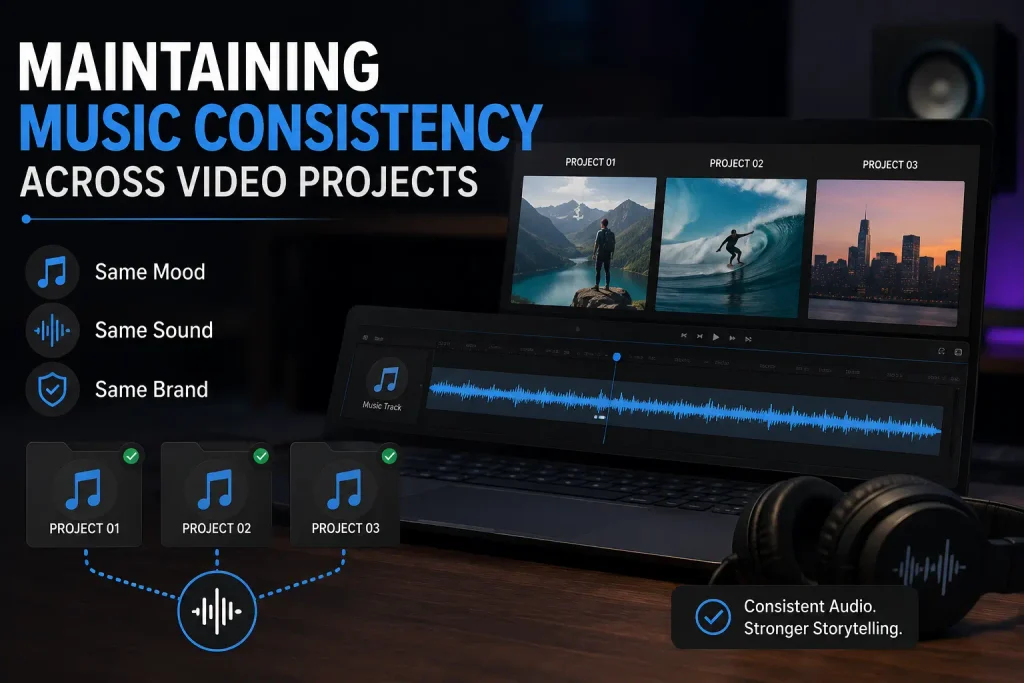
Music plays an important role in setting the emotional tone of a video. A dramatic scene, product advertisement, or brand film depends on music that supports the intended feeling.
In AI-assisted production, maintaining music consistency across multiple scenes is becoming increasingly important.
A video series may require the same musical identity across different episodes or campaign variations. Sudden changes in style, tempo, or mood can make content feel disconnected.
AI music tools are helping creators generate and adapt soundtracks while keeping them aligned with the overall creative direction.
For example, a luxury brand campaign may require a consistent premium sound style across multiple advertisements. AI-assisted workflows can help maintain that identity while creating variations for different formats.
Creating Realistic Sound Effects and Environments
Sound effects help audiences understand and experience the world inside a video.
A scene set in a forest, city, office, or futuristic environment needs audio elements that match the visuals. Footsteps, background noise, environmental sounds, and movement effects all contribute to realism.
AI audio tools are helping creators generate and manage these elements more efficiently.
Instead of manually searching for every sound effect, filmmakers can create audio environments that match the scene requirements.
This is especially useful for AI-generated films and advertisements where visuals and audio need to be developed together.
How Complete AI Workflows Improve Audio and Visual Continuity
Creating a professional video requires coordination between multiple creative elements. Scripts, visuals, voices, music, sound effects, and editing decisions all need to work together.
When these elements are created separately, maintaining consistency becomes more difficult.
Invideo Agent helps creators approach video production as a connected workflow by supporting the journey from ideas and references to complete video projects. Keeping creative decisions connected across planning, generation, editing, and refinement, it helps teams create videos where visuals and audio work together more effectively.
This approach is useful for projects that require consistent characters, product presentations, dialogue, and sound design across multiple scenes.
With invideo Agent Two, creators working on larger projects can manage more complex production workflows by coordinating areas such as storytelling, visual planning, cinematography, and effects. This helps teams maintain a consistent creative direction across different stages of production.
AI Models Are Improving Voice and Audio Capabilities
Different AI models are improving specific parts of video production, including voice generation, sound design, and audio synchronization.
Some models focus on creating realistic voices, while others help improve dialogue timing, emotional delivery, or sound integration.
For example, advanced video models are becoming better at understanding the relationship between visuals and audio, helping creators produce scenes where movement, dialogue, and sound feel more connected.
As AI models continue to improve, filmmakers will have more control over creating complete audiovisual experiences rather than generating visuals and adding sound afterward.
Why Audio Consistency Matters for Commercial Videos
For brands, consistent audio is an important part of maintaining identity.
A marketing campaign may include multiple advertisements, product videos, social media clips, and regional versions. While the visuals may change, the voice style, music, and overall sound direction should remain recognizable.
A consistent audio identity helps audiences associate content with the brand and creates a more professional experience.
This is especially important for ecommerce, advertising, and customer-facing videos where trust and recognition influence purchasing decisions.
The Future of AI-Powered Audio in Filmmaking
AI audio technology is moving toward more connected production workflows where voices, music, and sound effects are created alongside visuals.
Future AI systems will focus on improving:
- Natural character voices
- Realistic dialogue delivery
- Better lip synchronization
- Adaptive sound design
- Consistent audio across long projects
As these technologies develop, filmmakers will have greater control over every part of the production process.
The goal is not simply creating realistic sounds. It is creating complete stories where every visual and audio element supports the same creative vision.
FAQs
1. What is audio consistency in video production?
Audio consistency means keeping voices, music, sound effects, volume levels, and background sounds consistent throughout a video. It helps different scenes feel connected and creates a smoother viewing experience.
2. How does AI improve voice consistency in videos?
AI voice technology can maintain consistent voice characteristics such as tone, pitch, speaking style, and emotional delivery across multiple scenes. This is especially useful for recurring characters, digital presenters, and brand videos.
3. Why is voice consistency important in AI-generated videos?
Voice consistency helps maintain a character’s identity and makes AI-generated content feel more natural. If a character’s voice changes noticeably between scenes, the video can feel disconnected or unrealistic.
4. How does AI improve dialogue synchronization?
AI can help align generated dialogue with video timing, facial expressions, and character movements. This makes conversations feel more natural and reduces the need for manual synchronization.
5. What is lip sync in AI video production?
Lip sync is the process of matching a character’s mouth movements with spoken dialogue. AI-powered lip-sync technology helps synchronize speech and facial movements, making digital characters and presenters appear more realistic.
Final Thoughts
Audio consistency is becoming one of the most important parts of AI-powered video production. While visuals attract attention, sound creates emotion, realism, and connection.
AI voice tools, improved lip sync, intelligent sound design, and connected production workflows are helping creators produce videos where dialogue, music, and effects feel naturally connected.
The future of AI filmmaking will not only focus on generating better visuals. It will focus on creating complete cinematic experiences where every element, from the first frame to the final sound, works together seamlessly.