

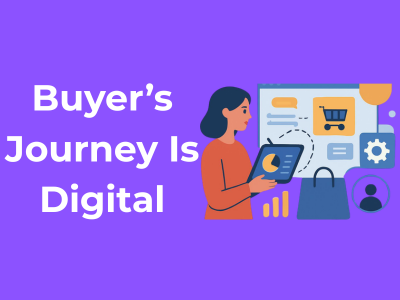
Modern buyers can easily access information throughout their purchasing journey. With just a few clicks, they can compare products, read customer reviews, watch demonstrations, and learn about different solutions. This allows them to make informed decisions without needing immediate help from a sales representative.
Research shows that many buyers complete between 60% and 80% of their purchasing journey online before contacting a company. They often visit multiple websites, read blog articles, explore social media content, and check independent review platforms to evaluate their options.
The rise of smartphones and remote work has also increased digital buying behavior. Buyers can research products anytime and anywhere, making digital channels a convenient and preferred way to gather information and compare solutions.
For businesses, this means having a strong online presence is essential. Helpful content, a user-friendly website, customer reviews, videos, and educational resources can influence purchasing decisions long before a buyer reaches out to a sales team. A strong digital experience often plays a major role in winning new customers.
What Is the Buyer’s Journey?
The buyer’s journey refers to the process a customer goes through from recognizing a need to making a purchase decision.
While every buyer is unique, most journeys follow three primary stages:
1. Awareness Stage
The buyer realizes they have a problem, challenge, or opportunity.
Examples:
- A company struggles with inefficient workflows.
- A marketing team needs better lead generation.
- A business wants to improve customer support.
At this stage, buyers seek information rather than products.
2. Consideration Stage
The buyer begins evaluating potential solutions.
They may compare:
- Different approaches
- Software platforms
- Service providers
- Vendors
- Technologies
Research becomes more focused and detailed.
3. Decision Stage
The buyer narrows their options and chooses a solution.
They may request:
- Product demos
- Consultations
- Pricing information
- Free trials
- References
Traditionally, sales teams played a major role throughout all three stages. Today, digital channels dominate much of the process.
Why Has the Buyer’s Journey Become So Digital?
Several factors have transformed purchasing behavior.
1. Information Is Instantly Available
The internet has eliminated information barriers.
Buyers no longer need salespeople to explain:
- Product features
- Industry trends
- Pricing models
- Competitor comparisons
They can find most of this information independently.
2. Buyers Prefer Self-Service Research
Modern buyers value autonomy.
Research consistently shows that decision-makers prefer researching at their own pace rather than immediately speaking with sales representatives.
Digital resources provide:
- Convenience
- Privacy
- Flexibility
- Speed

3. More Stakeholders Are Involved
B2B purchasing decisions often involve multiple stakeholders.
These decision-makers frequently conduct independent research before participating in buying discussions.
Digital content enables everyone involved to gather information simultaneously.
4. Trust Is Built Through Content
Today’s buyers trust educational content more than traditional sales messaging.
They often consult:
- Industry blogs
- Customer reviews
- Expert opinions
- Case studies
- Analyst reports
Companies that provide valuable information earn credibility before sales conversations begin.
The Rise of the Digital-First Buyer
Modern buyers are often described as “digital-first.”
This means they prefer digital experiences before human interactions.
Characteristics of digital-first buyers include:
1. Independent Research
They seek answers without waiting for sales assistance.
2. Multiple Content Touchpoints
Many buyers interact with numerous pieces of content before making a decision.
These may include:
- Blog articles
- Videos
- Podcasts
- Social media posts
- Email newsletters
3. Higher Expectations
Buyers expect:
- Fast-loading websites
- Clear information
- Transparent pricing
- Personalized experiences
4. Mobile Accessibility
Research often occurs across multiple devices.
Businesses must provide seamless experiences on:
- Smartphones
- Tablets
- Laptops
- Desktop computers
How Digital Content Influences Buying Decisions
Content has become one of the most powerful drivers of buyer behavior.
Every blog article, video, webinar, or case study serves as a digital salesperson available 24/7.
1. Educational Content Builds Trust
Buyers reward companies that educate rather than simply promote.
Effective content includes:
- Guides
- Tutorials
- Industry insights
- Research reports
2. Case Studies Reduce Risk
Potential customers want evidence.
Case studies demonstrate:
- Results
- Success stories
- Practical applications
3. Comparison Content Accelerates Decisions
Buyers frequently search for comparisons before purchasing.
Examples include:
- Product comparisons
- Feature breakdowns
- Pricing analyses
Businesses that address these questions often gain a competitive advantage.
How Businesses Can Adapt to a More Digital Buyer Journey
Organizations that understand digital buying behavior can better support prospects throughout the purchasing process.
1. Create Content for Every Stage
Develop resources that align with each phase of the journey.
Awareness Content
- Blog posts
- Educational videos
- Industry reports
Consideration Content
- Buying guides
- Comparison pages
- Webinars
Decision Content
- Case studies
- Product demos
- Testimonials
2. Invest in Search Engine Optimization (SEO)
Most buyer journeys begin with search.
Strong SEO helps businesses appear when prospects are researching solutions.
Focus on:
- Keyword research
- Technical SEO
- Helpful content
- User experience
3. Improve Website User Experience
Your website often serves as the first impression.
Ensure visitors can easily find:
- Product information
- Pricing
- Resources
- Contact options
4. Support Self-Service Buying
Buyers increasingly prefer self-directed exploration.
Provide:
- Knowledge bases
- Product tours
- FAQ pages
- Interactive tools
The Impact of AI on the Digital Buyer’s Journey
Artificial intelligence is changing how buyers discover and evaluate information.
Search behavior is shifting from traditional search engines toward AI-powered platforms.
Buyers now use tools such as:
- ChatGPT
- Gemini
- Claude
- Perplexity
Instead of clicking multiple search results, users can receive synthesized answers instantly.
This evolution makes Answer Engine Optimization (AEO) and Generative Engine Optimization (GEO) increasingly important.
Conclusion
The answer to the question “How much of the buyer’s journey is digital?” is simple: most of it now happens online.
Before contacting a sales representative, today’s buyers use search engines, websites, reviews, videos, social media, and AI tools to research products and services. Studies suggest that around 60% to 80% of the buying journey is completed digitally, and this number continues to grow as more people prefer researching on their own.
For businesses, this creates a great opportunity to connect with potential customers early in the decision-making process. Companies that provide helpful content, improve their online visibility through SEO, and create a smooth digital experience are more likely to earn trust and attract buyers.
As buying habits continue to evolve, successful businesses will be the ones that meet customers where they already spend their time—online, informed, and ready to make confident purchasing decisions.
Frequently Asked Questions (FAQ)
What percentage of the buyer’s journey is digital?
Most industry research suggests that between 60% and 80% of the buyer’s journey occurs digitally before a buyer contacts a sales representative.
Why do buyers research online before contacting sales?
Online research allows buyers to gather information independently, compare solutions, understand options, and make informed decisions at their own pace.
Is the buyer’s journey fully digital?
No. While much of the research process is digital, human interactions still play an important role during complex purchasing decisions, negotiations, demonstrations, and implementation discussions.
How can businesses improve the digital buyer experience?
Businesses can improve the buyer experience by creating helpful content, optimizing their website, improving search visibility, offering self-service resources, and providing transparent information.
How does AI affect the buyer’s journey?
AI helps buyers discover information faster through conversational search experiences. Businesses must optimize content for both traditional search engines and AI-powered answer engines.