

Influencer marketing is really big now with companies spending a lot of money to work with people who make content. Businesses like to use influencers because they help them reach the people they want to build trust with them and sell stuff.This is better than a lot of ways of advertising.
As more companies start using influencer marketing they need help finding the right people to work with making sure everything goes smoothly and seeing how well their campaigns are doing. This is where influencer agencies come in.An influencer agency is like a man, between companies and influencers. They help companies plan what they want to do find the influencers to work with make deals with them and make sure everything goes as planned from start to finish.
If you like marketing, social media or the people who create content starting an influencer agency can be a way to make money. With a plan and the right systems you can build an agency that helps companies do well and makes you money at the same time.
What Is an Influencer Agency?
An influencer agency is a business that helps brands plan, execute, and manage influencer marketing campaigns.
The agency acts as a bridge between brands and content creators by handling tasks such as:
- Influencer discovery and outreach
- Campaign strategy
- Contract negotiations
- Content approvals
- Campaign management
- Performance reporting
- Relationship management
Some agencies focus exclusively on representing influencers, while others work directly with brands. Many successful agencies eventually do both.
Why Influencer Agencies Are a Great Business Opportunity
The creator economy continues to grow rapidly across platforms like Instagram, TikTok, YouTube, LinkedIn, and emerging social media networks. As more brands invest in influencer marketing, the demand for agencies that can connect businesses with the right creators is increasing every year.
One of the biggest advantages of starting an influencer agency is that it requires relatively low startup costs. Unlike traditional businesses, you don’t need to invest in inventory, manufacturing, or expensive equipment. This makes it an accessible business model for entrepreneurs, marketers, and social media professionals.
Influencer agencies also offer several benefits, including strong demand from brands, recurring revenue opportunities, remote work flexibility, and the ability to scale over time. With the creator economy expanding, there is significant potential for long-term growth and profitability.
With the right skills, industry knowledge, networking abilities, and efficient systems, you can build a successful influencer agency from home. As influencer marketing continues to evolve, agencies that help brands achieve measurable results will remain in high demand.
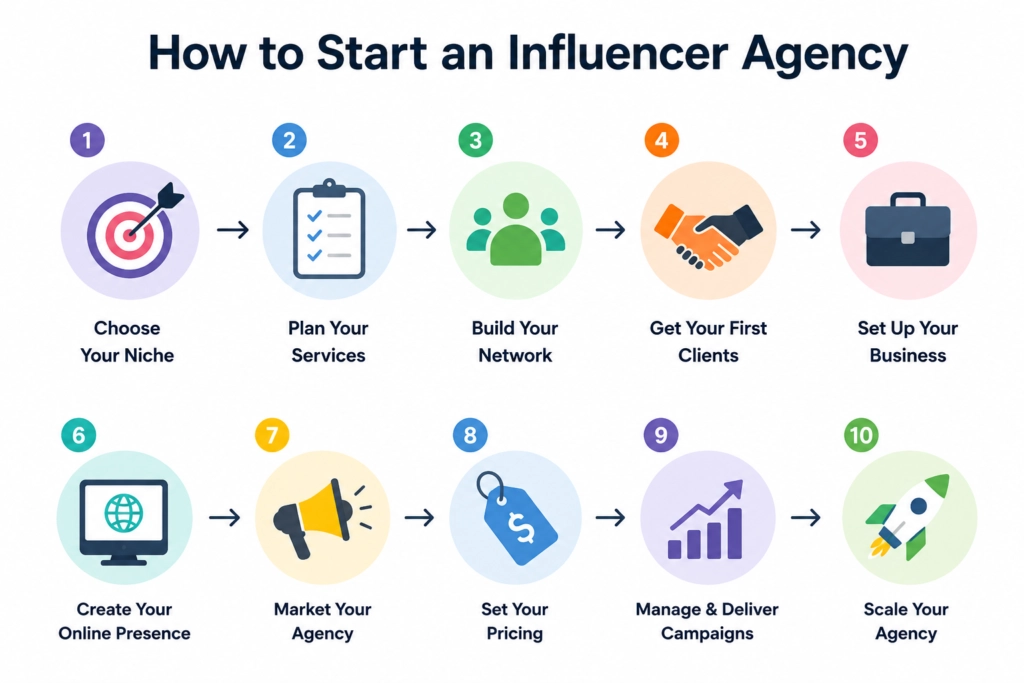
Step 1: Choose Your Influencer Agency Business Model
Before launching, define exactly what type of agency you want to build.
Brand-Focused Agency
This model helps companies run influencer campaigns.
Services include:
- Campaign planning
- Influencer sourcing
- Negotiations
- Reporting
- Content management
Best for:
Marketing professionals, consultants, and agency owners.
Talent Management Agency
This model represents creators and influencers.
Services include:
- Brand deal negotiations
- Partnership sourcing
- Personal branding
- Revenue growth
- Career management
Best for:
People with strong creator relationships and networking abilities.
Hybrid Agency
A hybrid model serves both brands and creators.
Benefits include:
- More revenue streams
- Greater market control
- Stronger network effects
Many successful influencer agencies eventually transition into this model.
Step 2: Select a Profitable Niche
One of the biggest mistakes new agency owners make is trying to serve everyone.
Instead, specialize.
Popular Influencer Marketing Niches
- Beauty and cosmetics
- Fitness and wellness
- Fashion
- Technology
- Gaming
- Finance
- Real estate
- Travel
- Food and beverage
- B2B and LinkedIn influencers
Specialization makes it easier to:
- Build authority
- Create case studies
- Develop expertise
- Attract referrals
- Differentiate from competitors
For example, becoming known as “the influencer agency for fitness brands” is often more profitable than being a generalist agency.
Step 3: Create Your Business Foundation
Treat your agency like a real business from day one.
Register Your Business
Choose an appropriate legal structure such as:
- Sole proprietorship
- LLC
- Corporation
Consult a local business advisor or attorney to determine the best option for your region.
Open Business Accounts
Separate personal and business finances.
Set up:
- Business bank account
- Accounting software
- Payment processing system
- Business insurance if necessary
Build Essential Documents
Create professional templates for:
- Client agreements
- Influencer contracts
- Campaign briefs
- NDAs
- Invoices
Professional documentation builds trust and reduces legal risk.
Step 4: Build Your Influencer Network
Your agency’s success depends heavily on the quality of its creator relationships.
Start Networking Early
Reach out to influencers before you have clients.
Focus on:
- Nano influencers (1,000–10,000 followers)
- Micro influencers (10,000–100,000 followers)
- Emerging creators
These creators are often easier to connect with and more responsive.
Create a Creator Database
Track details such as:
- Name
- Niche
- Audience demographics
- Engagement rate
- Contact information
- Past collaborations
Over time, this database becomes one of your agency’s most valuable assets.
Step 5: Develop Service Packages
Clearly define what clients receive.
Influencer Discovery Package
Includes:
- Creator research
- Outreach
- Shortlisting
- Contact management
Campaign Management Package
Includes:
- Strategy
- Creator coordination
- Content review
- Reporting
Full-Service Influencer Marketing
Includes:
- Campaign planning
- Influencer recruitment
- Contract management
- Performance tracking
- Optimization
Packaging services simplifies sales conversations and increases profitability.
Step 6: Set Your Pricing Structure
Pricing is one of the most common concerns for new agency owners.
Common Pricing Models
Monthly Retainer
Clients pay a recurring monthly fee.
Typical range:
- $1,000–$10,000+ per month
Campaign Fee
Fixed pricing per campaign.
Typical range:
- $2,000–$50,000+
Percentage of Campaign Spend
Agencies charge a percentage of total influencer budget.
Typical range:
- 10%–30%
Talent Commission
For creator representation.
Typical range:
- 10%–20% of influencer earnings
Recommended Approach
Most new agencies succeed with a combination of:
- Monthly retainers
- Campaign management fees
This creates predictable recurring revenue.
Step 7: Build a Professional Online Presence
Brands will evaluate your credibility online.
Create a Website
Your website should include:
- Service pages
- About page
- Contact page
- Case studies
- Testimonials
- Blog content
Optimize for Search
Target keywords such as:
- Influencer marketing agency
- Influencer campaign management
- Creator partnerships
- Brand collaborations
- Influencer outreach services
A strong SEO strategy can generate leads for years.
Step 8: Find Your First Clients
Many new agency owners overcomplicate client acquisition.
The reality is that your first clients often come from direct outreach.
LinkedIn Outreach
Connect with:
- Marketing managers
- Brand directors
- Startup founders
- Ecommerce owners
Provide value before pitching.
Email Prospecting
Identify brands already working with influencers and offer improvements to their strategy.
Networking Events
Attend:
- Marketing conferences
- Creator economy events
- Industry meetups
Relationships often generate faster results than advertising.
Strategic Partnerships
Collaborate with:
- Social media agencies
- PR firms
- Branding consultants
- Web design agencies
Referral partnerships can become major lead sources.
Step 9: Create Case Studies Quickly
Case studies are one of the strongest sales tools.
If you’re new and don’t have client results yet:
Build Starter Campaigns
Partner with:
- Small local businesses
- Startup brands
- Emerging creators
Document everything.
Track:
- Reach
- Engagement
- Clicks
- Sales
- Return on investment
Even a small success story can help close larger clients later.
Step 10: Use the Right Tools
The right technology helps agencies operate efficiently.
Influencer Discovery Tools
Examples include:
- Creator marketplaces
- Influencer databases
- Social listening platforms
Project Management Tools
Use software for:
- Task management
- Team collaboration
- Client communication
Analytics Tools
Track:
- Engagement rates
- Conversions
- Campaign performance
- Audience demographics
Technology improves scalability and client satisfaction.
How Much Does It Cost to Start an Influencer Agency?
One reason influencer agencies are attractive is their low startup cost.
Typical Startup Expenses
- Website: $100–$500
- Branding: $100–$1,000
- Software subscriptions: $50–$500 monthly
- Legal documents: $200–$2,000
- Marketing: Variable
Many founders launch successfully with less than $2,000.
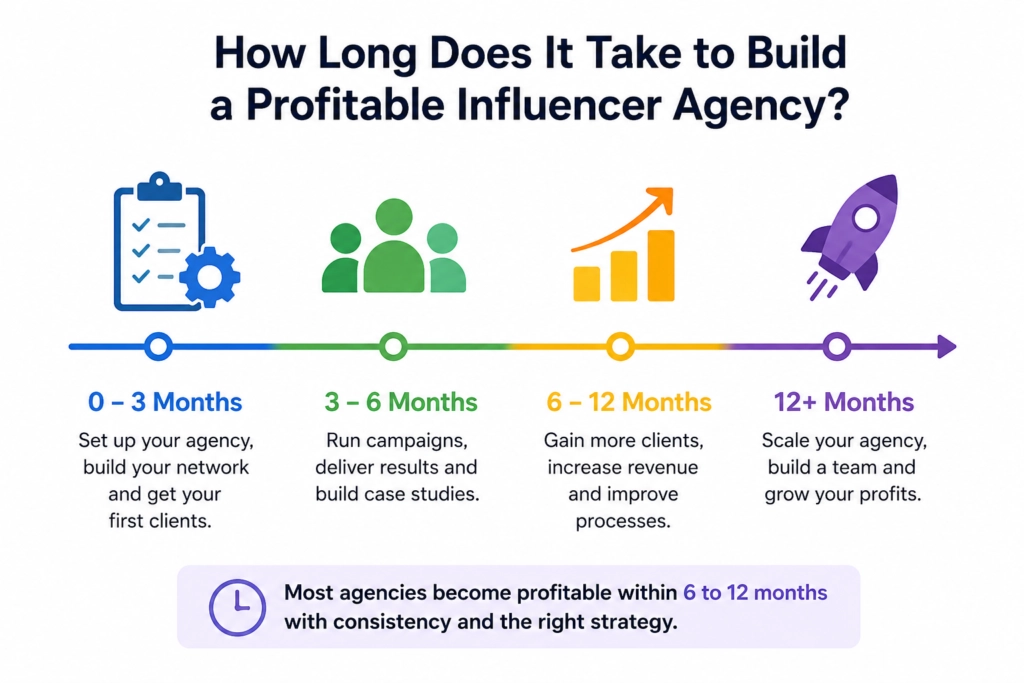
How Long Does It Take to Build a Profitable Influencer Agency?
Results vary based on experience, niche, and client acquisition efforts.
Typical timeline:
Months 1–3
- Build systems
- Develop network
- Land first clients
Months 4–12
- Create case studies
- Increase referrals
- Grow recurring revenue
Year 2+
- Hire team members
- Expand service offerings
- Scale operations
Many agencies achieve profitability within the first year when focused on recurring retainers.
Common Mistakes to Avoid
Targeting Everyone
Specialization creates authority.
Underpricing Services
Cheap pricing often attracts difficult clients and limits growth.
Ignoring Contracts
Always use legally reviewed agreements.
Focusing on Follower Counts
Engagement and audience quality matter more than vanity metrics.
Neglecting Relationship Building
Strong creator and client relationships drive long-term success.
Expert Insights for Long-Term Success
The most successful influencer agencies do more than connect brands with creators.
They become strategic growth partners.
Focus on:
- Measurable ROI
- Long-term partnerships
- Data-driven decisions
- Authentic creator relationships
- Continuous industry learning
As platforms evolve, agencies that prioritize strategy over transactions consistently outperform competitors
Conclusion
Starting an influencer agency is a promising business opportunity in today’s rapidly growing creator economy. With relatively low startup costs and increasing demand from brands looking to leverage influencer marketing, it offers a practical path for entrepreneurs, marketers, and social media professionals to build a profitable business.
To create a successful agency, focus on a specific niche, build strong relationships with influencers, and develop efficient systems for managing campaigns and client projects. Delivering high-quality service and measurable results will help establish trust, strengthen your reputation, and attract long-term clients.
As your agency grows, consistency, professionalism, and a results-driven approach become even more important. Brands are looking for strategic partners who can help them achieve their marketing objectives, not just coordinate influencer collaborations.
By staying informed about industry trends, nurturing valuable relationships, and continuously improving your services, you can position your agency for long-term success in the ever-evolving world of influencer marketing.
Frequently Asked Questions
How do I start an influencer agency with no experience?
Start by learning influencer marketing fundamentals, building relationships with creators, running small campaigns, and documenting results. Practical experience can be developed quickly through hands-on projects.
Do I need a business license to start an influencer agency?
Requirements vary by location. Most agencies benefit from registering as a formal business entity and obtaining any required licenses.
How much can an influencer agency make?
Revenue varies significantly. Small agencies may generate a few thousand dollars per month, while established agencies can earn six or seven figures annually.
Can I start an influencer agency from home?
Yes. Many influencer agencies operate remotely with distributed teams and online communication tools.
What services should a new influencer agency offer?
Start with influencer discovery, outreach, campaign management, and reporting. Expand services as expertise grows.
How do influencer agencies get clients?
Common methods include LinkedIn outreach, referrals, networking events, SEO, content marketing, email prospecting, and strategic partnerships.
Is influencer marketing still growing?
Yes. Brands continue increasing investments in creator partnerships because influencers provide authentic engagement and measurable business outcomes.