

My first online match was a mess. The modem screeched, my mother needed the phone line, and a stranger’s ping jumped so high that he teleported across the map. I loved every second of it.
That memory shows how far we have come. How online gaming has evolved is not just a story about better graphics or faster internet. It is a story about how people play, talk, compete, and spend money together. Today, a player in Jammu can team up with friends in Seoul on a phone, then watch a world final on a stream an hour later. Platforms like TheHackGamer also reflect how gaming culture has grown beyond simply playing games.
This guide walks through the full timeline, from text-based experiments in the 1970s to cloud gaming and AI in 2026. You will also see what changed, why it mattered, and where things may go next.
What Is Online Gaming and How Does It Work?
Online gaming means playing a video game over a network, usually the internet, with or against other people. The game runs on your device, a remote server, or both. The network keeps everyone’s actions in sync.
Understanding Online Gaming
Think of a multiplayer match as a shared conversation. Your device sends small messages such as “I moved left” or “I fired.” A server collects those messages, decides what really happened, and sends the result back to everyone. The whole loop happens many times per second.
For a deeper technical background, the Wikipedia article on online games is a solid starting point.
How Online Multiplayer Games Connect Players
There are two common setups:
- Peer-to-peer: Players’ devices connect directly to each other. It is cheap, but one weak connection can hurt everyone.
- Client-server: Players connect to a central server. It is fairer, harder to cheat in, and the standard for most big games today.
Matchmaking systems then group you with players of similar skill and, ideally, a nearby location to keep delay low.
Different Types of Online Gaming
Multiplayer PC Games
PC was the birthplace of most online play. Platforms such as Steam, launched in 2003, made buying, updating, and joining games far easier.
Online Console Games
Consoles went online in a big way with services like Xbox Live and PlayStation Network. Friends lists, party chat, and one account across games became normal.
Mobile Online Games
Phones brought the largest audience. Many mobile titles are free to start, short to play, and built around social features.
Browser-Based Games
Browser games need no install. They ran on tools like Flash for years and now mostly use modern web technology.
Cloud Gaming
Cloud gaming runs the game on a remote machine and streams the video to you. Your device only needs a good screen and a stable connection.
The History of Online Gaming: A Timeline of Major Milestones
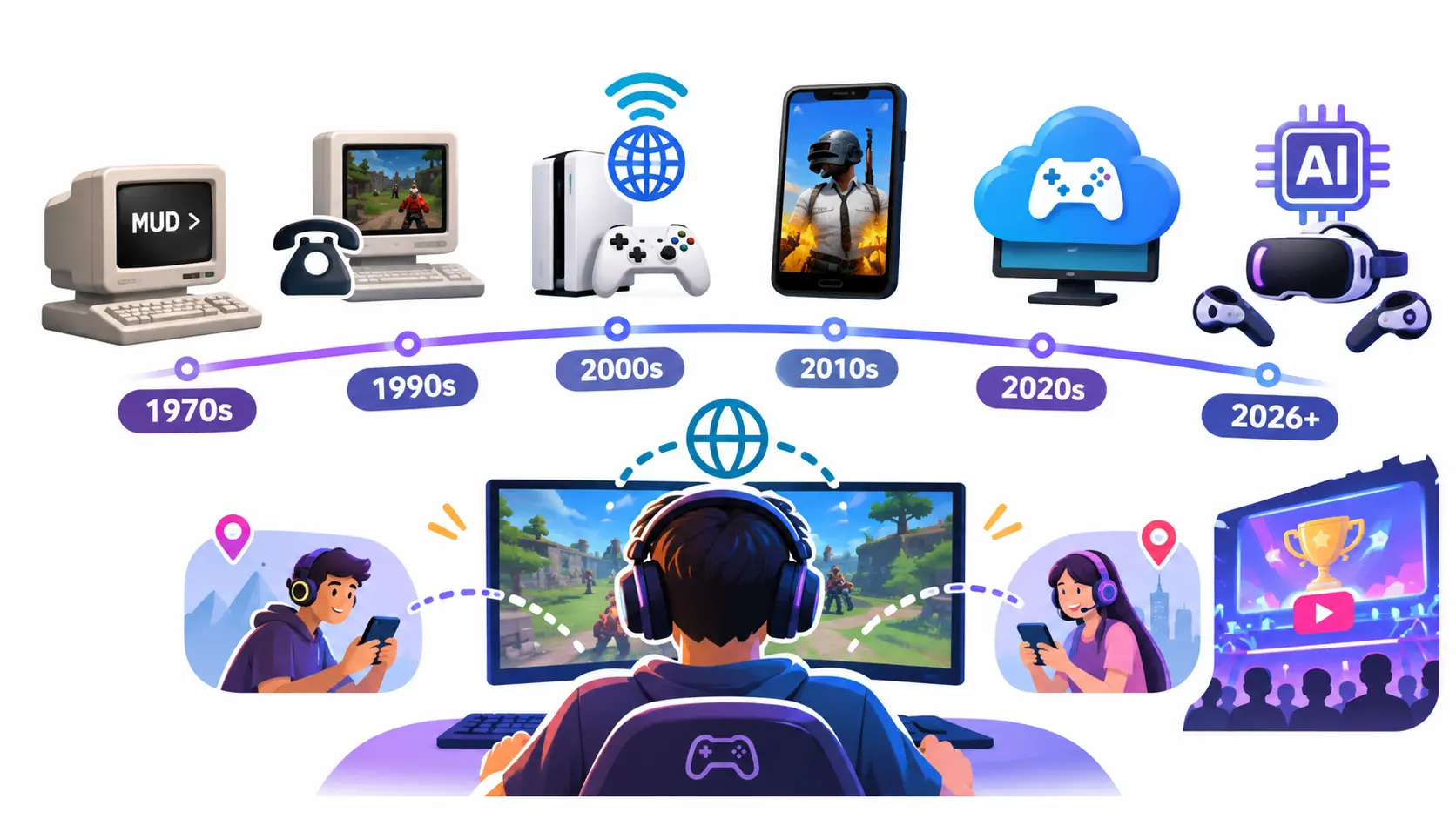
Here is the short version. Each decade added a new layer: networks first, then speed, then access, then convenience.
The 1970s: Early Network-Based Multiplayer Experiments
Early Computer Games and Network Connections
University systems such as PLATO in the United States hosted some of the first multiplayer games. Titles like Maze War and Spasim let several people share a virtual space, long before home internet existed. The graphics were simple, but the idea was huge: other people could be inside the game with you.
The Development of Multi-User Dungeon Games
In the late 1970s, students at the University of Essex created MUD, short for Multi-User Dungeon. It was text only. You typed commands and read descriptions, yet players formed friendships, rivalries, and communities. The MUD article on Wikipedia explains how these worlds became the ancestors of today’s MMORPGs.
The 1980s: The Beginning of Networked Gaming
Bulletin Board Systems (BBS)
A BBS was a computer that other people dialed into by phone. Only one or a few callers could connect at a time, so “door games” were turn-based. Trade Wars is one well-known example. It was slow, but it built habits we still see, such as leaderboards and daily check-ins.
Early Multiplayer Computer Experiences
Paid services like CompuServe offered early online worlds, and Lucasfilm’s Habitat explored avatars and virtual towns. Costs were high, since players often paid by the hour, so only dedicated fans took part.
The 1990s: Dial-Up Internet and LAN Gaming
How Dial-Up Connections Changed Multiplayer Gaming
Dial-up let ordinary households connect for the first time. The catch was latency. Every action took time to travel, so fast games felt rough. Developers had to invent smarter ways to hide delay, which shaped online game design for decades.
Doom, Quake, and the Growth of PC Multiplayer
Doom, released in 1993, made network deathmatch popular. Quake followed in 1996 and brought true 3D play, and its later QuakeWorld update improved how games felt over the internet. Around the same time, Battle.net launched alongside Diablo, and games like Ultima Online and EverQuest proved that persistent online worlds could attract huge communities.
The Rise of LAN Parties
Because home internet was slow, many players carried their computers to a friend’s house and connected them with cables. LAN parties delivered low delay and plenty of snacks. Read more about LAN parties.
The 2000s: Broadband and Online Gaming Communities
The Impact of Broadband Internet
Broadband was the turning point. Connections stayed on, speeds rose, and phone lines were freed up. Online play stopped being a hobby for enthusiasts and became a normal way to play.
World of Warcraft and MMORPG Popularity
World of Warcraft launched in 2004 and became the defining MMORPG of its era. It made raids, guilds, and shared quests feel approachable. Many players say they met lifelong friends there. If you want player opinions on MMOs old and new, communities like MMORPG on Reddit are active and honest.
Xbox Live and PlayStation Network
Xbox Live arrived in 2002 and PlayStation Network followed in 2006. Console players gained voice chat, friends lists, and digital stores. Halo 2 on Xbox Live is often remembered as the moment console online play went mainstream.
The Growth of Counter-Strike and Competitive Gaming
Counter-Strike started as a community-made mod for Half-Life and grew into one of the most important competitive shooters ever. Its team-based rounds and clear rules suited organized play, and its tournaments helped lay the groundwork for modern esports.
The 2010s: Smartphones, Streaming, and Mobile Multiplayer
The Smartphone Gaming Revolution
The iPhone and the App Store changed who could play. Suddenly, anyone with a phone had a game console in their pocket. Mobile games were short, touch-friendly, and easy to share.
Free-to-Play and In-App Purchases
Many games dropped the upfront price and earned money from optional purchases instead. This lowered the barrier to entry, and it also started long debates about fairness, which we cover later.
Twitch and the Rise of Gaming Creators
Twitch launched in 2011 and Amazon bought it in 2014. Watching others play became entertainment in its own right. Creators built careers on streaming, and games started to be designed with spectators in mind.
The Expansion of Esports
Games like League of Legends and Dota 2 filled arenas and online broadcasts. Esports moved from niche events to a recognized professional scene with teams, sponsors, and salaried players.
The 2020s–2026: Cloud Gaming, Cross-Play, and AI
Cloud-Based Gaming Services
Services like GeForce Now and Xbox Cloud Gaming let players stream demanding games to modest devices. Not every attempt worked. Google’s Stadia shut down in January 2023, which shows that the technology is promising but the business model is hard.
Cross-Platform Multiplayer
Games such as Rocket League and Fortnite helped prove that players on different devices can share one match. Cross-play keeps friend groups together, whatever hardware they own.
Live-Service Games and Seasonal Updates
Instead of launching once and moving on, many studios now run games as ongoing services. Seasons, events, and balance patches keep players returning. The upside is fresh content. The downside is that players may feel pressure to keep up.
AI-Powered Gaming Experiences
AI already helps with matchmaking, cheat detection, and chat moderation. Studios are also testing smarter non-player characters and tools that speed up development. Results so far are mixed, and players are still debating where AI helps and where it replaces human creativity.
How Technology Has Transformed Online Gaming
Several technologies pushed online games forward. Here is what each one did in plain English.
Faster Internet and Reduced Latency
Latency, often called ping, is the time a signal takes to travel between you and the server. It is measured in milliseconds. Lower is better. Fiber and better routing cut it dramatically compared with dial-up.
Dedicated Servers and Better Multiplayer Infrastructure
Dedicated servers are machines built to host matches. They provide steadier performance than a player’s home connection and make cheating harder. Large studios now run servers in many regions so players connect close to home.
Advanced Graphics and Realistic Game Environments
Graphics grew from flat sprites to detailed 3D worlds. Better visuals do more than look good. They make large battles, readable maps, and expressive characters possible, which deepens the experience.
Artificial Intelligence in Modern Games
Behind the scenes, AI balances teams, spots suspicious behavior, and flags abusive messages. Players rarely see it, but it shapes almost every match.
Cloud Computing and Game Streaming
Cloud computing powers servers, storage, and game streaming. It also lets studios scale up when a new season launches and scale down later, which saves money.
Virtual Reality and Augmented Reality
VR places you inside the game with a headset. AR blends game elements into the real world, as Pokémon Go did in 2016. Both are still growing, but social VR spaces and fitness games have found loyal audiences.
5G and the Future of Mobile Multiplayer
5G can offer faster speeds and lower delay on phones, especially outdoors and on the move. Actual results depend on your carrier and area, so treat it as an improvement rather than a guarantee.
How Multiplayer Gaming Changed the Way People Play
Online play changed more than technology. It changed behavior.
From Local Multiplayer to Global Communities
Players used to share a couch. Now they share servers. A small clan can include people from five countries who have never met in person.
The Rise of Cooperative and Competitive Gameplay
Co-op games reward teamwork and communication. Competitive games reward skill and strategy. Many people enjoy both, and the best games let you switch between them.
Voice Chat, Messaging, and Social Interaction
Text chat gave way to voice, party systems, and apps built around communities. For many players, the group chat matters as much as the game.
Cross-Platform Gaming and Shared Experiences
Cross-play removed a big social barrier. You no longer need to ask which console your friend owns before inviting them.
How Gaming Communities Build Long-Term Connections
Guilds, Discord servers, and forums keep people connected for years. If you want to see how players talk about games and culture, truegaming is a long-running place for thoughtful discussion.
The Mobile Gaming Revolution: Making Gaming Accessible to Everyone
Mobile gaming is the biggest reason the audience grew so wide. A phone is cheaper than a console or gaming PC, and most people already own one.
How Smartphones Expanded the Gaming Audience
People who never called themselves gamers now play daily on the bus, at lunch, or before bed. Short sessions and simple controls opened the door for new players of all ages.
The Role of Android and iOS Gaming
Android’s wide range of devices, including budget phones, brought gaming to many regions. iOS offered a polished platform that often attracted premium and high-spending audiences. Together they cover most of the world’s mobile players.
Popular Mobile Multiplayer Games
PUBG Mobile
A battle royale shooter that brought the 100-player match style to phones in 2018. It also built a strong esports scene.
Call of Duty: Mobile
Launched in 2019, it packed familiar maps and modes into a touch-friendly format and showed that major franchises can thrive on mobile.
Free Fire
Known for short matches and the ability to run on lower-end phones, it became especially popular in regions where budget devices are common.
Roblox
Roblox is a platform where players create and share their own games. Its young audience and creator economy make it unusual. Parents should review its safety settings.
How Mobile Gaming Changed Game Monetization
Mobile popularized free downloads, ads, and in-app purchases. Developers could reach millions without selling a box, though they also had to compete in a crowded store.
Mobile Gaming vs. PC and Console Gaming
Mobile wins on convenience and reach. PC and console win on performance, controls, and depth. Many players now use all three, depending on the moment.
The Rise of Esports and Online Gaming Competitions
Esports means organized, competitive video game play, often with teams, leagues, and prizes. Wikipedia’s esports article covers the history in detail.
How Competitive Online Gaming Started
Early competitions were small. Quake and StarCraft communities ran tournaments in the late 1990s, often in cafés and at LAN events. Players competed for bragging rights and modest prizes.
The Growth of Professional Esports
Over time, teams signed contracts, sponsors arrived, and tournaments moved to large venues and online broadcasts. Today, professional players often train like athletes, with coaches, analysts, and set schedules.
Popular Esports Games and Tournaments
Counter-Strike
A tactical shooter with a long history and a loyal fan base. Its major tournaments are among the most respected in the scene.
League of Legends
Launched in 2009, it built a global league system and an annual World Championship that draws viewers worldwide.
Dota 2
Known for its depth and for The International tournament, famous for its crowdfunded prize pools in earlier years.
Valorant
Release in 2020, it blends tactical shooting with character abilities and quickly developed an international circuit.
How Twitch and YouTube Gaming Changed Esports
Streaming made tournaments easy to watch from anywhere. Fans could follow their favorite players, chat live, and learn from commentators. That visibility helped sponsors and publishers invest more.
Career Opportunities in the Esports Industry
Not everyone needs to be a pro player. The industry also needs coaches, analysts, commentators, event producers, team managers, designers, and community staff. Competition for jobs is strong, so building a portfolio and real experience helps.
How Online Gaming Became a Global Business
Video games now sit alongside film and music as major entertainment industries, and online features are a big part of that.
The Growth of the Global Gaming Industry
Online connectivity let publishers sell games worldwide, update them instantly, and earn money over many years. When you read industry numbers, check whether they are reported figures or forecasts. Reports from research firms like Newzoo and trade groups like the Entertainment Software Association are common sources, but each uses its own methods, so numbers rarely match exactly.
Free-to-Play vs. Paid Gaming Models
- Paid games: You pay once, then play. Costs are clear.
- Free-to-play: The download is free, and revenue comes from optional items. Reach is bigger, but spending can add up.
Microtransactions, Battle Passes, and In-Game Purchases
Microtransactions are small purchases inside a game. Battle passes offer rewards for playing through a season. Used fairly, they fund long-term support. Used aggressively, they feel like pressure. Some countries, such as Belgium, have restricted loot boxes, which shows how seriously regulators take the issue. See microtransactions.
Gaming Subscriptions and Digital Distribution
Subscriptions give access to a library for a monthly fee. Digital stores replaced physical shelves, so players can download a game within minutes.
How Indie Developers Benefit From Online Platforms
Small teams can now publish worldwide without a big publisher. Success is never guaranteed, but online platforms made it possible for solo creators to reach millions of players.
The Economic Impact of Online Gaming
Gaming supports developers, streamers, esports staff, hardware makers, and service providers. It also drives progress in graphics, networking, and cloud technology that spills into other fields.
How Online Gaming Has Influenced Modern Entertainment and Culture
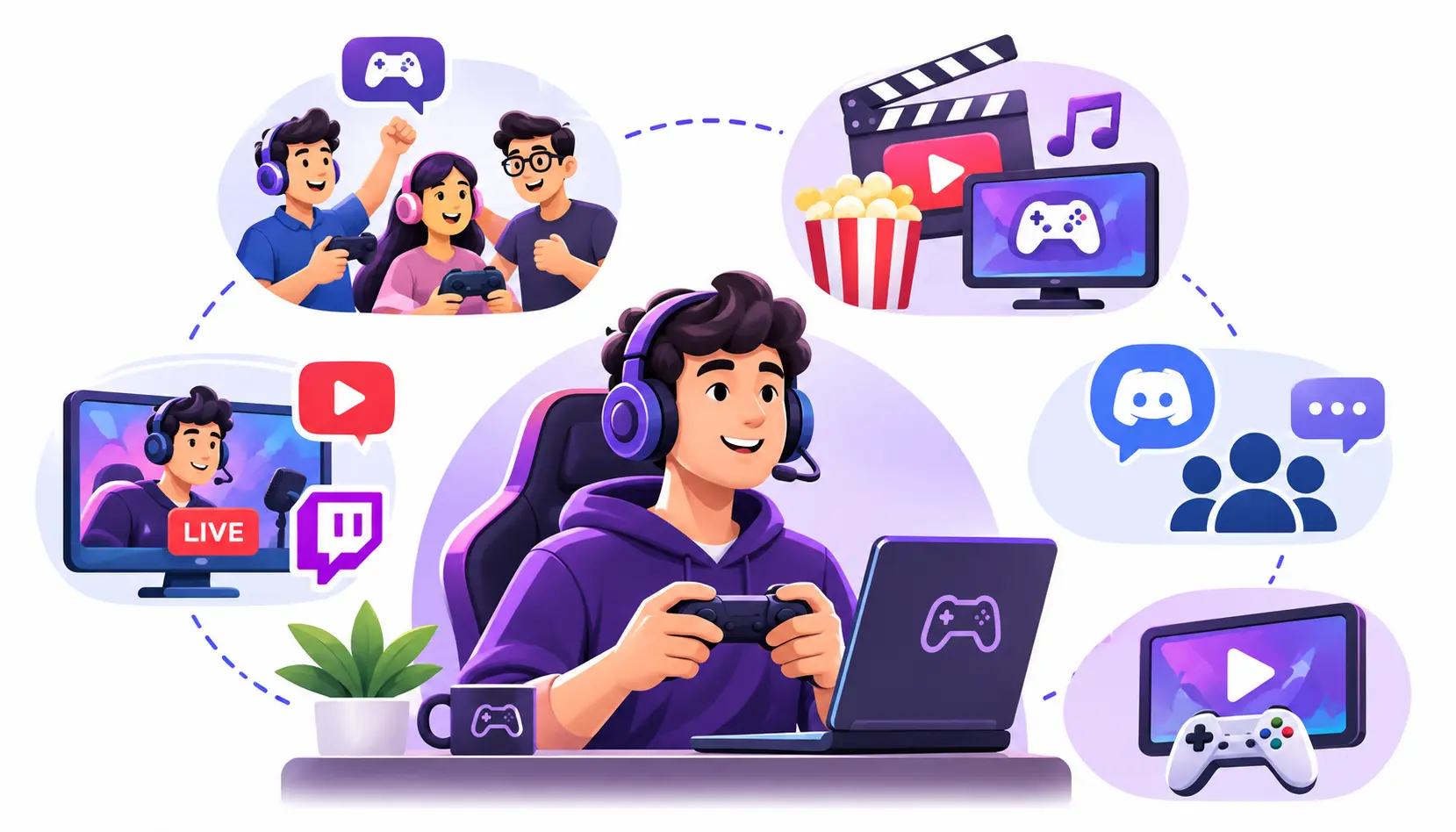
Gaming as a Social Activity
For many people, games are where they hang out. Friends talk, joke, and spend time together inside the game, much like meeting at a park.
The Influence of Gaming on Movies, Music, and Pop Culture
Game stories are now adapted into films and series. Artists have held virtual concerts inside games such as Fortnite, and gaming terms and memes have also become popular ways for people to express themselves on social media.
The Growth of Gaming Influencers and Content Creators
Creators on Twitch and YouTube shape which games become popular. The same principle applies to micro-influencer marketing, where creators build engaged audiences and influence what their followers discover. A single stream can send thousands of new players to a title overnight.
Online Gaming and Digital Communities
Discord servers, forums, and fan wikis have become digital neighborhoods. Gaming communities also share social media content, including clips, highlights, memes, and fan creations, helping gaming trends reach wider audiences. People share tips, art, and support, and these spaces often outlive the games that created them.
How Gaming Has Changed the Meaning of Entertainment
Entertainment used to be something you watched. Games made it something you take part in, and streaming lets you do both at once.
Online Gaming Then vs. Now: What Has Changed?
| Feature | Early online gaming | Modern online gaming |
| Internet | Dial-up | Broadband, fiber, 5G |
| Graphics | Basic 2D and early 3D | Advanced 3D and realistic visuals |
| Multiplayer | LAN and limited online play | Global multiplayer |
| Communication | Text chat | Voice and integrated social features |
| Devices | Mainly computers | PC, console, mobile, cloud |
| Distribution | Physical media | Digital downloads and streaming |
| Competition | Small tournaments | Global esports |
| Updates | Limited patches | Continuous updates and live events |
Benefits and Challenges of Modern Online Gaming
Benefits of Online Gaming
- Social connections and teamwork: Cooperative play builds communication skills and friendships.
- Entertainment and relaxation: Games help many people unwind after a long day.
- Strategic thinking and problem-solving: Planning, resource management, and quick decisions are part of many games.
- Competitive and career opportunities: Esports, streaming, and game development offer real paths for dedicated people.
Challenges of Online Gaming
- Cybersecurity and account theft: Weak passwords and phishing links put accounts at risk. Turn on two-factor authentication.
- Online harassment and toxicity: Abuse in voice and text chat is still a problem. Use mute, block, and report tools.
- Excessive screen time: Long sessions can hurt sleep, study, and work. The World Health Organization includes “gaming disorder” in its disease classification, though most players never reach that level.
- In-game spending and microtransactions: Small purchases add up quickly, especially for younger players.
- Internet connectivity and latency issues: A weak connection can ruin a match. A wired connection and a nearby server region usually help.
How Players Can Enjoy Online Gaming Responsibly
A few habits make a big difference:
- Set a time limit and take regular breaks.
- Set a monthly spending cap, or use platform controls.
- Use strong, unique passwords and two-factor authentication.
- Keep personal details private in public lobbies.
- Talk with children about who they play with and what they buy.
What Does the Future of Online Gaming Look Like?
Nobody can predict this exactly, but several trends look likely to continue.
AI-Powered Games and Smarter NPCs
Non-player characters may become more responsive, and AI tools may speed up development. The real test is whether these features make games more fun rather than just cheaper to make.
Cloud Gaming and Hardware-Free Experiences
If networks keep improving, high-quality gaming on almost any screen becomes realistic. Cost, data use, and connection quality will decide how fast this grows.
VR, AR, and Immersive Multiplayer Worlds
Headsets are getting lighter and more affordable. Social spaces and fitness titles lead for now, while big blockbuster experiences are still developing.
Blockchain and Digital Ownership: Opportunities and Limitations
In theory, blockchain could let players truly own items and trade them across games. In practice, many projects struggled with scams, security problems, and weak gameplay. Steam banned blockchain-based games in 2021, and many players remain skeptical. Ownership ideas may survive, but the hype has cooled.
More Connected Cross-Platform Gaming Ecosystems
Expect more shared accounts, shared progress, and cross-play across devices. Players increasingly expect their game to follow them.
The Future of Esports and Interactive Entertainment
Esports will likely keep evolving through better broadcasts, regional leagues, and new games. Interactive entertainment may also blend further with streaming, social media, and live events.
Frequently Asked Questions About the Evolution of Online Gaming
1. How has online gaming evolved over the years?
It moved from text-based university experiments in the 1970s to dial-up and LAN play in the 1990s, then to broadband, consoles, mobile, streaming, and cloud services. Each stage made online play faster, cheaper, and more social.
2. When did online gaming become popular?
It grew in the late 1990s with PC games and exploded in the 2000s when broadband spread and Xbox Live and World of Warcraft arrived. Smartphones then expanded it again in the 2010s.
3. What was the first online multiplayer game?
There is no single agreed answer. Early networked games such as Maze War and Spasim appeared in the 1970s, and MUD, from the late 1970s, is often cited as the first widely recognized online multiplayer world.
4. How did the internet change the gaming industry?
It allowed worldwide multiplayer, digital sales, instant updates, and live-service business models. It also created streaming and esports as major parts of gaming culture.
5. How has mobile technology changed online gaming?
Smartphones put games in the hands of billions of people. Mobile also popularized free-to-play models and short, social play sessions.
6. Why is online gaming more popular today?
Access is easier, games are often free to start, and friends are already online. Streaming and social media also make games easier to discover.
7. What technologies are shaping modern online gaming?
Fast internet, dedicated servers, cloud computing, AI, 5G, and VR and AR all play a role. Cross-platform tools and better matchmaking also matter.
8. How has online gaming changed social interaction?
It lets people build friendships across distances through voice chat, guilds, and communities. It also brings challenges such as toxicity, so good moderation and personal boundaries matter.
9. What is the difference between traditional gaming and online gaming?
Traditional gaming usually means single-player or local play, often offline. Online gaming connects you to other players over a network and often includes ongoing updates and shared worlds.
10. What is the future of online gaming?
Expect more cloud streaming, smarter AI features, cross-platform play, and immersive technology. Convenience and community will likely matter more than raw graphics.
Conclusion
Looking back, how online gaming has evolved comes down to three big shifts: better connections, wider access, and stronger communities. Dial-up and LAN parties proved people wanted to play together. Broadband and consoles made it easy. Mobile, streaming, and cloud services made it nearly universal.
The tools will keep changing, but the heart of online gaming stays the same. People want to share an experience, test their skills, and spend time with others. Play smart, protect your accounts, and enjoy the community you build.