


You picked up your phone and found 300 unread messages. All of them are OTP codes, verification alerts, and signup confirmations from services you never used. Your phone is hot, your battery is draining fast, and new messages keep arriving every few seconds.
This is SMS bombing. It is a real cyberattack, and it happens to ordinary people every day.
This guide explains exactly what SMS bombing is, how it works behind the scenes, what attackers are really trying to accomplish, and most importantly, how you can protect yourself.
What Is an SMS Bomber?
Definition of an SMS Bomber
An SMS bomber is a tool, script, or service that sends a large number of text messages to a single phone number in a short period of time. The goal is to overwhelm the target’s device with messages, making the phone nearly unusable.
Some SMS bombers are simple scripts written in Python or similar languages. Others are web-based tools or mobile apps. What they all have in common is that they automate the process of generating and sending bulk messages to one specific number without that person’s consent.
The term “bomber” comes from the idea of “bombing” a device with messages the same way you might flood an inbox with emails.
Why SMS Bombing Happens
SMS bombing does not always happen for the same reason. Some attackers use it as a harassment tool, targeting someone they have a personal grudge against. Others use it as a distraction tactic during a more serious cyberattack. Some do it simply to show off technical knowledge or test tools they found online.
The motivations vary, but the impact on the victim is always the same: confusion, disruption, and potential harm.
Common Goals Behind SMS Bombing Attacks
While SMS bombing looks like a simple nuisance on the surface, there are often deeper goals behind it:
Harassment and intimidation. The most common reason. An attacker wants to make life difficult for someone they dislike or wants to intimidate.
Distraction during account takeover. This is the most dangerous use case. While a victim is buried under hundreds of spam messages, the attacker is quietly resetting passwords and stealing accounts. More on this in the Hidden Dangers section.
Service disruption. Flooding a business phone number with messages can tie up customer service lines or disrupt operations.
Testing and showing off. Some attackers, particularly younger ones, run SMS bombers simply to see if the tool works or to impress others online.
Financial fraud. By disrupting communication channels, attackers can prevent victims from receiving fraud alerts from their banks at a critical moment.
Common Signs You Are Being SMS Bombed
If you are under an SMS bombing attack, you will likely notice several things at once:
Hundreds of OTP messages. Your phone starts filling up with one-time password messages from banks, shopping sites, social media platforms, and services you have never heard of. These are triggered by signing up for accounts using your number.
Constant notifications. Your notification bar becomes unusable. Messages arrive faster than you can dismiss them. Your phone buzzes or rings non-stop, making it impossible to use normally.
Device slowdown. The messaging app struggles to handle hundreds of incoming messages simultaneously. The phone becomes slow, unresponsive, or freezes while trying to process and display all the incoming texts.
Overheating and battery drain. The continuous radio activity from receiving messages, combined with the processor working overtime to handle notifications, causes the phone to heat up and drain the battery significantly faster than normal.
How SMS Bombing Works
SMS Gateway Infrastructure Explained
To understand SMS bombing, you first need to understand how text messages actually travel from one place to another.
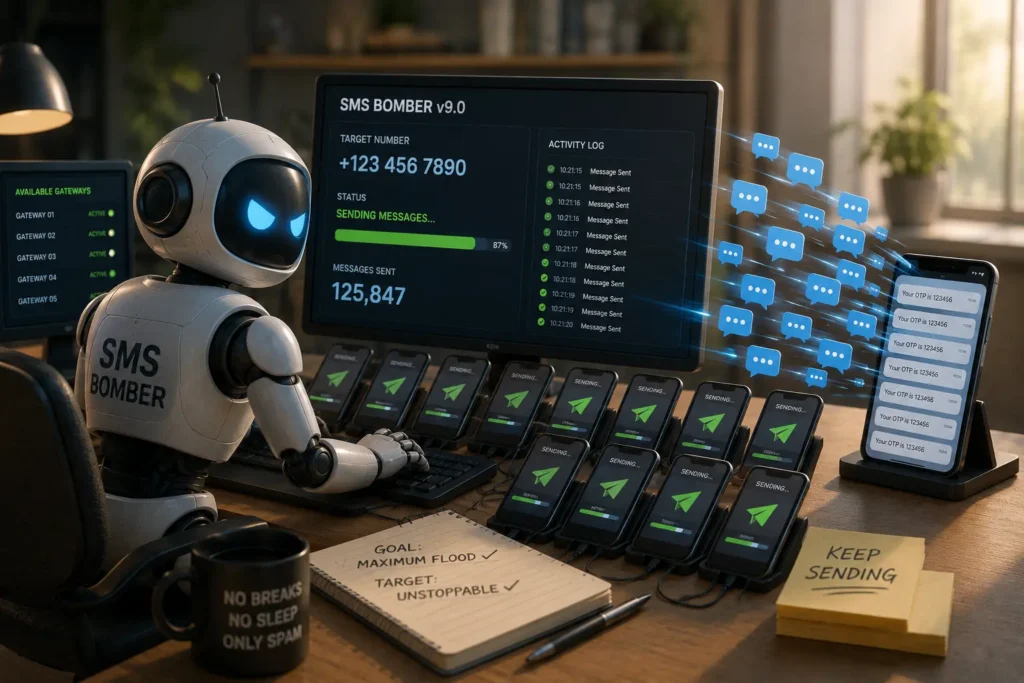
When a website sends you an OTP or a welcome message, it does not send that text directly from a phone. Instead, it uses an SMS gateway. An SMS gateway is a service that connects web applications to the mobile telephone network. Companies like Twilio, Vonage, Infobip, and others provide these services through simple programming interfaces called APIs.
A developer building a signup form can connect to one of these gateways, write a few lines of code, and their app can now send text messages to any number in the world. This infrastructure is what makes two-factor authentication, delivery alerts, and appointment reminders possible.
It is also what SMS bombers exploit.
API and OTP Abuse
Most legitimate websites have a “Send OTP” button. When you click it, the site calls an SMS gateway API to send a one-time password to your number. If that website does not have proper rate limiting or abuse prevention, an attacker can click that button hundreds of times, or better yet, write a script to call the underlying API automatically.
Each call sends another OTP to the target’s number. A single vulnerable API endpoint can send dozens of messages per minute. An attacker with a list of hundreds of such endpoints can combine them to create a bombing effect.
Promotional Form Abuse
Many e-commerce sites, newsletters, and service platforms ask for your phone number to send promotional alerts or order updates. These forms often send a confirmation text when you enter a number.
Attackers feed these forms a victim’s phone number in an automated loop. Every form submission triggers a new SMS. Because these are marketing platforms rather than security systems, they tend to have looser protections against repeated submissions.
Verification System Exploitation
When you create a new account on any platform, most services send a verification code to confirm ownership of the phone number. Attackers repeatedly trigger these verification flows using the victim’s number across dozens of platforms at the same time.
Each platform thinks it is sending one legitimate verification text. The victim receives all of them at once.
How One Request Can Trigger Hundreds of Messages
The efficiency of SMS bombing comes from scale and automation. A single attacker running a script can simultaneously hit 50, 100, or even 200 different services at once. Each of those services sends one message to the target. In the span of a minute, the victim can receive over a hundred texts.
The attacker is not sending messages directly. They are tricking legitimate services into sending messages on their behalf, which also makes the attack harder to trace and block.
Evasion Tactics Used by Attackers
Attackers use several methods to avoid being caught or blocked:
Spoofed numbers. Attackers can mask the apparent origin of their requests, making it look like the activity is coming from a different phone number or IP address.
Burner phones. Prepaid phones purchased with cash leave little trace. Attackers use them to sign up for services, trigger sending functions, and then discard the device.
VoIP services. Voice over IP platforms allow users to create temporary phone numbers cheaply and anonymously. These are used to register accounts used in attacks without revealing the attacker’s real number.
Automation scripts. Rather than clicking buttons manually, attackers use scripts that run automatically, cycling through lists of vulnerable APIs and form endpoints. These scripts can run faster than any human and can operate 24 hours a day.
Types of SMS Bombing Attacks
Traditional SMS Bombers
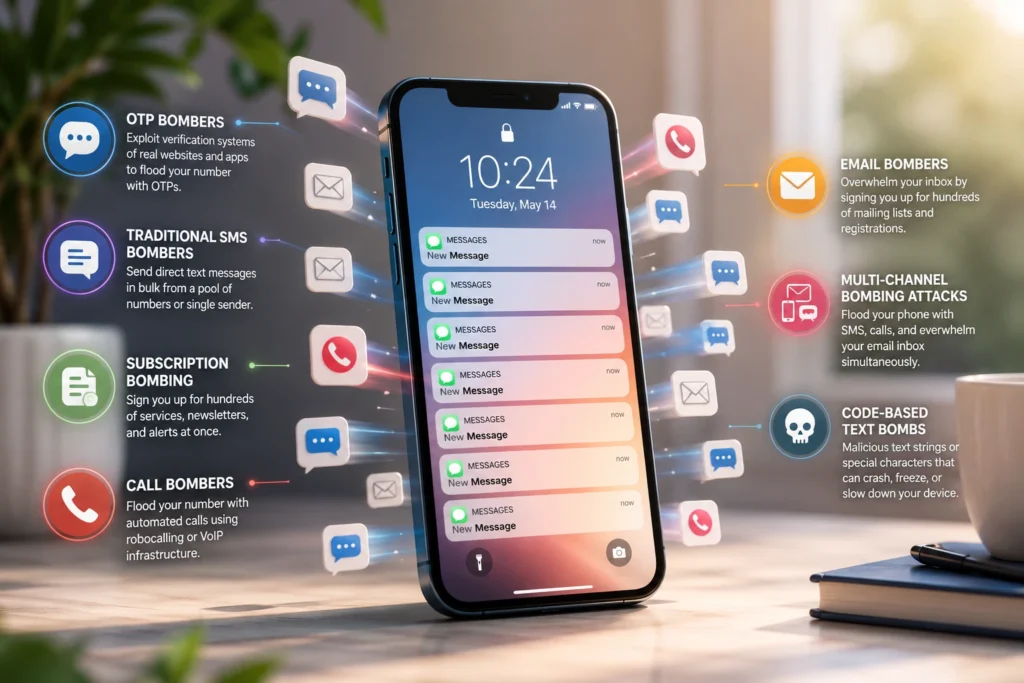
The original form of SMS bombing involved sending direct text messages in bulk to a target. Early tools would use a pool of numbers or a single sender and simply blast the target repeatedly. These are largely ineffective today because carriers have developed strong filtering to detect and block bulk SMS from a single origin.
OTP Bombers
OTP bombers are the dominant form of SMS bombing today. Instead of sending messages directly, they exploit the verification systems of real websites and apps. Because the messages come from legitimate sources like banks, e-commerce platforms, and social networks, they are much harder for carriers to filter. The target sees real messages from real companies, which also makes the attack more confusing and alarming.
Call Bombers
A variation of SMS bombing, call bombers flood a phone number with automated phone calls instead of text messages. The effect is similar: the victim’s phone becomes unusable. These tools use robocalling infrastructure or VoIP services to place hundreds of calls in rapid succession.
Email Bombers
Email bombing works on the same principle but targets an email inbox rather than a phone. Attackers sign the victim’s address up for hundreds of mailing lists, newsletters, and account registrations. The inbox fills up so fast that important emails get buried. Email bombing is often paired with SMS bombing for maximum disruption.
Multi-Channel Bombing Attacks
The most sophisticated version combines all of the above. The attacker floods the victim’s phone with SMS messages, calls, and simultaneously overwhelms their email inbox. This multi-channel approach is almost always used as a cover for a more serious attack, like a financial fraud or account takeover, where the attacker needs the victim distracted across every communication channel they might use to detect or respond to the real threat.
Code-Based Text Bombs
This is a lesser-known variant that most articles overlook. Certain characters, Unicode sequences, or very long strings can cause some older phones and messaging apps to crash, freeze, or slow down significantly when received as a text message. These are sometimes called “text bombs” or “crash strings.”
A notable example was a specific Arabic text string that caused iPhones to crash when received as a notification. These are typically software bugs rather than infrastructure attacks, and they are usually patched quickly once discovered. However, they represent a technical dimension of SMS-based attacks that goes beyond simply flooding a device with messages.
Popular SMS Bomber Tools and Projects
1. BOMBitUP
BOMBitUP was one of the most widely known SMS bomber apps, particularly popular in South Asia. It was an Android application that contained a list of Indian websites and services whose APIs it would call repeatedly to trigger SMS messages to a target number. At its peak, it could send hundreds of messages per hour using free-tier APIs of legitimate platforms.
The app has been removed from the Google Play Store multiple times for violating terms of service, and most of the APIs it relied on have since implemented rate limiting or shut down their open endpoints entirely. Current versions circulating online are largely non-functional or worse, designed to steal user data.
2. TBomb
TBomb is a command-line based SMS bomber written in Python, primarily targeting Linux users. It was shared openly on GitHub and became well-known in certain security hobbyist communities. Like BOMBitUP, it worked by cycling through a list of websites with vulnerable SMS-sending endpoints.
The project’s GitHub repository has been taken down and reinstated multiple times. Most of its target endpoints no longer work, and the project is largely considered inactive and ineffective in 2024 and beyond.
3. GitHub SMS Bomber Projects
Dozens of SMS bomber projects have been posted to GitHub over the years. They follow a similar pattern: a list of API endpoints or web forms, a script that loops through them, and a phone number input. Most are written in Python, JavaScript, or Shell.
GitHub has removed many of these repositories for violating its acceptable use policies. The ones that remain are either inactive, broken, or exist in a gray area as “educational” or “security research” tools. In practice, most serve no legitimate research purpose.
Why Many Older SMS Bombers No Longer Work
The majority of SMS bomber tools built before 2022 simply do not work anymore. The reason is straightforward: the websites they exploited wised up. Most major platforms now implement rate limiting on their SMS endpoints, meaning after one or two requests from the same IP address, no more messages are sent. CAPTCHA requirements have been added to many forms. APIs that were once open have been locked down.
The cat-and-mouse dynamic between attack tools and platform defenses means that any SMS bomber tool has a limited shelf life. By the time a tool becomes well-known enough to be widely downloaded, many of its targets have already patched the vulnerabilities it relies on.
Fake SMS Bomber Websites and APK Scams
This is something very few people talk about but needs to be said clearly. A large number of websites that claim to offer free SMS bombing services are outright scams. They collect the phone number of the person you want to target, and also your own phone number or account credentials, and do nothing useful with the tool while potentially misusing your data.
Similarly, many APK files (Android installation packages) circulating on download sites and Telegram groups that claim to be SMS bomber apps are actually malware. They may contain spyware that reads your messages, banking trojans, or credential-stealing software. Anyone who downloads these tools is far more likely to become a victim than to successfully attack someone else.
SMS Bomber vs OTP Bomber
Key Differences
While the two terms are often used interchangeably, there is a meaningful technical distinction between an SMS bomber and an OTP bomber.
An SMS bomber in the traditional sense focuses on volume. It tries to send as many text messages as possible to a number, often using direct messaging infrastructure or carrier exploits.
An OTP bomber specifically targets the verification and authentication systems of websites and apps. It does not send messages directly. Instead, it tricks legitimate platforms into sending their own automated messages.
Attack Methods
Traditional SMS bombers use direct routes: they send messages through SMS gateways, often using spoofed or purchased numbers. They rely on the attacker controlling a sending infrastructure.
OTP bombers use an indirect approach. The attacker writes a script that submits forms or calls APIs on hundreds of websites, using the victim’s phone number. The messages come from real companies, making them look completely legitimate to both the victim and the carrier.
Common Targets
Traditional SMS bombing has been used more commonly against businesses, flooding a customer service or support number to cause disruption.
OTP bombing is more often directed at individuals, particularly as part of account takeover attacks. The personal nature of OTP messages, coming from banks or social media platforms, makes the attack more psychologically effective and more useful as a distraction tool.
Comparison Table
| Feature | SMS Bomber | OTP Bomber |
|---|---|---|
| Message source | Attacker-controlled numbers | Legitimate companies |
| Detection difficulty | Easier to detect and block | Much harder to filter |
| Primary goal | Volume and disruption | Distraction and account takeover |
| Infrastructure needed | SMS gateway access | List of vulnerable APIs |
| Effectiveness today | Low (carrier filtering) | Moderate (harder to block) |
| Risk to victim | Nuisance and harassment | Financial and account security risk |
Hidden Dangers of SMS Bombing
Most articles describe SMS bombing as an annoying prank. That framing completely misses the real threat. SMS bombing is often not the attack itself. It is the cover for a far more dangerous attack happening at the same time.
The Smokescreen Effect
The most serious use of SMS bombing is as a smokescreen. While the victim is panicking about hundreds of incoming messages and struggling to use their phone, an attacker is quietly working through the victim’s digital life in the background.
Here is how the smokescreen is used during specific attacks:
- Account takeovers. The attacker has already obtained the victim’s password through a data breach or phishing. They now need to bypass two-factor authentication. The real 2FA code gets buried among hundreds of spam OTPs. The victim cannot find it, and the attacker is working quickly to complete the login before the window closes. Proactive defenses. Running regular phishing simulations helps teams recognize deceptive messages before attackers can use them to obtain credentials.
- Password resets. A password reset link or code sent to the victim’s phone gets lost in the flood of messages. The attacker triggered the reset and needs the victim to not see or use that code before the attacker can complete the process from their own device.
- Email compromises. Email account takeover attempts trigger verification codes. The SMS flood prevents the victim from seeing the real alert their email provider sent. By the time the victim notices, the email account has already been accessed. Choosing a reliable provider through an email validation service comparison can also help organizations strengthen account security by reducing invalid addresses, improving communication reliability, and supporting more effective identity verification processes.
- SIM swap attacks. In a SIM swap, the attacker calls the victim’s mobile carrier and convinces them to transfer the victim’s number to a new SIM card. The carrier often sends a confirmation text. The SMS flood buries that confirmation. The victim has no idea their number is being stolen until they lose all mobile service entirely.
The smokescreen effect is why SMS bombing should be treated as a serious security event, not just an annoyance. If it happens to you, you should immediately check all your important accounts.
Resource Depletion Attacks
Businesses are also targeted by SMS bombing in a different way. If a company uses SMS for customer authentication or support, flooding their SMS gateway with bogus requests can exhaust their monthly message quota. SMS gateways charge per message. A sustained bombing attack can cost a small business hundreds or thousands of dollars in SMS fees before anyone realizes what is happening.
This type of attack is sometimes used against competitors or by cybercriminals extorting small businesses.
Battery and Device Performance Impact
On the hardware side, continuous incoming message processing is genuinely taxing for a smartphone. The radio transceiver activates with every incoming message. The notification system, processor, and display all engage repeatedly. During a sustained attack, it is normal for a phone’s battery to drain at three to five times the normal rate. Some devices may also experience heat buildup, particularly older smartphones with less efficient processors.
In rare cases involving older or already-degraded devices, the sustained processing load during a prolonged attack could theoretically contribute to battery wear over time.
Financial Consequences
Beyond the direct battery and device impact, there are financial consequences for victims. If you are on a limited mobile data or messaging plan, receiving thousands of messages could incur overage charges. International roaming plans can be particularly vulnerable.
For businesses, as mentioned above, the cost of receiving or triggering thousands of automated messages can be significant. And for anyone who falls victim to the smokescreen effect and has accounts compromised, the downstream financial consequences can be severe.
Missed Emergency Notifications
This is one of the most underappreciated dangers. During an active SMS bombing attack, your phone is essentially useless for receiving important messages. If a family member tries to reach you, if your bank sends a fraud alert, if an emergency broadcast goes out, or if anyone tries to contact you for a genuine reason, those messages get buried or you simply cannot see them in the noise.
The few minutes or hours during which your phone is flooded could coincide with a genuinely time-sensitive situation, and you would have no way of knowing.
Psychological Impact on Victims
Being SMS bombed is a stressful and disorienting experience. Victims often describe feeling panicked, violated, and helpless. Not knowing why it is happening, whether your accounts are being stolen, or who is targeting you creates significant anxiety.
For victims of harassment campaigns, where SMS bombing is used alongside other forms of online abuse, the psychological impact can be substantial. Feeling like your device is under siege and that someone is deliberately targeting you causes real distress. This is especially true when the bombing continues for hours or days.
Why SMS Bombers Often Stop Working
Rate Limiting
Rate limiting is the most fundamental defense against SMS bombing. A web service with proper rate limiting will only allow a certain number of SMS requests from the same IP address, account, or phone number within a given time window. Once the limit is hit, further requests are rejected.
A properly rate-limited endpoint might allow two OTP requests per phone number per hour. Even if an attacker scripts a thousand requests, only two messages actually get sent. This single defense makes a massive difference.
CAPTCHA Protection
Adding a CAPTCHA to any form or flow that triggers an SMS message forces a human to prove they are a real person before the message is sent. Automated scripts cannot reliably solve modern CAPTCHAs, which means each message send requires actual human interaction. This effectively breaks the automation that SMS bombing depends on.
API Shutdowns
Many of the APIs exploited by older SMS bomber tools have simply been shut down or moved behind authentication walls. A service that previously had an open endpoint for sending promotional codes might now require a registered account and API key, or might have removed the functionality entirely.
As SMS bomber tools became well-known, platform security teams began auditing their messaging APIs and closing off any that could be abused.
Anti-Abuse Systems
Major platforms now run behind-the-scenes abuse detection systems that look at patterns of behavior rather than just individual requests. If a platform notices that the same phone number has been used in 200 signup attempts across 30 minutes, it flags that activity and stops sending messages to that number.
These systems operate across the platform’s own infrastructure and do not rely on the attacker making an obvious single error.
Telecom Filtering Technologies
Mobile carriers themselves have implemented filtering at the network level. Sophisticated traffic analysis tools can identify patterns consistent with SMS flooding, even when messages come from many different sources. Carriers can throttle or block message delivery to a number that is receiving an abnormally high volume of messages from multiple senders in a short time.
What To Do If Someone Is SMS Bombing Your Phone
Immediate Actions
The moment you realize your phone is being flooded with messages, your first priority is not fixing the annoyance. Your first priority is protecting your accounts. Open your most important apps: banking, email, social media, and check for any unauthorized activity. Change passwords on your most critical accounts if you have any reason to suspect the bombing is being used as a distraction.
Enable Do Not Disturb
Turn on Do Not Disturb mode immediately. This silences all notifications and stops your phone from alerting you to each incoming message. You will still receive the messages, but your phone will stop being a vibrating, buzzing mess. This makes your device usable again while the attack continues.
On Android, pull down the notification shade and tap Do Not Disturb. On iPhone, open the Control Center and tap the crescent moon icon, or go to Settings and toggle Focus mode.
Use Airplane Mode During Active Attacks
If the flooding is so severe that your phone is completely unusable, turn on Airplane Mode temporarily. This cuts all mobile connections and stops messages from arriving. Use this time to access your accounts via Wi-Fi on another device and check for any suspicious activity.
When you turn Airplane Mode back off, the messages that were sent while you were offline may or may not arrive, depending on your carrier’s message queuing behavior.
Contact Your Carrier
Call your mobile carrier from another phone or through their online chat service. Explain that you are experiencing an SMS bombing attack. Carriers can flag your number and apply temporary filtering to reduce the volume of messages reaching your device. Some carriers have dedicated fraud and abuse teams who handle exactly this type of situation.
Report the Incident
File a report with your local cybercrime authority. In the United States, this means reporting to the FBI’s Internet Crime Complaint Center (IC3) at ic3.gov. In the United Kingdom, report to Action Fraud. In India, report to the National Cyber Crime Reporting Portal at cybercrime.gov.in.
Even if law enforcement cannot immediately stop the attack, your report creates a paper trail that is useful if the situation escalates or if legal action becomes necessary.
Monitor Sensitive Accounts
After an SMS bombing attack, spend the next 24 to 48 hours monitoring your most important accounts closely. Check login histories on your email, social media, and banking apps. Look for any password reset requests or changes you did not make. Enable login notifications if you have not already done so.
If you find any evidence that an account was accessed without your permission, treat that as a separate security incident and act accordingly.
How to Protect Yourself From SMS Bombers
Android Protection Methods
Android users have several tools available to reduce the impact of SMS bombing.
Google Messages Spam Protection
If you use Google Messages as your default SMS app, there is a built-in spam protection feature that uses machine learning to identify and filter suspicious messages.
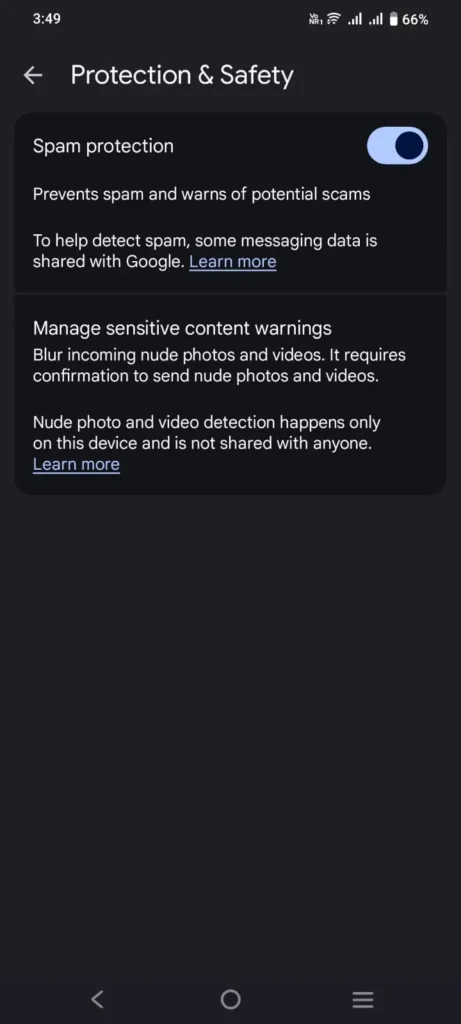
Go to Settings within the app, tap Spam Protection, and make sure it is enabled. Flagged messages get moved to a spam folder rather than appearing in your main inbox.
Truecaller
Truecaller is a caller ID and spam blocking app that is particularly effective in India and South Asia. It maintains a large crowd-sourced database of spam numbers and can automatically block or mute messages from numbers flagged as spam. It also offers an SMS inbox that filters messages by category, which can reduce the noise during a bombing attack.
Hiya
Hiya is another spam detection app available for Android that focuses on identifying spam calls and messages. It works in the background and can flag incoming messages from known spam sources.
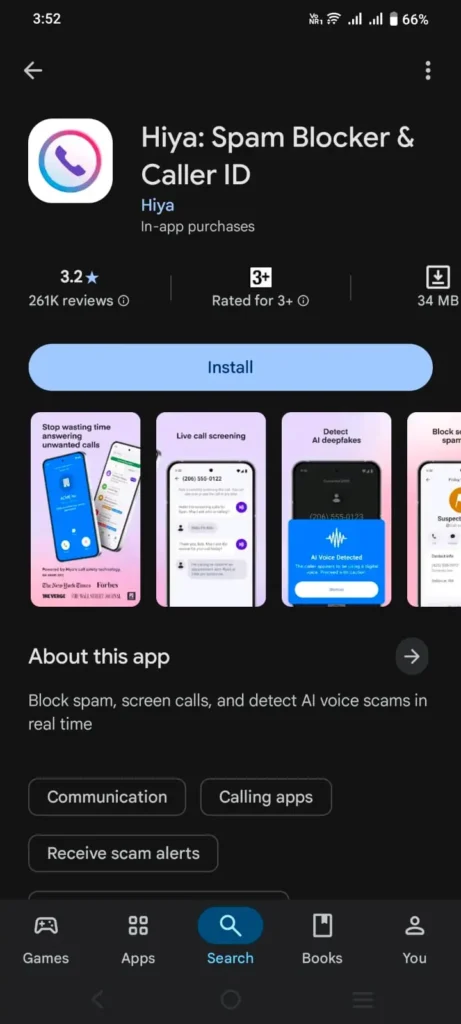
It is a strong alternative for users in North America and Europe.
Key Messages
Key Messages is a privacy-focused SMS app that offers granular controls over notifications and messaging permissions. It is useful for users who want more control over how messages from unknown numbers are handled, including the ability to route unknown senders to a separate inbox.
iPhone Protection Methods
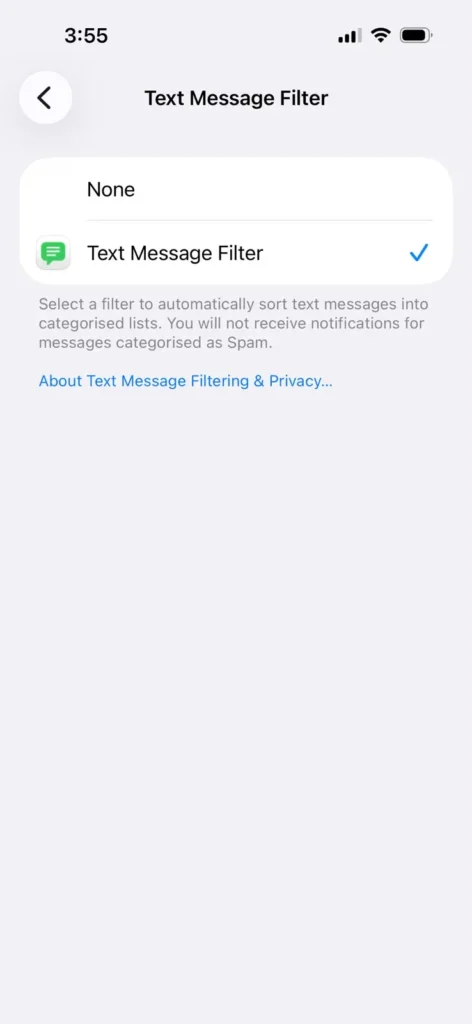
Filter Unknown Senders
iOS has a native feature that silences messages from people who are not in your contacts. Go to Settings, then Messages, and enable Filter Unknown Senders. Messages from numbers not saved in your contacts will be delivered to a separate list rather than triggering notifications. This significantly reduces the disruptive impact of an SMS bomb that relies on messages from unknown numbers.
iOS Security Updates
Apple regularly releases security updates that patch vulnerabilities in the Messages app, including protections against crash strings and text bomb exploits mentioned earlier.
Keeping your iPhone updated to the latest version of iOS is one of the most effective ways to stay protected against these technical variants of SMS attacks.
Universal Best Practices
Regardless of what device you use, these habits significantly reduce your exposure to SMS bombing and related attacks.
Never Share OTPs
A legitimate company will never ask you to read an OTP out loud to them over the phone. If anyone calls asking for an OTP you just received, hang up immediately. This is almost always a social engineering attack where the caller is attempting an account takeover and needs you to relay the verification code they just triggered.
Use Secondary Numbers for Signups
Consider using a secondary phone number for website signups, online shopping, and newsletter registrations. Apps like Google Voice, TextNow, or Hushed provide free or low-cost secondary numbers. This keeps your real number out of marketing databases and reduces the number of platforms that have your primary number to use in a bombing attack.
Limit Public Exposure of Your Number
Avoid posting your phone number on public forums, social media profiles, or websites. Every place your number appears publicly is a potential source for attackers building a target profile. Use email or messaging apps for public contact when possible.
Enable Two-Factor Authentication
This may seem counterintuitive given that OTP messages are part of the attack, but strong two-factor authentication on your important accounts is still essential. The key is to use an authenticator app (like Google Authenticator or Authy) rather than SMS-based 2FA for your most critical accounts. App-based 2FA generates codes locally and is not vulnerable to SMS bombing or SIM swap attacks.
How Businesses Prevent OTP Flooding Attacks
Individual users are not the only ones who need protection. Businesses that send SMS messages to customers need to actively secure their own systems to prevent their infrastructure from being weaponized in an attack against someone else.
CAPTCHA Implementation
Any web form that triggers an SMS message should include a CAPTCHA. Even a simple checkbox CAPTCHA stops automated scripts from repeatedly triggering message sends. More advanced image-based or behavioral CAPTCHAs are even more effective. This single step eliminates the vast majority of automated SMS flooding abuse.
Challenge-Response Verification
Before sending an SMS, some businesses implement a challenge-response step. For example, the user must first solve a small puzzle, answer a simple question, or complete a multi-step form before the system will send a verification code. This friction stops bots without significantly inconveniencing legitimate users.
CSRF Protection
Cross-Site Request Forgery (CSRF) tokens are security mechanisms that ensure a form submission actually originated from the legitimate website rather than from an external script. Implementing CSRF protection on any form that triggers SMS sending means that scripts from outside the site cannot silently trigger messages.
API Rate Limiting
On the backend, businesses should implement strict rate limiting on any API endpoint that triggers SMS messages. Common configurations include limits per phone number (for example, no more than 3 messages per 10 minutes to the same number), per IP address, and per account. These limits should apply globally, not just within a single session.
Device Fingerprinting
Device fingerprinting collects characteristics of the device making a request (browser type, screen resolution, operating system, installed fonts, and more) to create a unique profile. If the same device profile keeps requesting SMS sends to different numbers, or the same number repeatedly, it can be flagged and blocked. This works even when attackers change their IP address.
Risk-Based Authentication
Rather than applying the same security checks to every user, risk-based authentication analyzes the context of each request. A login from a familiar device at the usual time of day might not need an OTP at all. A login from a new country at 3am triggers stronger verification. This reduces the overall volume of OTPs sent and makes each one more meaningful.
SMS Gateway Budget Controls
Most SMS gateway providers allow businesses to set spending caps. Setting a daily or hourly budget limit means that even if an attacker manages to trigger a large number of OTP sends, the gateway automatically stops sending once the budget is hit. This protects both the business’s finances and prevents their infrastructure from being used to harm customers.
Messages-Per-Second Restrictions
Businesses can configure their SMS gateway accounts to limit the maximum number of messages sent per second. A normal authentication flow never needs to send more than a handful of messages per second. Capping this rate means even a successful API abuse campaign can only generate a trickle of messages rather than a flood.
How Mobile Carriers Detect and Block SMS Bombing
This is one of the most overlooked aspects of the entire topic. Mobile carriers are not passive participants. They have sophisticated detection systems working constantly to identify and stop SMS flooding at the network level.
Reply Rate Analysis
Legitimate SMS marketing and authentication messages see a certain percentage of recipients reply or interact with them. Messages sent as part of an SMS bombing campaign typically see a zero percent reply rate or highly abnormal engagement patterns. Carriers monitor these reply rates as one signal of abuse.
Traffic Pattern Monitoring
Carriers analyze traffic patterns across their entire network in real time. A sudden spike in messages being delivered to a single number from many different sending entities within a short window is a clear statistical anomaly. These spikes trigger automated investigation and potential throttling.
Behavioral Analysis Systems
Beyond simple volume monitoring, carriers use behavioral analysis that looks at the nature and content of messages over time. Are all messages coming in the form of OTPs? Are they from a diverse set of senders? Is the content consistent with a specific type of flood? These behavioral profiles help distinguish a genuine attack from a user who legitimately receives many messages.
3-Queue Mitigation Models
Some carriers use tiered queuing systems to manage suspicious traffic. Suspected spam or bombing traffic gets placed in a lower-priority queue, which throttles delivery speed. Legitimate traffic goes through the high-priority queue and arrives normally. This means a bombing attack’s effectiveness is degraded without the carrier having to block messages outright, which could accidentally block legitimate messages.
Telecom Network Prioritization Techniques
Carriers also work with telecom industry bodies and peer networks to share data on abuse patterns. If a specific sending source is identified as operating a bombing campaign, that information can be shared across networks so other carriers can take preventive action. Industry groups like the Mobile Ecosystem Forum and regional telecommunications regulators coordinate these efforts.
Legal Consequences of SMS Bombing
Is SMS Bombing Illegal?
Yes. In most countries, SMS bombing is illegal. It falls under various laws depending on the jurisdiction, including laws against harassment, computer misuse, unauthorized access to communications infrastructure, and telecommunications abuse.
The specific charge depends on how the bombing was conducted and what damage it caused. Using a bombing attack as a cover for account takeover adds fraud and computer crime charges on top of the harassment charges.
Harassment and Cybercrime Laws
In many countries, using any means of electronic communication to harass, intimidate, or cause distress to another person is a criminal offense. SMS bombing, particularly when directed at an individual with the intent to cause distress, fits the definition of electronic harassment in statutes across the United States, United Kingdom, Australia, Canada, India, and the European Union.
In the United States, this can involve the Computer Fraud and Abuse Act (CFAA), the Telephone Consumer Protection Act (TCPA), and various state-level harassment and cyberstalking statutes.
Computer Misuse Regulations
Using automated scripts to repeatedly send requests to websites and APIs you are not authorized to stress-test could qualify as unauthorized access to computer systems or interference with computer services, depending on how the law is interpreted in your jurisdiction. In the United Kingdom and Australia, computer misuse acts explicitly cover unauthorized and damaging use of networked systems.
U.K. Malicious Communications Act
In the United Kingdom, the Malicious Communications Act 1988 and the Communications Act 2003 both cover sending messages intended to cause distress or anxiety. SMS bombing directed at an individual clearly falls within the scope of these laws. The Online Safety Act 2023 further strengthens protections and enforcement mechanisms around harmful online communication in the UK.
Potential Criminal Penalties
Depending on jurisdiction and severity, SMS bombing can result in criminal charges carrying significant penalties. In the United States, federal charges under the CFAA can carry prison sentences of up to 10 years for serious cases. In the United Kingdom, convictions under the Malicious Communications Act can result in up to two years imprisonment. In India, charges under the Information Technology Act can result in up to three years imprisonment and fines.
Civil Liability Risks
Beyond criminal penalties, perpetrators can face civil lawsuits from victims. A victim who can prove that an SMS bombing attack caused financial harm, emotional distress, or damage to their device has grounds to sue for damages. Businesses that suffer financial losses due to API abuse during a bombing campaign may also pursue civil action.
Factors That Increase Sentencing Severity
Courts and prosecutors consider several factors when determining the severity of a sentence:
The intent behind the attack matters significantly. An attack used as cover for financial fraud will be treated far more seriously than one used purely as harassment.
The duration and scale of the attack are also relevant. A five-minute bombing is treated differently from a sustained campaign lasting days or weeks.
Whether the victim suffered provable harm, including financial loss, psychological harm, or device damage, affects both criminal sentencing and civil damages.
Using tools specifically designed for attack purposes, as opposed to accidentally triggering a vulnerability, is considered an aggravating factor.
SMS Bombing vs Smishing
What Is Smishing?
Smishing is a portmanteau of SMS and phishing. It involves sending text messages that impersonate legitimate organizations, such as banks, postal services, or government agencies, to trick recipients into clicking malicious links or providing sensitive information.
A classic smishing message might say something like: “Your parcel could not be delivered. Click here to reschedule.” The link leads to a fake website designed to steal login credentials or payment information.
Similarities Between the Two
Both SMS bombing and smishing use the SMS channel as their attack vector. Both can be used as part of a broader attack strategy, and both are illegal forms of harassment or fraud. Technically, smishing can be incorporated into a bombing attack: some attackers flood a victim’s phone with hundreds of messages, some of which contain malicious links, hoping the victim clicks one in the confusion.
Both attacks also exploit the inherent trust people place in text messages. Because SMS messages appear to come from real numbers and real services, people tend to take them seriously.
Key Differences
The fundamental difference is intent and method. SMS bombing is about volume and disruption. The goal is to overwhelm the recipient. The messages themselves do not need to contain anything dangerous. Smishing is about deception. The goal is to get the victim to take a specific action, usually clicking a link or replying with sensitive information. A smishing campaign might send just one well-crafted message, not hundreds.
SMS bombing attacks the recipient’s ability to use their phone. Smishing attacks the recipient’s judgment and trust.
Which Threat Is More Dangerous?
For the average person, smishing is statistically more dangerous. Successful smishing attacks result in real financial theft, identity fraud, and account compromise far more frequently than SMS bombing alone does. SMS bombing causes disruption and distress, but a single well-crafted smishing message can cost a victim their life savings.
However, when SMS bombing is combined with account takeover attempts as described in the smokescreen section, it becomes comparable in danger to a sophisticated phishing attack.
The Evolution of SMS Bombing
Early SMS Bombers
In the early days of consumer smartphones, SMS bombing was a manual or semi-manual process. Attackers would use basic scripts or even physical devices to send messages in bulk. The technical barrier was relatively high, which limited who could conduct these attacks. The tools were crude, the results were inconsistent, and carrier defenses at the time, while less sophisticated than today, were often sufficient to catch obvious bulk sending behavior.
Rise of OTP Bombing
As two-factor authentication became widespread in the 2010s, attackers recognized the potential of exploiting OTP systems. Platforms rushed to implement SMS-based 2FA without always securing the underlying request flows. This created the opportunity for OTP bombing, which quickly became far more effective than traditional SMS bombing because the messages came from trusted sources.
Tools like BOMBitUP and TBomb made OTP bombing accessible to people with minimal technical knowledge, which contributed to a significant increase in incidents, particularly in South Asia where these tools were most popular.
API Abuse Campaigns
By the late 2010s and early 2020s, more sophisticated attackers began targeting the APIs of large platforms systematically. Rather than relying on pre-built tools with limited endpoint lists, they would identify and probe vulnerable APIs themselves. This made campaigns more targeted and effective, and harder to attribute to known tools.
Organized groups began using SMS flooding as a paid service, offering to “bomb” a target number for a fee. This commoditization of the attack made it accessible to anyone willing to pay, regardless of technical skill.
Modern Telecom Defenses
The last several years have seen significant improvements in carrier-level and platform-level defenses. Machine learning-based spam detection, industry-wide abuse reporting networks, API security audits, and regulatory pressure on SMS gateway providers have all contributed to making SMS bombing substantially less effective than it was five years ago.
Most publicly available tools now have single-digit success rates at best, and the ones that do work rely on constantly refreshed lists of newly vulnerable endpoints.
Future of SMS Security
The future of SMS security is moving in two directions simultaneously. On one hand, the industry is pushing toward richer and more secure messaging protocols like RCS (Rich Communication Services), which provides more robust sender verification and spam filtering than traditional SMS.
On the other hand, as long as SMS-based OTP authentication remains widespread, there will always be an incentive for attackers to find new ways to exploit it. The long-term solution likely involves moving away from SMS-based authentication entirely in favor of app-based authenticators, passkeys, and biometric verification, which are not vulnerable to SMS flooding or SIM swap attacks at all.
Statistics and Trends
Growth of OTP Bombing Attacks
Reports from telecom security firms indicate that OTP fraud and SMS-based attacks have grown significantly in recent years. Recorded Future, Proofpoint, and other security companies have documented increases in SMS-based fraud, with OTP interception and flooding being among the most commonly reported categories. While precise figures vary across reports, the trend is consistently upward, driven by the continued reliance on SMS 2FA by major platforms.
Industries Most Targeted
Financial services are by far the most targeted industry, given the obvious financial incentive. These institutions also lean on document verification at onboarding and during high-risk transactions, since identity proofing at the door keeps most of the downstream account-takeover attempts from ever starting.
Banks, fintech apps, cryptocurrency platforms, and payment services send large volumes of OTP messages and are therefore the most valuable targets for abuse.
E-commerce is the second most affected sector. Online retailers use SMS for order confirmations, delivery alerts, and account verification, all of which can be exploited.
Telecommunications companies themselves are also targeted, both for the value of phone number control in SIM swap attacks and because their own verification systems are a route to downstream account compromise.
Mobile Security Trends
The broader mobile security landscape is shifting toward zero-trust frameworks, where no message or notification is treated as inherently trustworthy. Behavioral biometrics, device fingerprinting, and AI-based anomaly detection are all becoming standard components of mobile security platforms.
Consumer awareness of SMS-based threats has improved significantly since the early 2020s, driven in part by high-profile breaches and increased media coverage of smishing and OTP fraud.
Telecom Industry Responses
The GSMA, which is the global industry association for mobile operators, has published guidelines for operators on combating SMS fraud and flooding. Individual carriers have invested in fraud management systems, and regulators in several countries have imposed requirements on carriers to implement minimum anti-fraud standards.
In the United States, the FCC has taken action against illegal robocalling and has extended some of those frameworks to cover SMS abuse. In Europe, the General Data Protection Regulation creates additional accountability for businesses that fail to secure their SMS communication infrastructure from abuse.
Frequently Asked Questions
1. What is an SMS bomber?
An SMS bomber is a tool or script that sends a large volume of text messages to a single phone number in a short period of time. It works either by sending messages directly or by exploiting the verification and promotional SMS systems of legitimate websites and apps.
2. Do SMS bombers still work?
Most older SMS bomber tools are largely ineffective today. The websites and APIs they relied on have implemented rate limiting, CAPTCHA protection, and other anti-abuse measures. Some limited effectiveness remains through constantly updated endpoint lists, but the success rate is far lower than it was several years ago.
3. Is SMS bombing illegal?
Yes, in most jurisdictions. SMS bombing can fall under harassment laws, cybercrime statutes, computer misuse regulations, and telecommunications abuse laws. Criminal penalties range from fines to imprisonment depending on the country and the severity of the attack.
4. Can SMS bombing damage a phone?
Severe or prolonged SMS bombing can cause accelerated battery drain and device overheating. In most cases, damage is temporary and the device returns to normal once the attack stops. However, on older devices with degraded batteries, sustained extreme activity could contribute to hardware wear.
5. Can SMS bombing hack my account?
Not directly. However, SMS bombing is frequently used as a distraction while an account takeover happens in the background. If someone is bombing your phone, check all your important accounts for unauthorized activity immediately.
6. Is BombitUP safe?
No. BombitUP has been removed from the Google Play Store multiple times for policy violations. Current versions circulating online are outdated, largely non-functional, and in many cases contain malware. Downloading it puts your own device and data at risk.
7. How do I stop SMS bombing?
Enable Do Not Disturb or Airplane Mode immediately. Contact your carrier and report the attack. Use spam filtering apps to reduce noise. Report the incident to the relevant cybercrime authority. Check all your important accounts for unauthorized activity.
8. Are SMS bomber APKs dangerous?
Yes. The majority of SMS bomber APKs circulating on third-party download sites and messaging groups are malware. They may contain spyware, credential stealers, or banking trojans. Anyone who downloads them is at significant risk of becoming a victim themselves.
9. What is OTP flooding?
OTP flooding is another term for OTP bombing. It refers specifically to triggering large numbers of one-time password messages to a phone number by repeatedly submitting signup, login, or verification forms across many websites. The messages come from legitimate companies, making them hard to filter.
10. Why am I suddenly receiving hundreds of OTP messages?
This is almost certainly an SMS or OTP bombing attack. It may be a targeted harassment campaign or, more seriously, it may be a smokescreen for an account takeover attempt happening at the same time. Do not ignore it. Enable Do Not Disturb, check your important accounts for suspicious activity, change passwords where necessary, and contact your mobile carrier to report the attack.